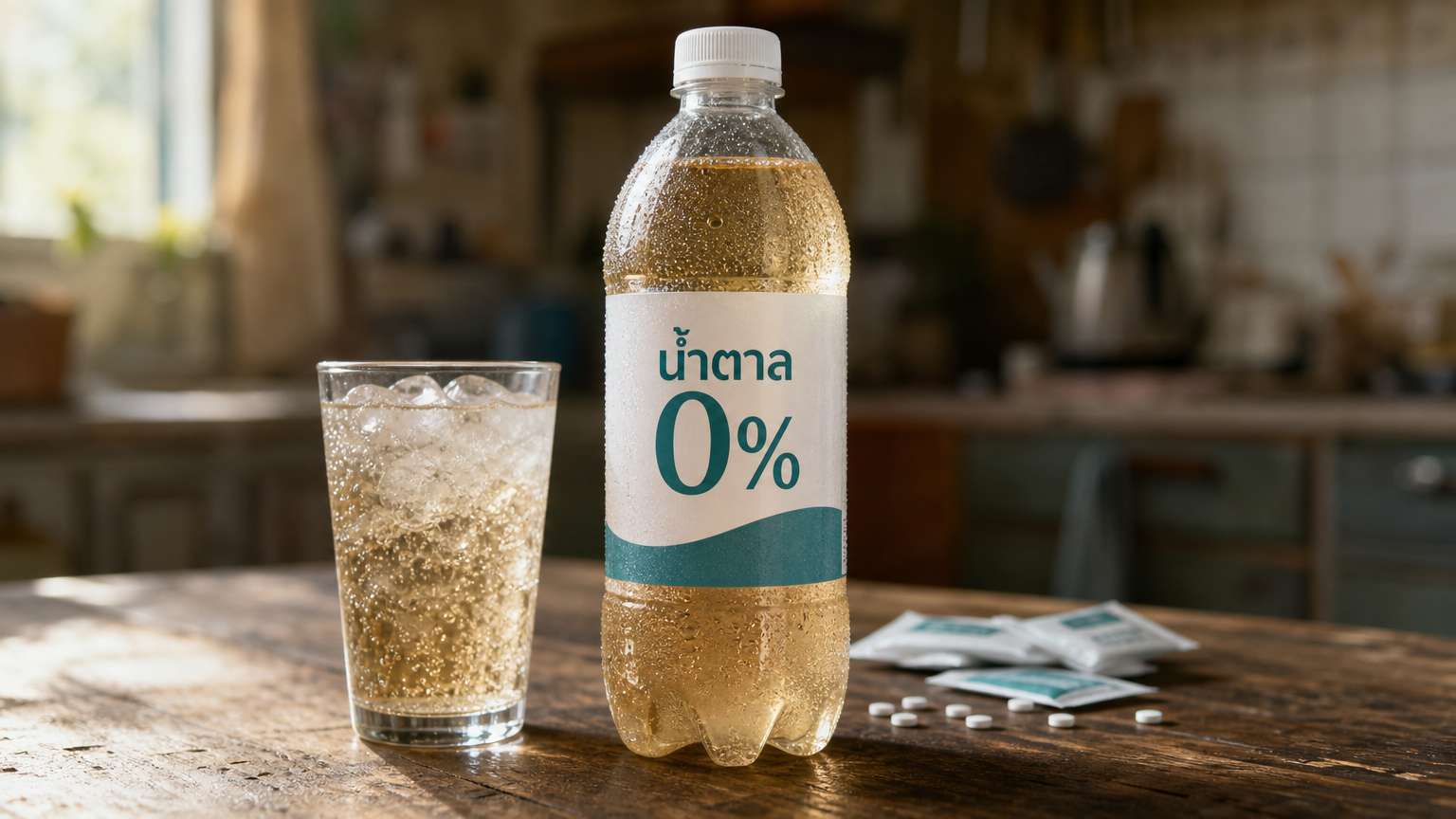
A drink label in Thailand that says 'sugar 0%', 'sugar free' or 'zero sugar' does not mean the drink contains exactly no sugar. According to the Food and Drug Administration (FDA) of Thailand, the claim means less than 0.5 grams of sugar per serving. Any sweetness you still taste usually comes from sweeteners that give no energy or very little. If you choose these drinks instead of regular soda, it helps to know what the label covers and what the World Health Organization (WHO) says about sweeteners and weight control.
What the Thai FDA requires for 'sugar 0%'
The Thai FDA says a product that uses the claim 'Sugar Free' or 'Zero Sugar' must contain less than 0.5 grams of sugar per serving. It must also meet other conditions set by law. The figure applies to one serving as defined on the label, not to the whole bottle.
So check how large one serving is and how many servings are in the bottle. If you finish the bottle in one sitting, the amount you consume is the number of servings multiplied by the stated amount.
The claim is a legal threshold. It is not a promise that the drink has no sweet taste or no sweetening ingredients. It also does not mean the drink is healthy in every way.
Why these drinks still taste sweet
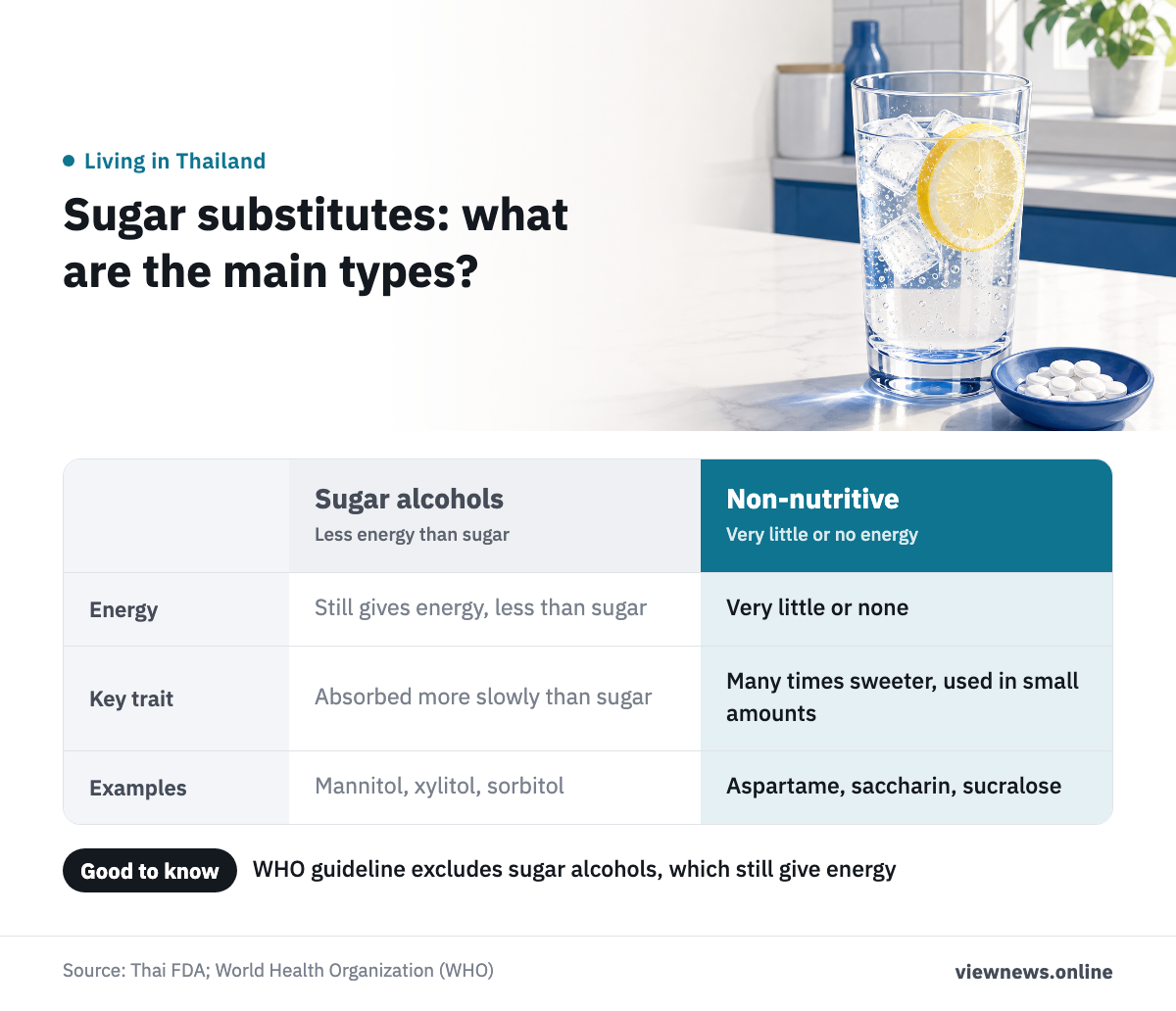
When sugar is almost removed, manufacturers usually add sweeteners instead. The Thai FDA groups them into two main types.
- Sugar alcohols: these still provide energy, but less than sugar, and the body absorbs them more slowly. Examples are mannitol, xylitol and sorbitol.
- Non-nutritive sweeteners: these provide very little energy or none, and are many times sweeter than sugar, so only small amounts are needed. The FDA lists aspartame, saccharin, acesulfame potassium, sucralose and steviol glycosides, which are extracts of the stevia plant.
The FDA says these substances are safe when used within the set limits. Eating or drinking too much can cause nausea, vomiting, bloating or diarrhea. Frequent sweet tastes may also make you used to sweetness, so you end up eating more than you intended. The FDA therefore advises people to limit their regular intake of sweet-tasting foods and drinks.
What the WHO says about weight control
On 15 May 2023, the WHO issued a guideline advising against the use of non-sugar sweeteners to control body weight or reduce the risk of noncommunicable diseases. The WHO said its systematic review of the research found no long-term reduction in body fat in adults or children. It also found signs that long-term use may be linked to a higher risk of type 2 diabetes, cardiovascular disease and death in adults.
Francesco Branca, the WHO's director for nutrition and food safety, said that replacing free sugars with non-sugar sweeteners does not help with weight control in the long term.
The advice has limits. The WHO classed it as a conditional recommendation, because the links to disease may be distorted by differences in participants' baseline health and in how people use sweeteners. The guideline covers everyone except people who already have diabetes. It does not cover low-calorie sugars or sugar alcohols, which still provide energy and which the WHO does not count as non-sugar sweeteners.
The WHO's examples include acesulfame K, aspartame, advantame, cyclamates, neotame, saccharin, sucralose, and stevia and stevia derivatives. The WHO guideline is international advice. The rules for label claims in Thailand remain those set by the Thai FDA.
How to read a label before you buy
Before picking up a drink marked 'zero sugar', check the following.
- How big one serving is, and how many servings are in the bottle.
- Which sweeteners are in the ingredients list, such as aspartame, sucralose or steviol glycosides.
- Whether it contains sugar alcohols such as xylitol or sorbitol, which still provide energy.
- Whether drinking it makes you crave more sweet food.
If your goal is to cut sugar or manage your weight, a zero-sugar drink can reduce the sugar you get from drinks, under the Thai FDA's definition. But the WHO says sweeteners should not be relied on as a long-term way to control weight. People with a health condition such as diabetes should talk to a doctor or pharmacist before starting or changing their drink choices and treatment.
Source: Food and Drug Administration (FDA) of Thailand, Consumer Capacity Development Division; World Health Organization (WHO) guideline on non-sugar sweeteners, published 15 May 2023.
This article is adapted from ViewNews' Thai-language report.