Schools across Thailand must check PM2.5 dust levels every day and use the readings to decide how pupils study and play that day. The Ministry of Education has told schools nationwide to follow the readings on Air4Thai, the government's air quality website and app. Parents can look at the same data themselves, according to a statement from the Prime Minister's Office on 7 November 2026.
The second term of the 2026 academic year has started, and many areas are entering the period when PM2.5 is closely watched. The Prime Minister's Office said many areas are still recovering from flooding, but protecting pupils and teachers from dust has to be done at the same time.
Who is giving the orders, and what schools must check
The instruction runs down a chain. The Ministry of Education told the Office of the Basic Education Commission (OBEC) and schools nationwide to follow the measures. OBEC then told every educational service area office and the Office of Special Education Administration to make sure the schools they supervise follow the PM2.5 measures strictly.
Schools must check Air4Thai every day, and the reading must feed into how they run lessons. It is not a record-keeping exercise. The day's reading decides whether children can do sports outdoors, whether they must wear masks, and what kind of classroom they use.
Educational service area offices must monitor the situation and visit affected schools quickly to help. School heads, teachers and other staff must keep telling pupils about the dust situation and how to protect themselves.
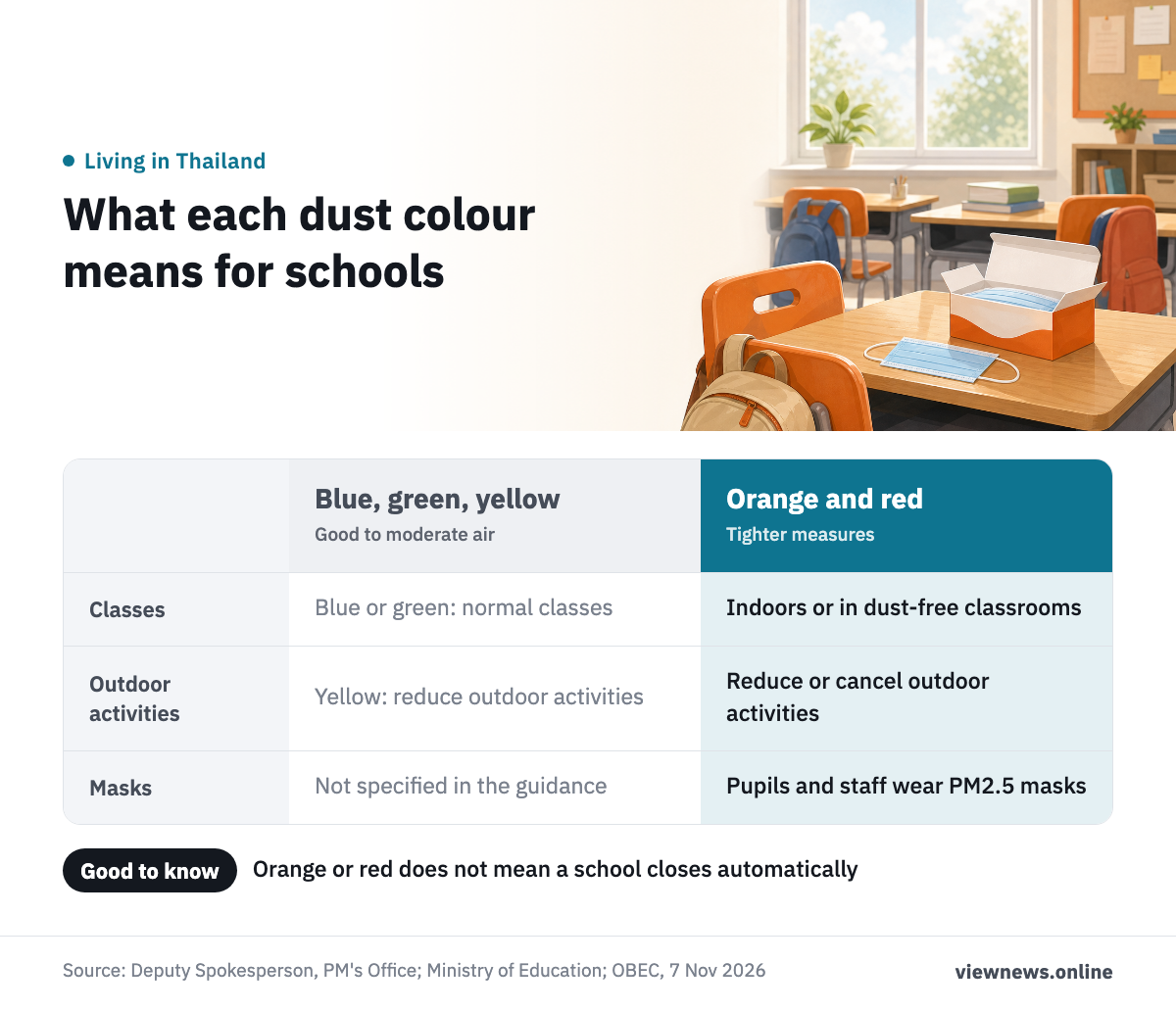
What each colour means for schools
The guidance follows the colour of the air quality level. Schools must do the following:
- Blue or green (good air quality): normal classes.
- Yellow (moderate): reduce outdoor activities.
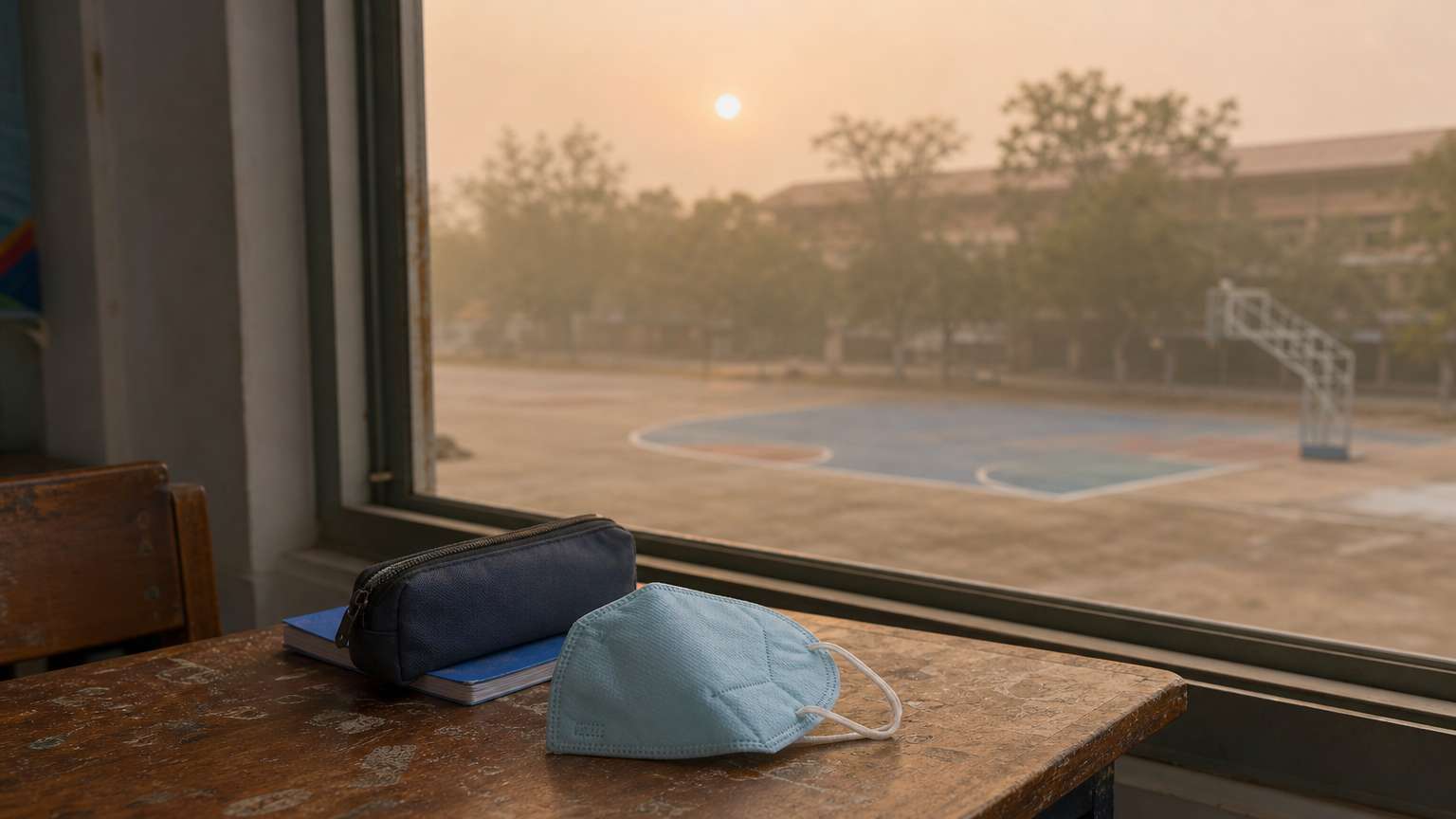
- Orange and red: pupils and staff wear masks that protect against PM2.5, classes are held indoors or in dust-free classrooms, and outdoor activities are reduced or cancelled.
On blue or green days nothing changes. On yellow days school stays open as usual, but activities held outside must be cut back.
The measures get tougher at orange and red. Besides masks, indoor lessons and fewer outdoor activities, schools must also consider changing how they teach, including opening or closing the school, depending on the situation and the relevant regulations. The key word is "consider". Orange or red does not mean a school closes automatically. The decision depends on the actual situation and the rules in force.
The statement does not give the numerical thresholds for each colour. For the latest colour levels and cut-offs, check Air4Thai directly rather than relying on figures from other sources.
How parents can check the dust level themselves
Schools must follow Air4Thai every day and use it to plan teaching. Parents can open the same website or app to see what the dust situation is each day.
If you want to know how your child's school is responding, ask the class teacher or the school office. Useful questions include whether outdoor activities are reduced that day, whether children must wear masks, and whether lessons are held indoors or in a dust-free classroom. The Ministry of Education's guidance tells schools to base these decisions on the dust reading.
Changes to teaching or school closures are decided case by case under the relevant regulations. Parents should therefore follow announcements from the school itself and not decide on their own based only on the colour shown on a screen.
The statement describes guidance from the Ministry of Education and OBEC. It does not say how private or international schools are expected to follow it, so families with children in those schools should ask the school what it does.
Children at higher risk, masks and what to ask your school
The guidance gives special attention to young children and pupils with heart or respiratory conditions. Teachers and school heads must watch for unusual symptoms. If your child has such a condition, tell the school so teachers know to keep a closer eye on them. For treatment or advice specific to your child, talk to the doctor who looks after them.
On masks, the government requires pupils and staff to wear PM2.5 masks on orange and red days. Parents may want to have PM2.5 masks ready before the dust gets bad, so they are not hunting for them on the day they are needed. If your child has a health condition, ask the child's doctor before choosing a mask.
Parents can also ask the school about several things the order requires of schools: whether a dust-free classroom is set up, how regularly school buildings are cleaned, and how the school keeps pupils informed about the dust situation and how to protect themselves.
Beyond these short-term steps, the Ministry of Education is also stressing longer-term measures. It wants teachers, pupils and parents to help cut pollution by using public transport, carpooling and planting trees to add green space. Volunteers, Scouts, Girl Guides and military studies students are to join campaigns to reduce dust in their communities. The government is encouraging people to use public transport or carpool.
Source: Statement by the Deputy Spokesperson of the Prime Minister's Office on 7 November 2026 on protecting pupils and teachers from PM2.5, as relayed by the Ministry of Education and OBEC to schools nationwide.
This article is adapted from ViewNews' Thai-language report.