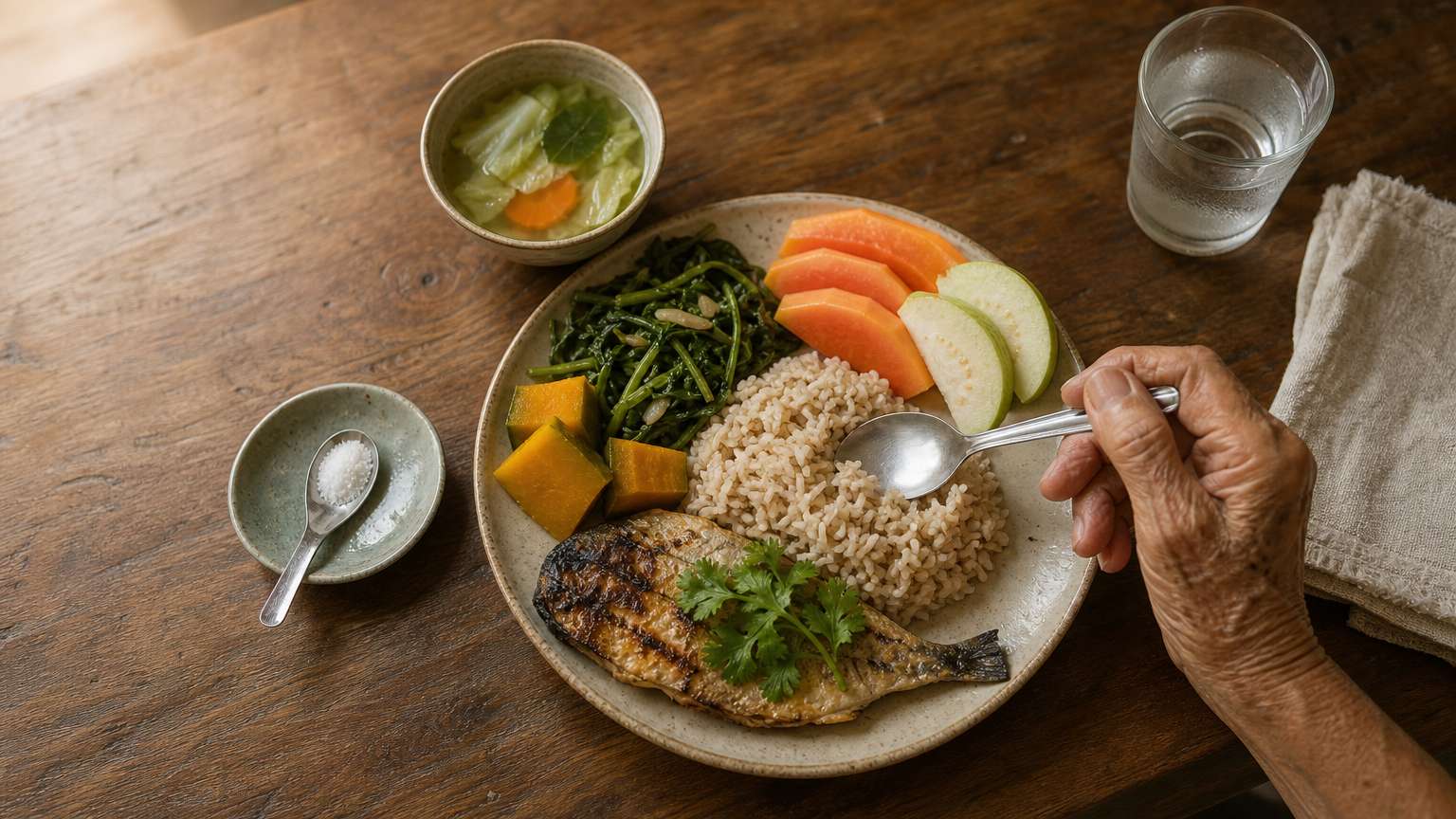
People in Thailand are living longer, but the years spent in good health have not kept pace. According to the World Health Organization (WHO), life expectancy at birth in Thailand was 78.1 years in 2023, while healthy life expectancy was 67.8 years, a gap of about 10 years. Diet is one of the factors people can change most quickly, and it matters for residents of any age, including long-stay retirees and expats who eat Thai food every day.
The gap between living long and living well
Data from the WHO Global Health Observatory show that in 2000, Thailand had a life expectancy at birth of 70.3 years and a healthy life expectancy of 61.4 years. That was a gap of 8.9 years. By 2023, life expectancy had risen to 78.1 years and healthy life expectancy to 67.8 years, a gap of 10.3 years.
Put simply, people in Thailand are living about 7.8 years longer than they did over the 23-year period, but their healthy years rose by only about 6.4 years. The final stretch of life that needs health care has become longer. These are national averages and do not predict what will happen to any one person. They do show that living longer and living well are not the same thing.
WHO: a good diet protects against chronic disease
The WHO fact sheet on healthy diets, dated 26 January 2026, says a good diet helps prevent malnutrition and non-communicable diseases such as diabetes, heart disease, stroke and cancer. An unhealthy diet is a leading risk factor for disease and disability. WHO also says high sodium intake is linked to higher blood pressure, which can lead to heart and blood vessel disease.
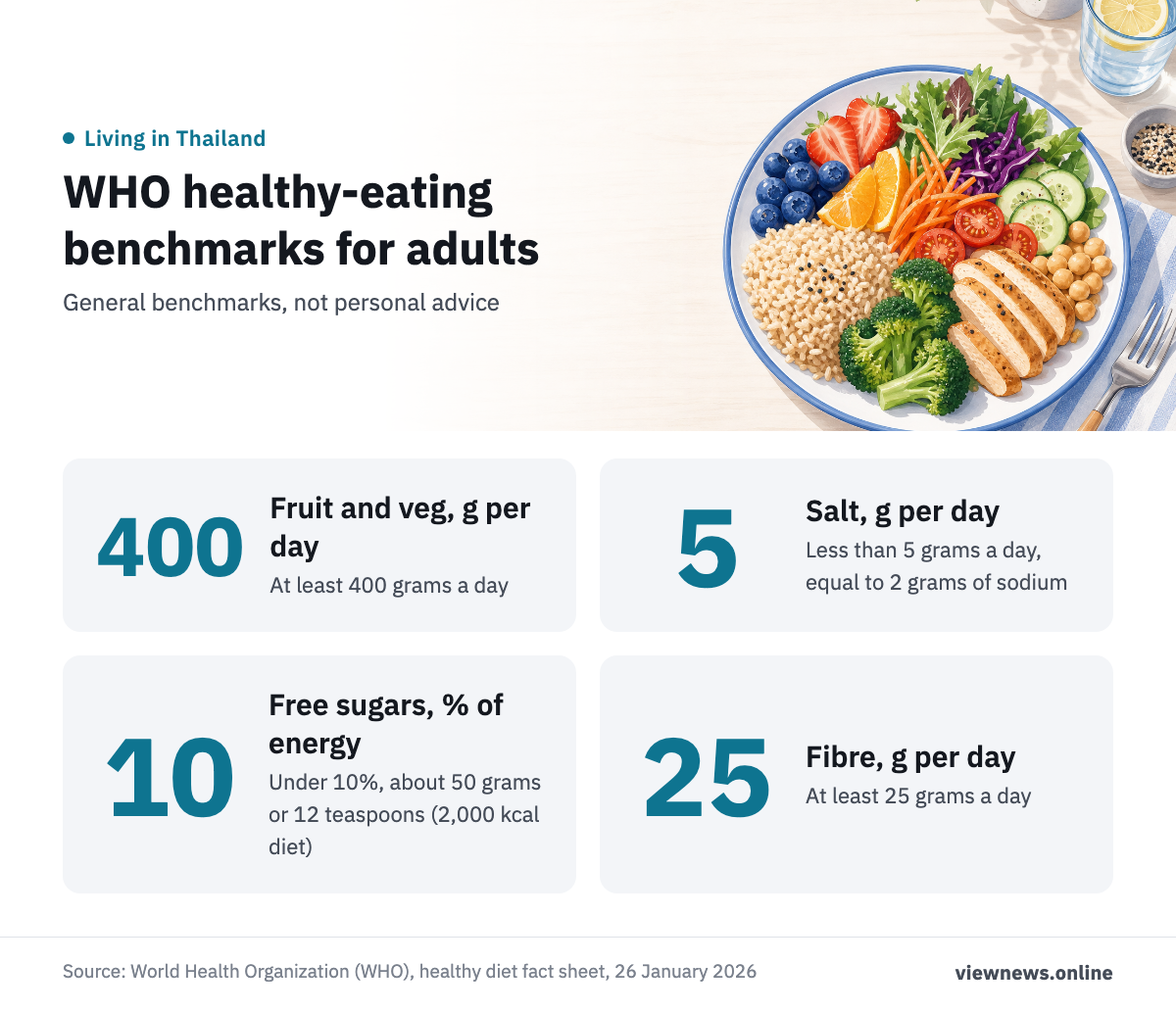
For adults, WHO gives clear reference figures:
- Fruit and vegetables: at least 400 grams a day.
- Salt: less than 5 grams a day, which equals 2 grams of sodium.
- Free sugars: less than 10% of daily energy intake. That is about 50 grams, or 12 teaspoons, on a 2,000-kilocalorie diet. Cutting to 5% or less may bring extra benefits.
- Fibre: at least 25 grams a day.
On fats, WHO recommends that total fat stay at or below 30% of daily energy, saturated fat below 10% and trans fat below 1%. Carbohydrates should come mainly from whole grains, vegetables, fruit and legumes. WHO says foods high in unhealthy fats, free sugars and sodium should be limited.
Thai Department of Health guidance for working-age adults and seniors
The Nutrition Division of the Department of Health, part of the Ministry of Public Health, has issued the 2026 Thai Food-Based Dietary Guidelines (Thai FBDGs), with separate advice for each stage of life. For working-age adults aged 19 to 59, the first guideline is to eat from every food group in the amounts shown on the national Nutrition Flag (ธงโภชนาการ) and to keep body weight within the standard range. Adults should eat a variety of colourful vegetables and fruit regularly and avoid very sweet fruit. Seniors aged 60 and over have a similar guideline on vegetables and fruit.
For both age groups, the guidelines say to "avoid high-fat, very sweet and very salty foods." Both groups are also told to drink clean water, avoid sweetened drinks, and cut back on or avoid alcohol. The Thai guidelines are qualitative. They do not set a daily limit for salt or sugar, so the figures in this article come from WHO.
Small changes you can make now
A common misunderstanding is that healthy eating can wait until old age or illness. Both WHO and the Department of Health describe sensible eating as a regular habit, not something only for older people. The Department of Health has a separate guideline for working-age adults.
In practice, the most visible steps are these: add vegetables and fruit until you reach WHO's 400-gram target, choose whole grains as your main source of carbohydrates, watch the sugar in sweetened drinks, and avoid heavily salted dishes. Less than 5 grams of salt a day is about one teaspoon, and that includes the salt already in packaged food and sauces. Changing one thing at a time does not mean giving up every favourite dish.
People with health conditions such as high blood pressure, diabetes or kidney disease, or those already in treatment, should talk to a doctor or pharmacist before changing their diet or treatment. WHO's figures are general benchmarks for adults, not advice for any individual.
Source: World Health Organization (WHO), fact sheet on healthy diets dated 26 January 2026, and the WHO Global Health Observatory indicators on life expectancy and healthy life expectancy; Nutrition Division, Department of Health, Ministry of Public Health, 2026 Thai Food-Based Dietary Guidelines.
This article is adapted from ViewNews' Thai-language report.