The Thai Meteorological Department (TMD) has issued a warning of heavy rain across southern Thailand from 9 to 13 November 2026. Rain is expected to fall continuously for five days, heavy in many areas and very heavy in some. Expats and tourists living in or travelling through the South should prepare for several days of repeated downpours.
The notice is titled "Heavy to very heavy rain in the southern region (effective 9-13 November 2026), No. 1 (299/2569)". The TMD asks the public to beware of danger from accumulated rainfall. Repeated rain raises the risk a little more each day, so people in the area should start preparing on the first day of the warning period.
A five-day warning for the South
The core message is that the South will see continuous rain for the whole period, 9 to 13 November 2026. Rain levels range from heavy in many areas to very heavy in some places. "Continuous" matters as much as "heavy", because one area can be hit by several rounds of rain with little break in between.
The notice covers the southern region as a whole and does not single out provinces. Rain may be heavier in some places and on some days than others, so check conditions for your own area every day during the warning period.
Why several days of rain are riskier than one
Accumulated rainfall means rain that keeps falling over several days until the total is more than the ground and drainage can normally handle. A single heavy shower usually passes quickly and water levels drop. After days of rain, the soil is saturated and waterways are already high. Each new round of rain then runs into canals, streams and roads faster.
If you live on a hillside, beside a river or canal, or in low-lying ground, do not judge the risk from the first day alone. If the first day is not severe, the third or fourth day can still be dangerous. Check the water level near your home every day and keep listening to announcements from local authorities.
Flash floods and runoff from the hills often follow accumulated rain. There are warning signs to watch for before the water arrives:
- Water in a stream or canal that was clear turns muddy red.
- Branches and logs float down with the current.
- The water level rises unusually fast in a short time.
- It is raining hard upstream or in the mountains, even if the rain has stopped where you are.
- You hear unusual noise from the mountains.
If you see these signs, move away from the water's edge and from slopes immediately. Do not wait for an official announcement. Flash floods arrive fast and often leave no time to save belongings. Get everyone in the household and your important documents out first, and deal with property only once it is safe.
Travel needs care too. Several days of rain can leave water standing on some stretches of road or make the surface slippery. Check your route before leaving, avoid driving during the heaviest rain, and do not drive or wade through water when you cannot tell how deep it is.
How to prepare before and during the rain
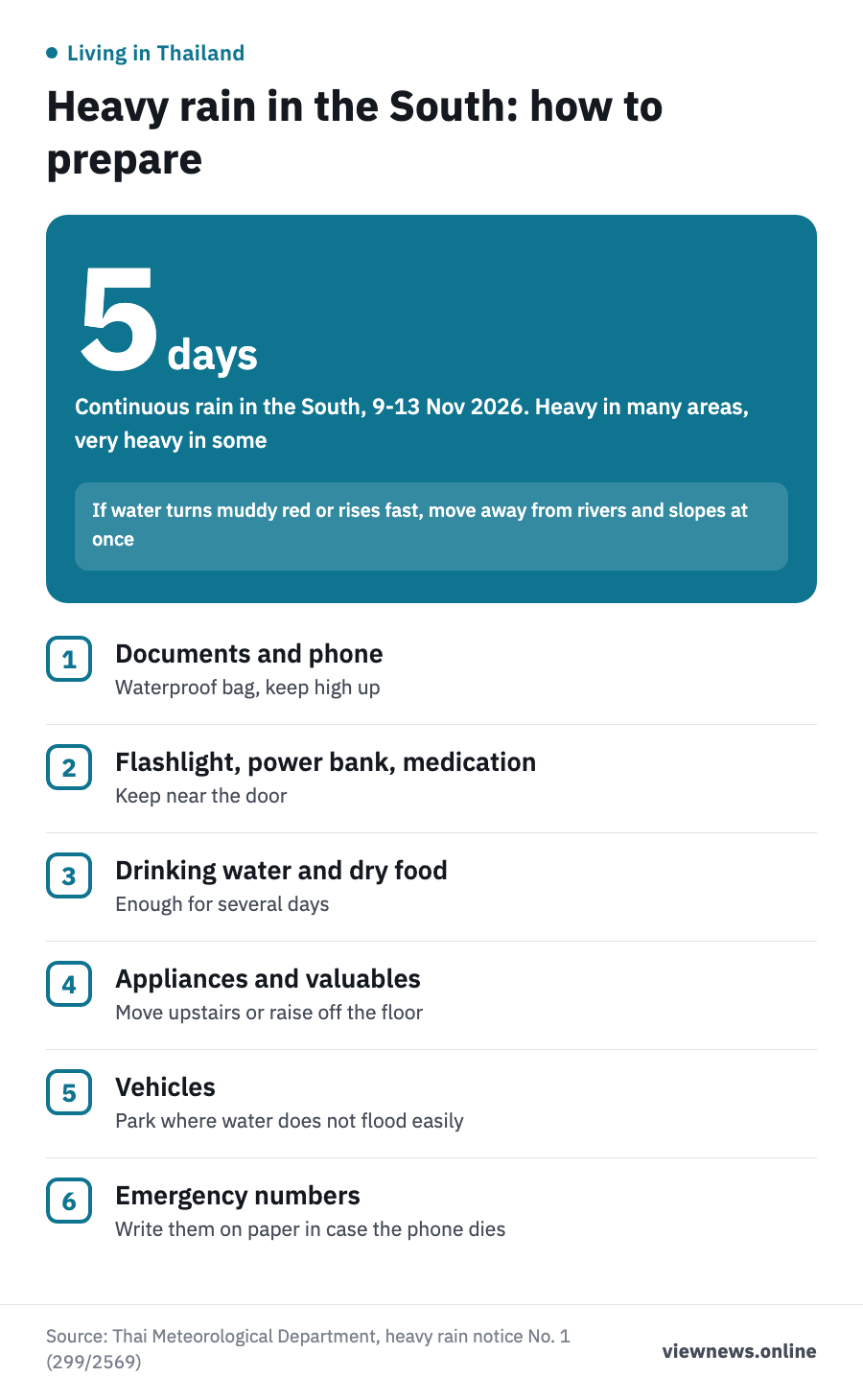
The best time to prepare is before the rain arrives. Gather essentials so you can grab them quickly, and move valuables away from places water could reach. If you already keep an emergency bag, check that everything is there and still works.
- Important documents and phone: put them in a waterproof bag and keep them high up. Passports and visa papers belong here.
- Flashlight, power bank and regular medication: keep them near the door.
- Drinking water and dry food: enough for several days.
- Electrical appliances and valuables: move them to an upper floor or raise them off the ground.
- Vehicles: park where water does not flood easily.
- Emergency numbers: write them on paper in case your phone battery runs out.
While the rain continues, follow the announcements every day. Move belongings from low or waterside areas early if you see the water rising, and decide where you would go if you had to leave. Households with elderly people, small children or bedridden patients should plan ahead, because moving them takes longer.
Agree with the people in your home and your neighbours on a meeting point in case of evacuation, and on who will help older people or children. A short rehearsal before the rain makes decisions faster if the situation changes suddenly. If you are a visitor, ask your hotel or tour operator about local conditions before heading out.
Where to check for the next announcement
This is the first notice of the warning period, so check the TMD's weather warning page at www.tmd.go.th for updates, especially before you travel or move belongings. The page may not be available in English.
The TMD lists a hotline, 1182, on its website. For help during an emergency, see the website of the Department of Disaster Prevention and Mitigation.
Source: Thai Meteorological Department, weather warning notice "Heavy to very heavy rain in the southern region (effective 9-13 November 2026), No. 1 (299/2569)".
This article is adapted from ViewNews' Thai-language report.