Thailand's PM2.5 dust season in 2027 could begin earlier and last longer than in recent years. The Ministry of Natural Resources and Environment met on 5 November 2026 to consider a draft plan to deal with forest fires, haze and dust for 2027. It also set out how it will seek money from the central budget. The plan is still a draft. It has not been approved, and no budget figure has been given.
The warning matters most to anyone living in areas where dust repeatedly exceeds the standard, including foreign residents. That is especially true for households with young children, older people, pregnant women or people with respiratory disease. The authorities say the burning season could start before the end of this year, so there is still time to prepare.
The 2027 dust plan has not been approved
The ministry's meeting considered the draft measures and the approach for requesting money from the central budget. The draft has not been approved and does not state an amount. Readers should not assume the measures are already in force. The agency is preparing a plan and preparing to ask for funds.
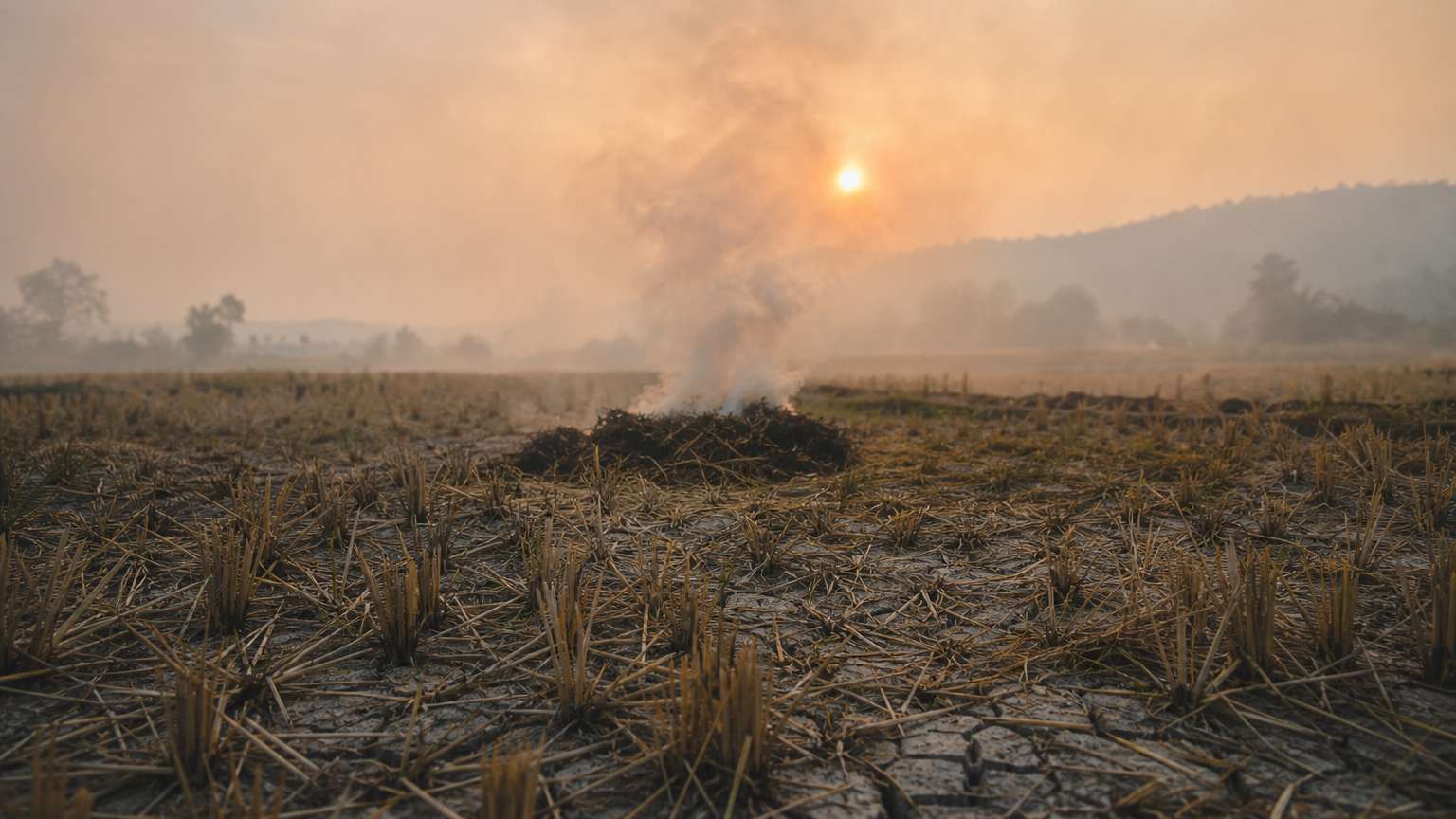
The ministry says the draft shifts from a mainly defensive approach to active prevention and management of pollution sources from the start. The one area it has detailed so far is controlling burning on farmland. That means promoting farming without burning, plowing crop residue back into the soil and turning biomass into products. The ministry has not yet given details on other parts of the draft.
Knowing what is still a draft helps readers plan around reality. Measures that are not yet approved could change before they are used, so households should not wait for them to be announced before preparing.
The burning season may start in late December and run to early May
The Director-General of the Pollution Control Department said on 4 November 2026 that burning patterns have changed. Burning used to begin around February. It will now start in late December or early January and run until early May.
This is a trend the agency is asking people to watch. It does not mean 2027 will definitely be worse than this year. But if the warning proves right, the period to watch for dust will be wider than many people are used to. People in high-dust areas should start preparing before the year ends, rather than waiting for readings to climb early in the new year.
Looking back, the ministry's meeting heard that from 1 November 2025 to 14 October 2026, average PM2.5 nationwide fell by 5 percent, and the number of days above the standard fell. But since early October 2026, dust has begun building up in many areas. The ministry expects Thailand to be affected by El Niño together with the Indian Ocean Dipole (IOD), which would make the weather drier than normal.
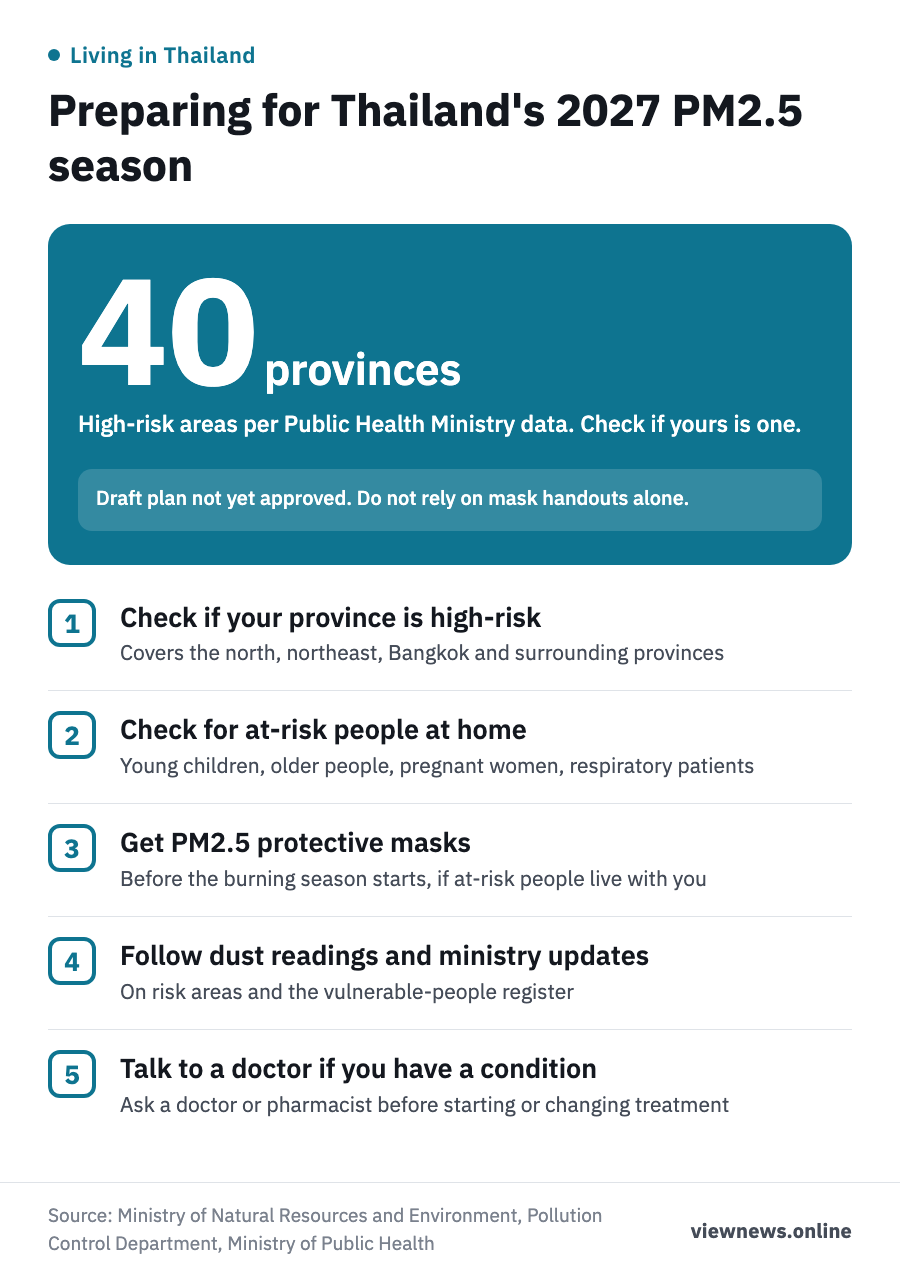
The Ministry of Public Health reported that across 2024 to 2026, more than 60 provinces had 24-hour average PM2.5 above 37.5 micrograms per cubic metre. It classes 40 provinces as high-risk areas. According to the ministry, these high-risk areas cover the north, the northeast, Bangkok and the surrounding provinces.
Central budget requests and the groups most at risk
The ministry said it will prepare to ask for central budget funds for three areas. The first is preventing and controlling forest fires, including operating costs, vehicles, and patrol and firefighting equipment. The second is controlling burning on farmland and creating incentives to stop it. The third is dust protection equipment, such as PM2.5 masks, to be handed out to the public.
The masks are meant to focus on young children, older people, pregnant women and people with respiratory disease. The Ministry of Public Health reported that it is preparing a register of about 16 million vulnerable people. But the central budget request for masks is still a plan, not something approved. Families with members in these groups should not rely on handouts alone.
Here is what readers can do now:
- Check whether your province is among the 40 high-risk provinces.
- Check whether your household includes young children, older people, pregnant women or people with respiratory disease.
- If so, get PM2.5 protective masks before the burning season starts.
- Follow dust readings and Ministry of Public Health announcements on risk areas and the vulnerable-people register.
People with existing health conditions should talk to a doctor or pharmacist about protecting themselves during high-dust periods, before starting or changing any treatment.
Where things stand
Based on the ministry's 5 November 2026 meeting, the matter falls into three categories. The first is what is still a draft: the 2027 measures for forest fires, haze and dust, which are not approved, and the central budget request, which has no stated amount.
The second is what is unclear. It is not known when the draft will go to the Cabinet or how much of the requested money will be granted. The ministry has not yet given details on other parts of the draft.
The third is what is already on the table: the Pollution Control Department's warning that burning may start in late December or early January and run to early May, and the Ministry of Public Health's data on 40 high-risk provinces, which it uses for planning. If the draft is approved or the ministry announces more, readers will be able to see what has changed.
Source: Ministry of Natural Resources and Environment (meeting on PM2.5 preparedness and the draft 2027 measures), Pollution Control Department (statement by the Director-General), Ministry of Public Health (data on risk areas and the vulnerable-people register). This article is adapted from ViewNews' Thai-language report.