Thailand ran a trade deficit with China of 3,105,598 million baht, or about 3.1 trillion baht, in fiscal year 2026 (October 2025 to September 2026), according to the Customs Department's information system. Chinese Premier Li Qiang is due to make an official visit to Thailand on 13-14 November 2026. Deputy Prime Minister and Foreign Minister Sihasak Phuangketkeow told reporters at Government House on 10 November that Thailand will raise the trade deficit during the visit.
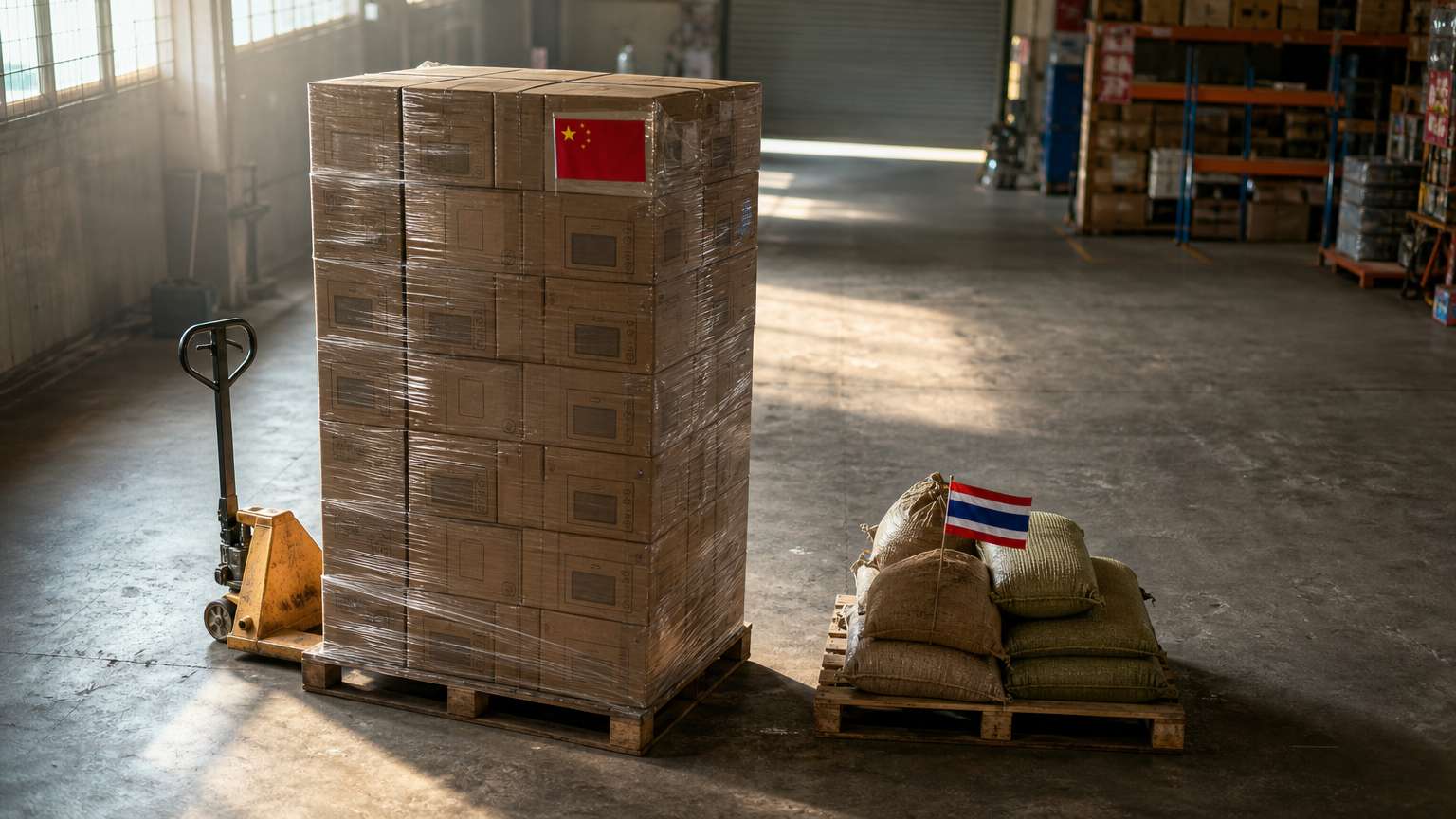
Thailand imported about 3.2 times more goods from China than it exported there. What the talks actually produce will only be known after the visit ends.
What Thailand plans to discuss with the Chinese premier
The foreign minister said Thailand will discuss building confidence in tourism and safety. The agenda also includes a crackdown on online crime and scammers.
Next are investment cooperation and the trade deficit, which the minister said Thailand will raise directly. Cooperation on electric vehicles (EVs) and new industries follows.
Another item is a "2+2" framework in 2027, a joint meeting of the foreign and defense sides of the two countries. Only the name of the framework and the year have been given. There are no details on what would be discussed.
The Cabinet also had several China-related documents on its agenda the same day. They include an outcome document for the Chinese premier's official visit, a memorandum of understanding (MOU) on the automotive industry, and an MOU on vocational education cooperation. The contents have not been released, so it is not clear what agreements will emerge.
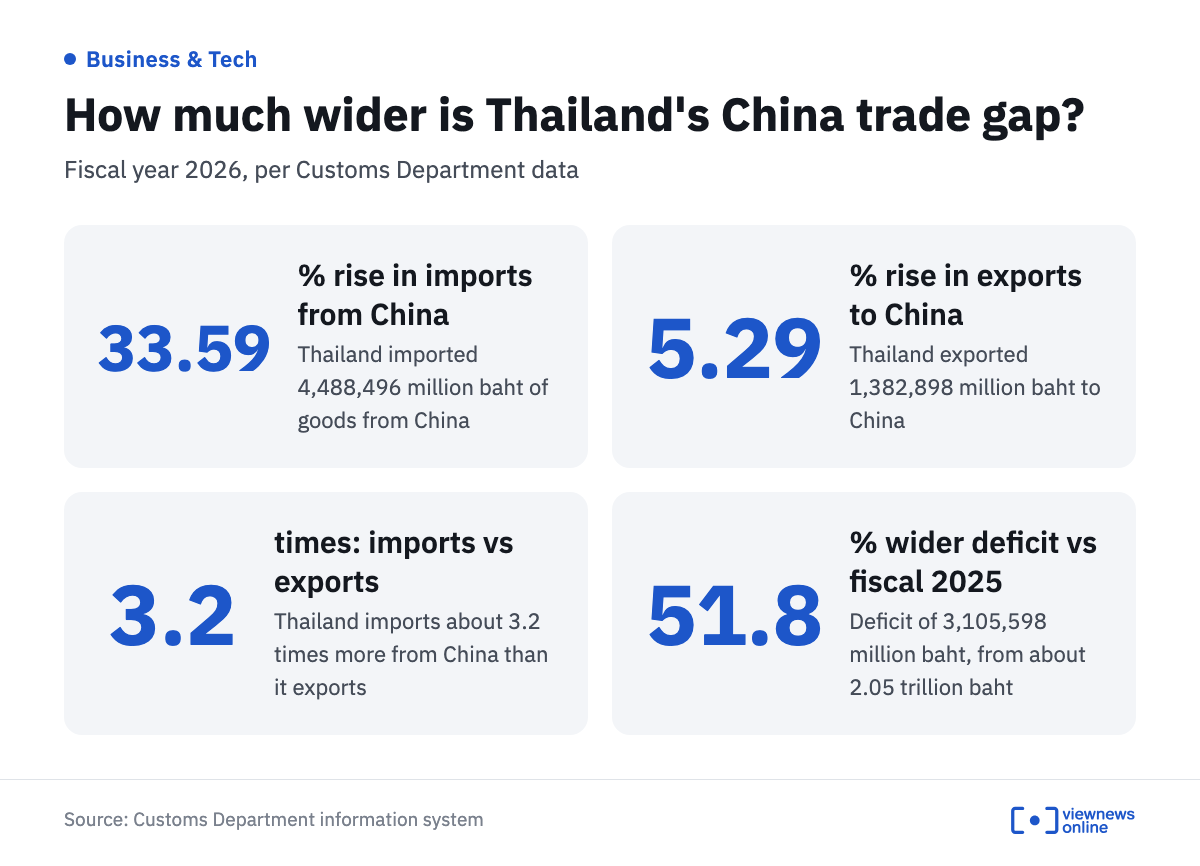
Thailand's trade gap with China widened
Customs Department data show that in fiscal 2026 Thailand imported 4,488,496 million baht of goods from China, up 33.59%. Exports to China were 1,382,898 million baht, up 5.29%. Total two-way trade came to 5,871,394 million baht, and Thailand was on the deficit side by 3,105,598 million baht.
The deficit is about 51.8% larger than in fiscal 2025, when it was about 2.05 trillion baht. That is an increase of roughly 1 trillion baht in one year. Imports grew about 6 times faster than exports (33.59% against 5.29%), so the gap between the two sides widened sharply.
The same data show China is Thailand's number 1 source of imports, at about 31.5% of all imports. On the export side, China is the number 2 market, at about 11.1% of all exports.
Most of what Thailand buys from China is IT goods and electronic components. Examples include communications equipment and parts at 503,606 million baht, electronic integrated circuits at 171,696 million baht, and printed circuit boards at 134,770 million baht. Thailand's exports to China are mainly farm goods and raw materials, such as fresh fruit at 165,564 million baht, synthetic rubber at 118,030 million baht, and natural rubber at 52,490 million baht.
Who the figures affect
Exporters of farm goods and raw materials are on the export side, since these are the main products Thailand sends to China. The 5.29% growth covers all goods shipped to China, not individual products. Each exporter needs to check the figures for their own product.
Another group is importers of IT goods and electronic components, the largest category of imports from China in the customs data. The 33.59% rise in imports from China is also an overall figure, not a product-level one.
On EVs and tourism, the foreign minister said only that they will be discussed. No proposal details have been released. It is not yet possible to say how the talks might affect investment, EV prices or tourist numbers. Anyone with a stake should wait for official information after the visit.
What to watch next
No results from the talks have been announced yet. There are only the agenda items the foreign minister described and the list of documents sent to the Cabinet.
Three things are worth following: the content and outcome of the documents put to the Cabinet, statements after the talks on trade balance and investment, and the next monthly trade figures from the Customs Department, which will show whether the gap between imports and exports is still widening. One visit does not guarantee the numbers will change. Real effects will show up in later data.
Source: Statements by the Deputy Prime Minister and Foreign Minister at Government House, Thailand-China trade data from the Customs Department's information system, and the Cabinet meeting agenda. This article is adapted from ViewNews' Thai-language report.