Thailand's Department of Disease Control has asked the public to watch for four groups of winter illnesses and health hazards in 2026: respiratory infections, food and water-borne diseases, insect-borne diseases, and cold-weather hazards. The department issued its announcement on 10 November 2026. It says anyone can fall ill, but young children, older people and people with chronic conditions face the highest risk. The warning comes as the Thai Meteorological Department forecasts cooler weather from 18 to 22 November 2026.
If you live with young children or older relatives, or take daily medication, the details below show which illnesses to watch for, which symptoms call for rest, and when to see a doctor.
The four groups of winter illness
Dr Montien Kanasawat, director-general of the Department of Disease Control, said people of all ages are more likely to get sick in winter. The department issued its announcement on preventing winter diseases and health hazards in Thailand for 2026 so the public can understand the risks and prepare.
The first group is respiratory infections: influenza, pneumonia, RSV (respiratory syncytial virus) and COVID-19. The second is food and water-borne disease, which in the announcement means acute diarrhoea. The third is insect-borne disease: malaria and scrub typhus. The fourth is cold-related health hazards, including deaths linked to cold weather and poisoning from gas water heaters.
The Thai Meteorological Department's Announcement No. 1 (309/2569) says temperatures will fall by 2 to 4 degrees Celsius in the Northeast from 18 to 22 November. The North, the Central region, Bangkok and surrounding provinces, and the East will see drops of 1 to 3 degrees Celsius.
Respiratory illness and diarrhoea: how to protect yourself
The announcement says cool, dry air helps respiratory infections spread. Main symptoms are fever, cough, sore throat, runny nose, headache and body aches. Some patients have breathing difficulty or develop pneumonia. Young children, older people and those with chronic conditions need extra care.
The department recommends four steps:
- Wear a face mask in crowded or high-risk places.
- Wash your hands often with soap and water or alcohol gel.
- Avoid close contact with people who are ill.
- Get vaccinated as your doctor advises.
If you are sick, rest at home and keep away from others so the infection does not spread to your family or workplace.
Acute diarrhoea can still occur in cool weather. It comes from food or water contaminated with germs. Symptoms are loose or watery stools, stomach pain, nausea and vomiting. Heavy loss of fluids and salts can lead to severe dehydration.
The department asks people to follow a three-part rule, in Thai "suk, ron, sa-at": food that is freshly cooked, served hot and clean. In practice, drink clean water, use a serving spoon, wash your hands before eating and after using the toilet, and avoid raw or undercooked food.
Malaria and scrub typhus: if you hike, camp or farm
Malaria spreads through bites from infected Anopheles mosquitoes. The risk is mainly for people who travel or stay overnight in forests and forest edges. Symptoms are fever, chills, headache and body aches. Anyone planning to camp or visit forests in the cool season should know this.
Scrub typhus spreads through bites from infected mite larvae. It is usually found in forests, scrub and farmland. Patients have a high fever, headache and body aches, and may have a sore resembling a cigarette burn where they were bitten. The department advises the following when entering risk areas:
- Wear long sleeves, long trousers, socks and closed shoes.
- Use mosquito or insect repellent.
- Sleep under a mosquito net when staying overnight.
- Shower and clean your body soon after leaving the area.
If you develop a fever after returning from a risk area, see a doctor promptly and tell them where you have been so the right tests can be done. Also see a doctor if you find an unusual sore after being in a forest.
Cold weather and gas water heaters
The fourth group in the announcement is deaths linked to cold weather. The department advises dressing for the weather, eating foods rich in vitamin C such as oranges, guava and tomatoes, getting enough sleep, avoiding long periods in cold places, and avoiding all alcohol, which raises the risk of dying in cold conditions.
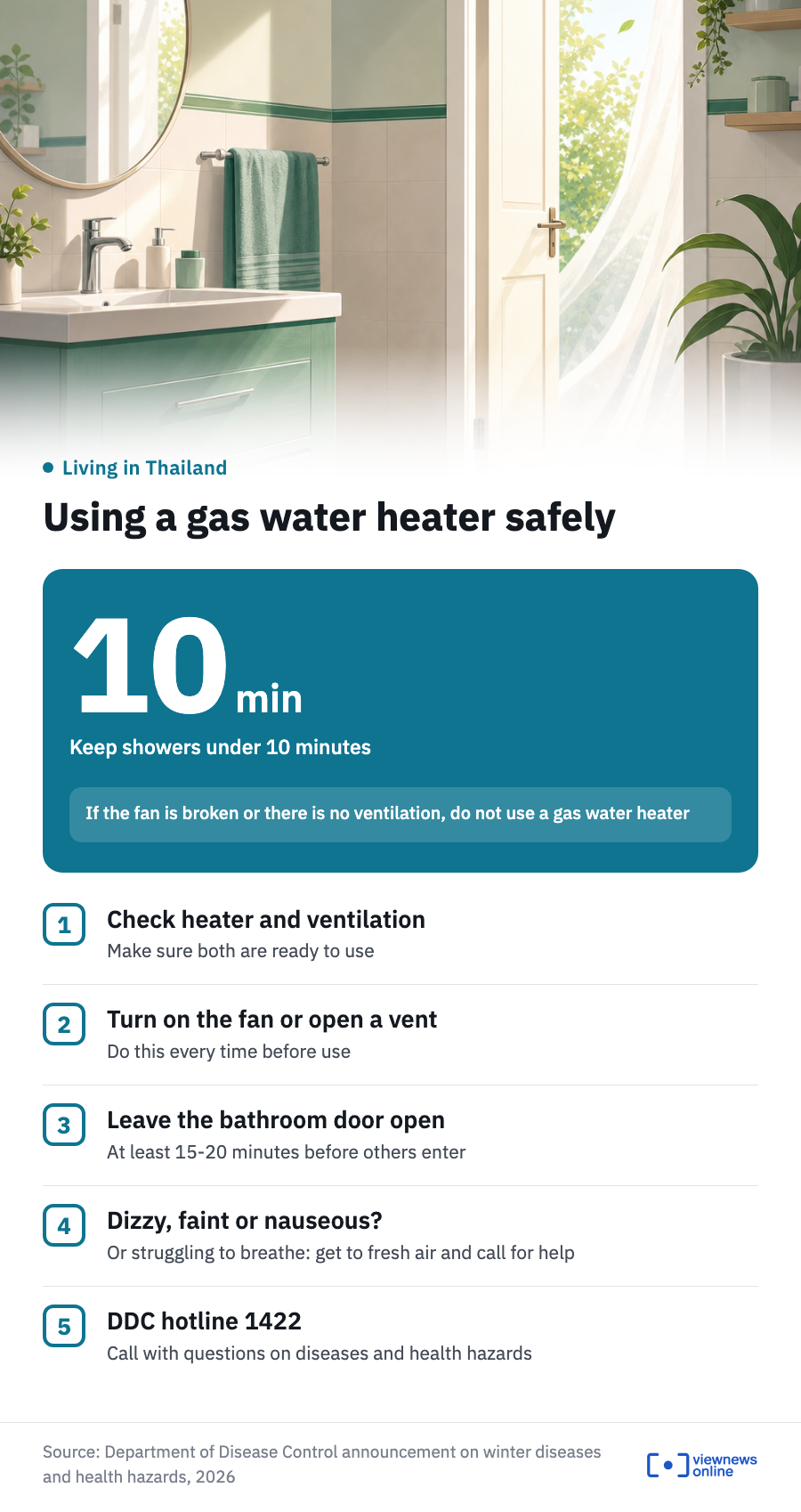
The announcement also names poisoning from gas water heaters as a winter hazard. If your home or rental uses one, the department says to check the heater and the ventilation before use and to turn on the fan or open a vent every time. If the bathroom has no ventilation or the fan does not work, do not use a gas water heater.
On timing, the department advises showers of no more than 10 minutes. After you finish, leave the bathroom door open for at least 15 to 20 minutes before anyone else goes in. If you feel dizzy, faint or nauseous, or have trouble breathing, get out to a well-ventilated area and ask for help quickly. For questions about diseases and health hazards, you can call the Department of Disease Control hotline on 1422.
For high-risk groups, the announcement says young children, older people and people with chronic conditions should take extra care. They and their carers should get vaccinated as their doctor advises, wear a mask in crowded places and keep warm. Seek care and report your travel history if you have a fever after a forest trip or find an unusual sore.
These are general guidelines. People with chronic conditions or ongoing treatment should talk to a doctor or pharmacist before starting or changing treatment. Seek medical care for severe symptoms such as breathlessness or high fever.
Source: Department of Disease Control announcement on preventing diseases and health hazards in the winter season in Thailand, 2026, and Thai Meteorological Department Announcement No. 1 (309/2569), dated 15 November 2026. This article is adapted from ViewNews' Thai-language report.