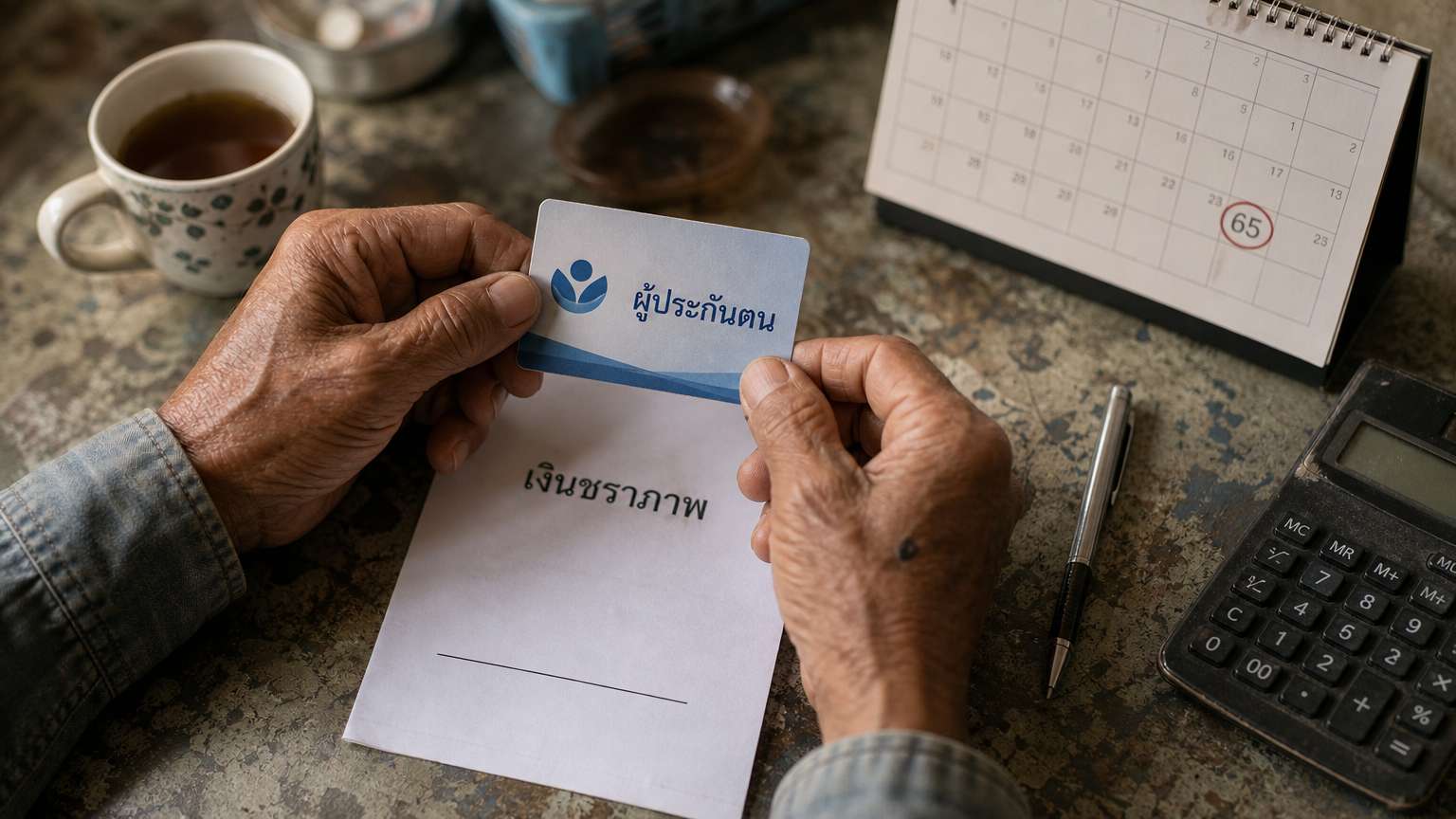
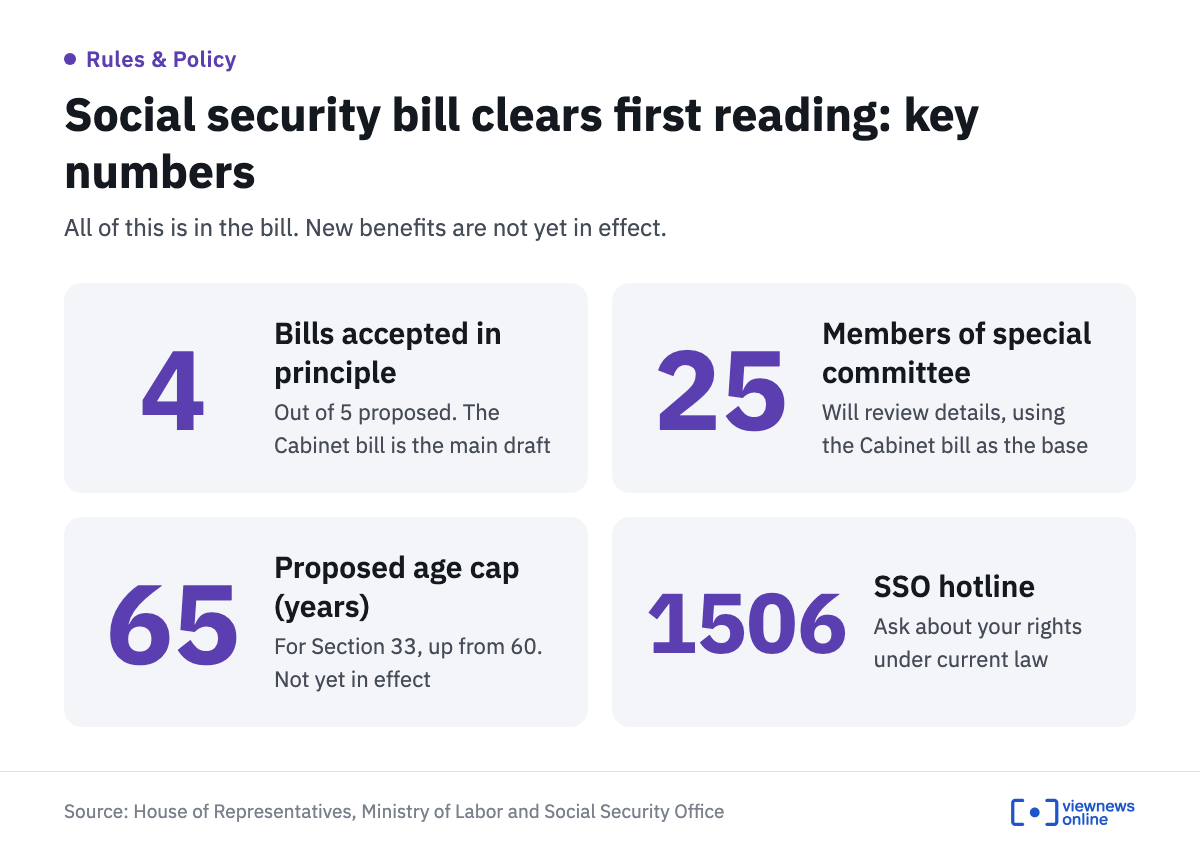
Insured workers in Thailand cannot yet use any new benefits under the proposed Social Security Act, because the bill has only passed its first reading. On 18 November 2026, the House of Representatives voted to accept in principle four of the five social security bills put forward. It named the Cabinet's bill as the main draft and set up a 25-member special committee to work through the details.
How the House voted on the five bills
Five bills went to the first reading: one from the Cabinet and four from members of parliament. The House voted on each separately. The Cabinet bill was accepted in principle by 436 votes to 0, with 1 abstention. One MP's bill passed 435 to 0, another 434 to 0, and a third 432 to 0.
The fourth MP's bill was not accepted. It was rejected by 302 votes against and 133 in favor, with 1 abstention. The special committee will use the Cabinet bill as its base text. It will amend the details together with the other bills that passed.
What the Cabinet bill proposes for insured workers
The Labor Minister told the House that the Cabinet bill would raise the age cap for Section 33 insured persons from 60 to 65. It would also let people keep paying contributions after their insured status ends. The 60 figure is the existing cap, as described in the bill. The 65 figure is only a proposal and has no effect until the law passes every stage.
The bill also contains three old-age benefit options:
- Choice: insured persons who qualify for a pension could choose between a lump-sum payment and a monthly pension.
- Early withdrawal: after a disaster, insured persons could take part of their old-age savings early. The amount would be capped at 30 percent and at 2 times the maximum wage base.
- Borrowing: insured persons could pledge part of the money as collateral with financial institutions that have an agreement with the Social Security Office (SSO).
The Labor Minister said these mechanisms would not affect the stability of the fund. That is the minister's statement to the House. The special committee has not yet reached any conclusion on it.
The other MPs' bills that passed propose restructuring the Social Security board, setting up a committee to audit how the fund is spent, and bringing platform workers into the system. These are proposals in bills accepted in principle. They are not certain to become law, because the committee will consider all the bills together and may change them.
Next steps and what remains uncertain
Accepting a bill in principle means only that the House agrees with its general direction. The law has not been changed. The 25-member special committee will now examine the details. The bill must then pass the second and third readings in the House and be considered by the Senate before it becomes law. No timeline has been confirmed, and there is no effective date.
So the age cap of 65 for Section 33 insured persons, the choice between a lump sum and a pension, partial early withdrawal after a disaster, and using old-age savings as loan collateral are all still content of the bill. Anyone planning retirement or deciding how to take old-age benefits should keep relying on the law now in force. They should not make decisions based on rights that have not taken effect.
Several points will stay open until the committee finishes. One is whether the old-age savings provisions remain in the main bill. Another is how the proposals on the board structure and platform workers are merged into it.
What insured workers can do now
There is nothing special to do for the new benefits, since no one can apply for them yet. It is still useful to know your rights under current law, so you can compare them as the bill moves forward.
- Use the rights available under the law now in force. Do not plan retirement or old-age payouts around benefits that are only in the bill.
- Call the SSO hotline at 1506 to ask about the conditions that apply to you.
- Ask through the SSO live chat at www.sso1506.com/ssolivechat.
- Check announcements and news from the SSO at www.sso.go.th, and follow meeting information on the parliament website.
After the committee finishes and the bill reaches its second and third readings, the content may differ from what the minister told the House. Wait for the committee's revised draft, and for SSO announcements after the law passes every stage, before making major decisions about your money.
Source: the House of Representatives, the Ministry of Labor and the Social Security Office, on the first-reading debate of the Social Security Act bills.
This article is adapted from ViewNews' Thai-language report.