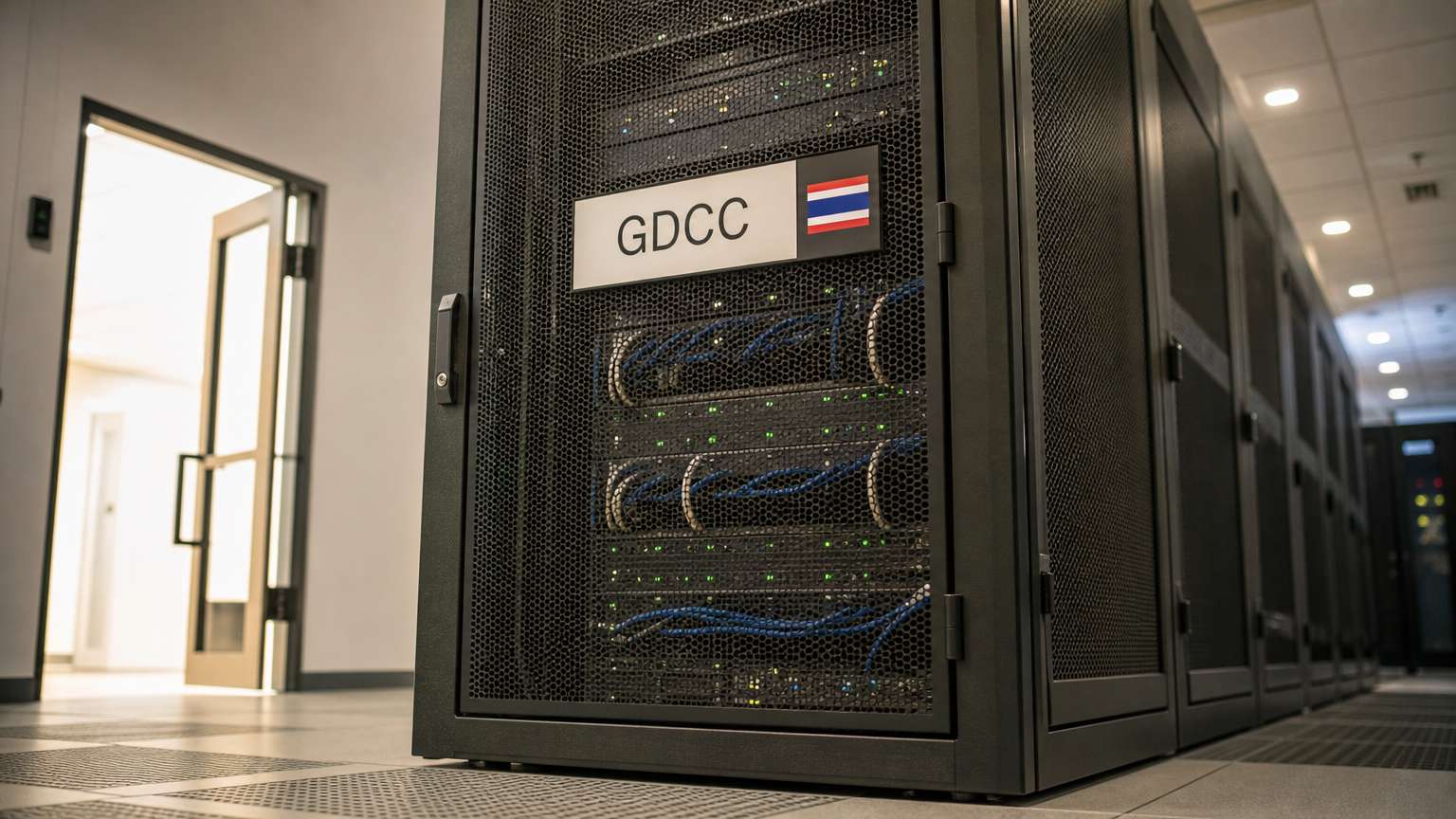
Thailand's government agencies must use the central government cloud, known as GDCC, as their first choice from fiscal year 2028 under new National Cloud guidelines that also matter to companies selling IT systems to the state. The Office of the National Digital Economy and Society Commission (ONDE) will procure the service, and National Telecom Public Company Limited (NT) will provide it. Budget requests for cloud services and servers filed outside the integrated digital government work plan will not be funded.
The Cabinet approved the approach on 24 November 2026 for fiscal years 2028-2030. The name National Cloud refers to guidelines for integrating Thailand's digital infrastructure.
What the National Cloud guidelines cover
Fiscal year 2028 begins on 1 October 2027. Under the Budget Procedures Act of 2018, a fiscal year ends on 30 September of the following calendar year and is named after that later year.
The Ministry of Digital Economy and Society (MDES) proposed the measure. The Cabinet meeting summary lists it as guidelines for buying, hiring or renting cloud services for fiscal years 2028-2030. GDCC stands for Government Data Center and Cloud services.
Agencies need to prepare before the new fiscal year starts because the rules apply from the budget request stage. At the planning stage, they should check which systems already use cloud services, which need more servers, and whether GDCC offers the services they require.
Cloud and server budgets must go through MDES
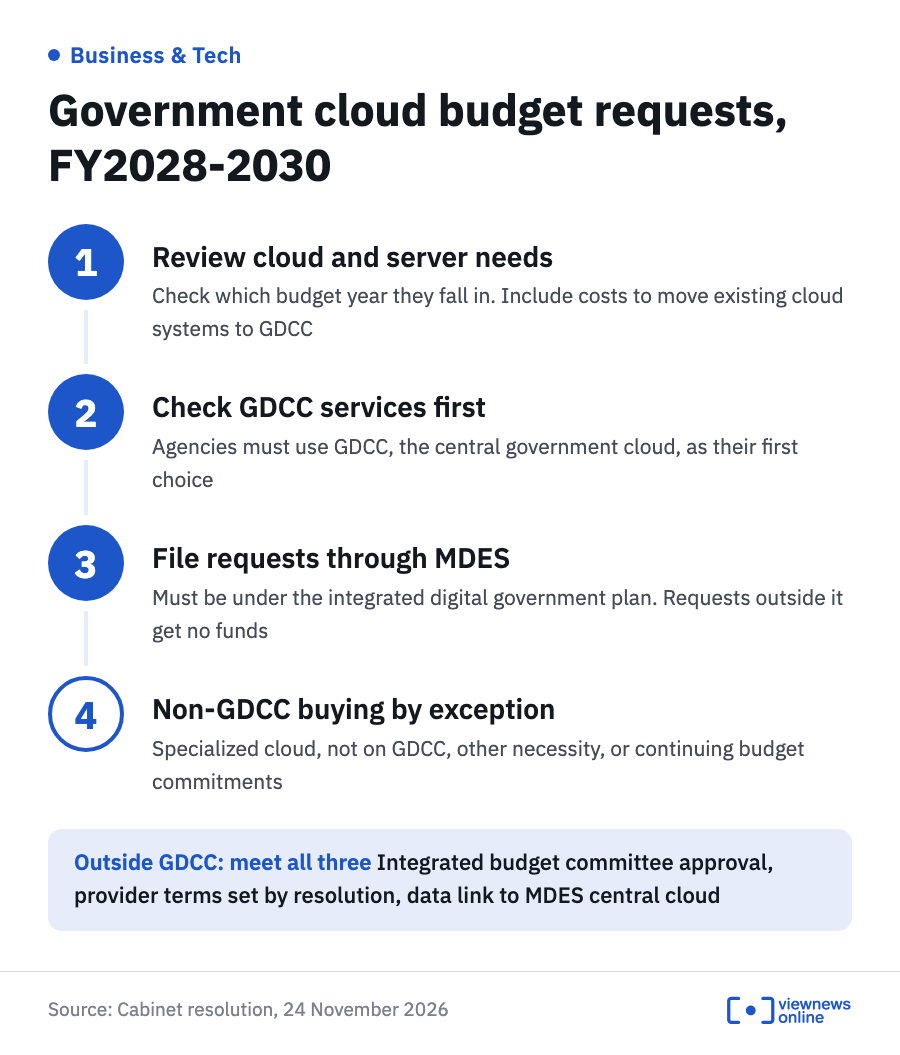
Agencies that need cloud services or servers must file budget requests under the integrated digital government work plan and submit them through MDES. Requests outside this plan will not receive funding. The Budget Bureau will allocate money based on necessity, also taking into account coverage from all funding sources.
Agencies with existing cloud systems must include the cost of moving them to GDCC in their requests. A request that covers only service fees, without the migration work, will not fully meet the guidelines.
Before filing, agencies and the vendors working with them can check the following:
- Identify which items are cloud services or servers, and which year's budget request they fall in.
- Check whether GDCC offers the required service, since it must be the first choice.
- Place the request under the integrated digital government work plan and submit it through MDES.
- For existing cloud systems, include the cost of migrating to GDCC.
- If buying from another source, state the grounds for an exception and seek approval.
- Review the terms set for service providers and the plan for linking data to the central system.
Vendors should ask government clients early on whether a project includes cloud services or servers, where the money comes from, and whether GDCC services have been checked. A project to buy servers for use within an agency must also follow the rules, even if it is not called a cloud project. Foreign suppliers should check with the agency concerned about their eligibility.
When agencies can go outside GDCC
The guidelines allow procurement outside GDCC when an agency needs a specialized cloud service, the required service is not available on GDCC, there is another necessity, or the item is already tied to a continuing budget commitment.
Falling into one of these categories is not enough on its own. The procurement must also meet three conditions:
- An exemption must be approved by the committee that prepares integrated expenditure budgets.
- It must use the service provider terms and conditions set under a resolution of the National Digital Economy and Society Commission at its meeting No. 2/2024.
- Data must be linked to the MDES central cloud management system.
These provider terms will apply for the time being until a new version is issued. Companies that want to serve the government should compare their services against the current terms and watch for changes in the new version.
State agencies that do not use the national budget are also affected. If they procure cloud services themselves, they must apply the same service provider standards. They should also link their data to the MDES central cloud management system.
Budget and data protection details still unclear
The details released so far give no total budget or savings target and do not mention personal data protection requirements.
They also leave open how much migration will cost in total, which systems holding public data will be involved, how agencies will cope if the central system fails, and how they could switch providers later.
Still to come are the official Cabinet resolution, new service provider terms and cost figures. Agencies should check their budget requests against official documents before confirming items. Vendors helping to prepare projects should review the same details with their clients before submitting proposals.
Source: The Thai Cabinet resolution, the government's summary of the Cabinet meeting, and the Budget Procedures Act of 2018. This article is adapted from ViewNews' Thai-language report.