Thailand's Food and Drug Administration (FDA) has found banned substances in four seized whitening creams, including two that carry a cosmetic notification number on the label. Supattra Boonserm, the FDA's secretary-general, announced the test results on 7 November 2026 and told anyone using these creams to stop immediately.
What the FDA found
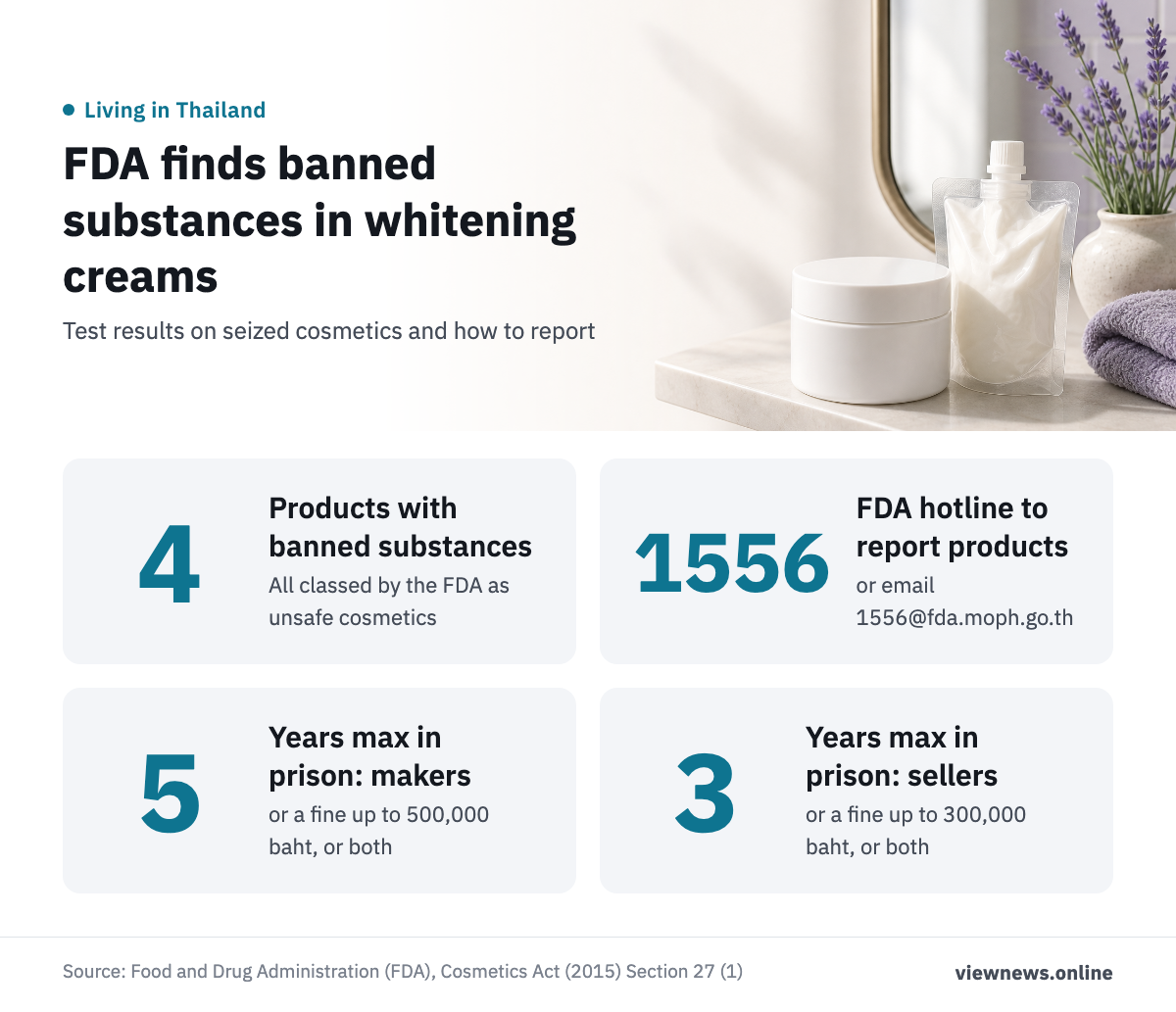
The FDA worked with the Consumer Protection Police Division to search two suspected locations in late July. Officers seized products and sent them to the Department of Medical Sciences for testing. All four products contained banned substances, and the FDA classed all four as unsafe cosmetics.
- Albotross Whitening Cream 3 (Thai name: แอลโบทรอส ไวท์เทนนิ่ง ครีม 3): notification number 12-1-6900003013, no production or expiry date. Contains hydroquinone.
- Albotross Night Cream 4 (Thai name: แอลโบทรอส ไนท์ ครีม 4): notification number 12-1-6900003122, no production or expiry date. Contains hydroquinone and retinoic acid.
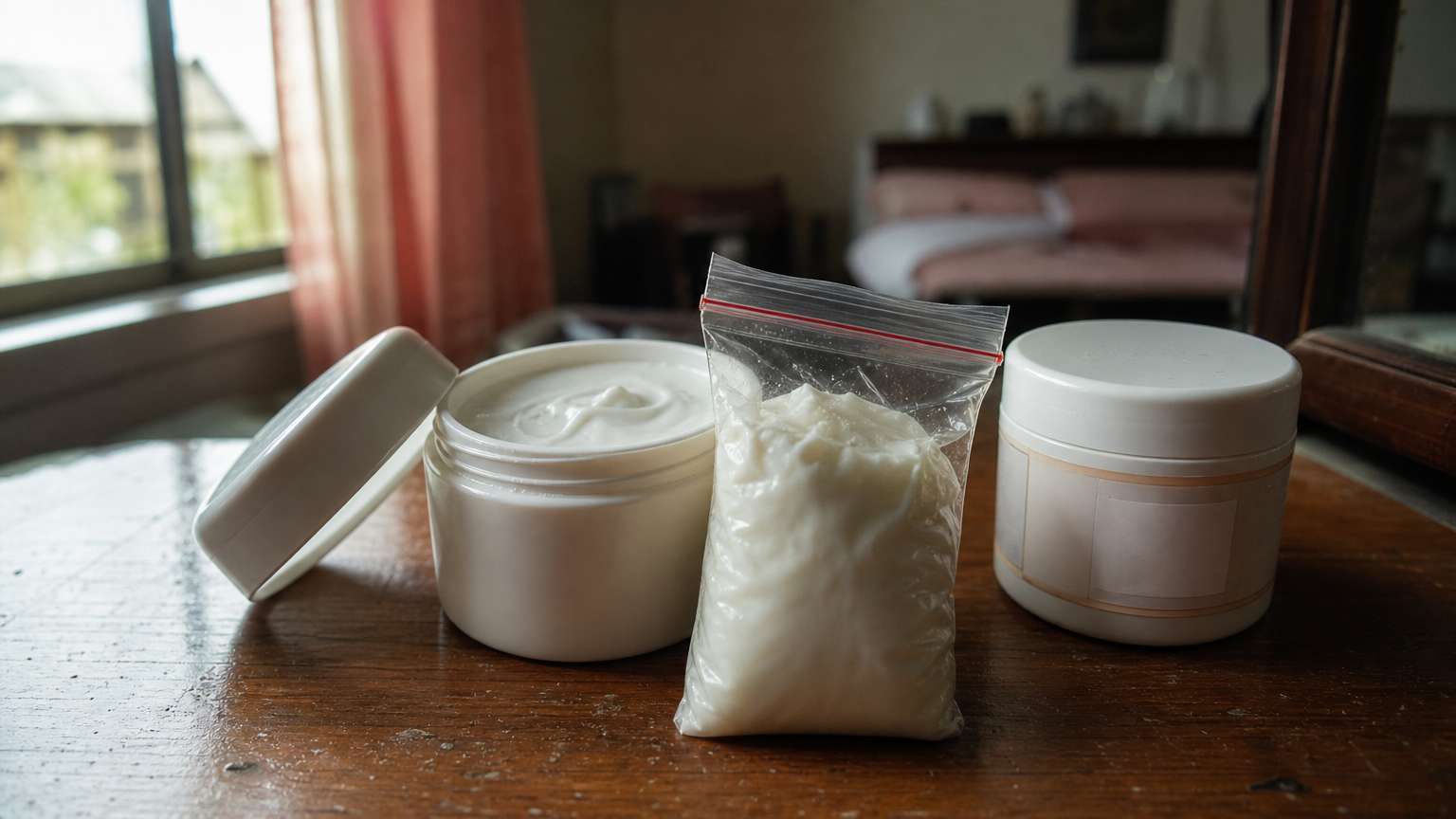
- ALBOTROSS WHITENING CREAM 3: sold in a cloudy white plastic jar with no notification number. Contains hydroquinone.
- A white cream in a clear plastic bag with no label at all. Contains hydroquinone.
The FDA did not disclose how much of each substance was present, so the concentration in each product is unknown.
A notification number is not a guarantee of safety
The test results show that a product with a notification number on its label can still contain banned substances. That does not mean every product with a number is unsafe. The number is a starting point, and you need to check the rest of the label too.
The FDA advises buying from shops with a clear, traceable location, and says products should carry a complete Thai-language label.
Health risks
According to the FDA, cosmetics containing hydroquinone can cause allergic reactions, irritation, inflammation, redness, burning, red bumps and darkening of the skin where applied. Long-term use may cause permanent melasma (dark patches) and may raise the risk of skin cancer.
Retinoic acid can cause redness, severe burning and irritation. It also makes skin more sensitive to light and may harm an unborn baby. Pregnant women should be especially careful and should avoid creams of unknown origin or ingredients.
If you have used these creams and have symptoms such as red, burning or irritated skin, see a doctor. Treatment has to be assessed by a doctor or pharmacist for each person. If you are already using a melasma or whitening cream, talk to a doctor or pharmacist before starting or changing your skincare routine.
What to check before buying a cream
The checklist below is our general advice and does not come from the FDA.
- A complete, readable label (the FDA says in Thai)
- A notification number on the label
- Production and expiry dates
- An ingredient list that does not include banned substances such as hydroquinone and retinoic acid
- The name of a manufacturer and seller you can contact
- A shop with a clear location, not cream sold in an unlabelled jar or bag
If a cream fails any of these checks, hold off using it and check with the FDA. The unlabelled cream in the clear bag in this case fails the first check.
Reporting and legal status
To report a suspicious cream, call the FDA hotline on 1556 or email 1556@fda.moph.go.th. We have not confirmed whether the hotline offers service in English.
The FDA sent its test results to the police division in early October. The case is with investigators, and no one has been found guilty. The only confirmed facts are the test results for these four products.
Under Section 27 (1) of the Cosmetics Act (2015), a person who makes unsafe cosmetics for sale faces up to 5 years in prison, a fine of up to 500,000 baht, or both. A seller or distributor faces up to 3 years in prison, a fine of up to 300,000 baht, or both.
Source: Food and Drug Administration (FDA), announcement of 7 November 2026. This article is adapted from ViewNews' Thai-language report.