Thailand's Cabinet has approved US$375,900 in funding from China for two projects, one of which is a study of how to recycle electric vehicle (EV) batteries, solar panels and electronic waste. The Industry Ministry will receive the money. The recycling project is a survey and a regulatory framework exercise, according to documents released by the Deputy Spokesperson of the Prime Minister's Office. A Chonburi MP has since raised concerns that it could make Thailand a dumping ground for foreign hazardous waste. Those concerns are a policy view, not a finding. Residents near factories and warehouses may want to know how to report suspect waste.
Two projects worth US$375,900
The Cabinet approved on 27 October 2026 a draft agreement between the Ministry of Industry and the Chinese Embassy in Thailand. It falls under the 2025 Lancang-Mekong Cooperation Special Fund. The Permanent Secretary of the Ministry of Industry, or a delegate, will sign. Each of the two projects runs for 18 months.
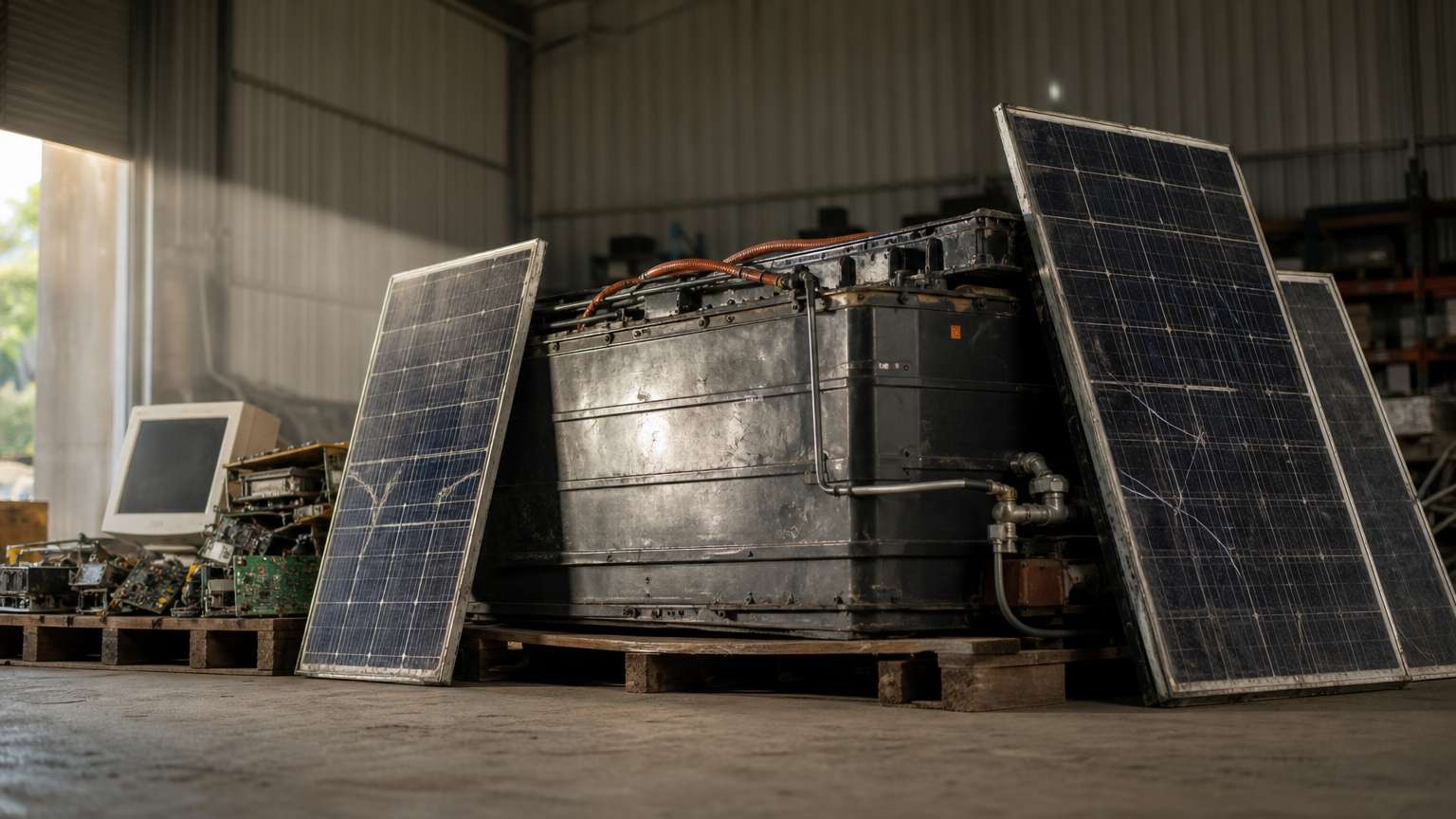
The first project is about building recycling capacity to support a circular economy and green industry across the Mekong-Lancang countries and China. The Office of Industrial Economics will run it with US$132,900 (up to 983,500 yuan). It aims to survey and strengthen the handling and recycling of car batteries, solar panels and electronic waste. It will also develop a regulatory framework and policy guidelines.
The second project, Pathway to Net Zero, covers industries in Cambodia, Laos, Myanmar, Vietnam and Thailand. The ISO Certification Institute will run it with US$243,000 (up to 1,798,200 yuan). It is not directly about waste management.
The Deputy Spokesperson said the projects will help Thai industry prepare for a low-carbon transition. Building recycling know-how and oversight should allow more materials to be reused and reduce waste. The government also says the work fits Thailand's BCG Economy Model, its bio-circular-green development strategy.
The MP's concerns and what is still unknown
On 1 November 2026, Narumas Piambandit, a Chonburi MP from the People's Party, said the MP does not dispute the importance of recycling and that Thailand needs an effective system. Narumas argued, however, that building a regional recycling industry without a policy guarantee that raw materials come only from inside Thailand could make the country a destination for hazardous foreign waste.
Narumas also questioned whether inspection systems are ready, citing figures saying the Customs Department seized 10.29 million kilograms of hazardous waste and electronic waste in fiscal year 2026, and sent 5.29 million kilograms back to the countries of origin. These are the MP's figures and have not been checked against Customs Department records. The MP called on the government to explain the matter publicly.
The project's stated aim is to survey, build capacity and develop a regulatory framework. The MP's concern is a policy warning about where it might lead. No document or evidence confirms that waste imports will happen, or that they will not.
Several questions remain unanswered. It is not known whether the framework will address where raw materials come from, when the survey results will be published, or who will check the project's work.
Why the rules matter
The first reason is volume. The Deputy Spokesperson said waste from EV batteries, solar panels and electronics is likely to grow as clean energy technology expands. The government argues that knowledge and oversight should be in place before that happens. Narumas also said domestic waste from EV batteries and solar panels is rising.
The second reason is what these items contain. Narumas said batteries and solar panels contain heavy metals and hazardous chemicals, and pointed in particular to heavy metal risks near the Laem Chabang port area in Chonburi. Both points make clear rules for storing, transporting and recycling these materials an issue that needs answers as volumes grow.
How to report suspect industrial waste
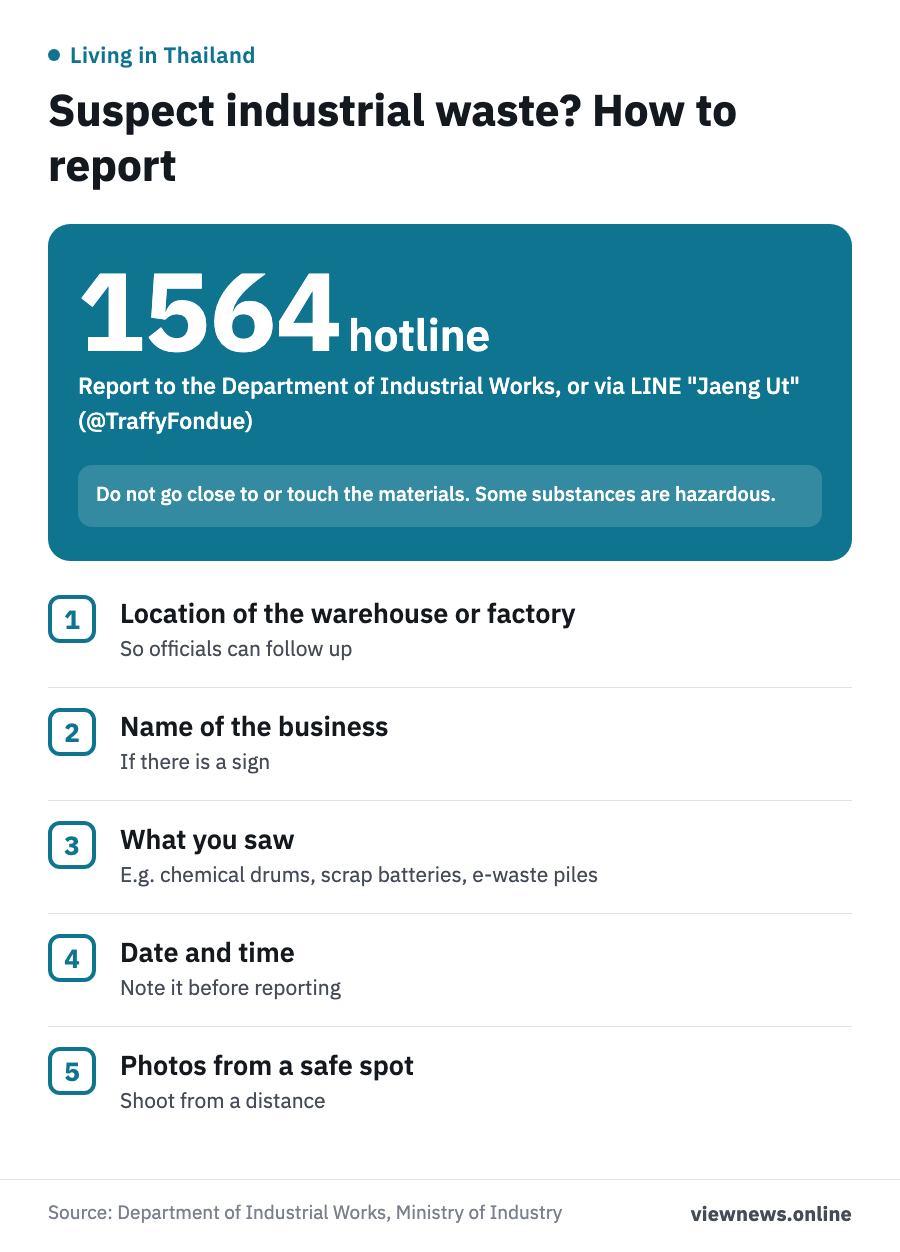
Anyone who finds a warehouse or factory that may be storing industrial waste can contact the Department of Industrial Works (DIW). The options are the 1564 hotline, or the LINE account "Jaeng Ut" (แจ้งอุต, LINE ID @TraffyFondue). The Ministry of Industry launched the LINE channel on 30 January 2025. Reporters can track the status of their report. The department's office is at 75/6 Rama VI Road, Ratchathewi District, Bangkok 10400. Contact numbers and channels can change, so check diw.go.th before reporting.
It is not confirmed whether English is available on the hotline or the LINE channel. If you do not speak Thai, consider asking a Thai-speaking friend or colleague to help.
When you report, have this information ready so officials can follow up:
- The location of the warehouse or factory
- The name of the business, if there is a sign
- What you saw, such as chemical drums, scrap batteries or piles of electronic waste
- The date and time you saw it
- Photos taken from a safe spot
Do not go close to the materials or touch them, because some substances are hazardous.
Source: Cabinet resolution of 27 October 2026 as released by the Deputy Spokesperson of the Prime Minister's Office; statement by Narumas Piambandit, MP for Chonburi (People's Party), on 1 November 2026; Department of Industrial Works contact and reporting information.
This article is adapted from ViewNews' Thai-language report.