Health plans advertised as full coverage may not cover what the ad suggests. On 29 October 2026, the US Federal Trade Commission (FTC) sent warning letters to 25 companies that market health plans or generate sales leads for them. The letters ask the companies to review ads that could mislead consumers about what a plan covers. For anyone in Thailand comparing health or overseas travel insurance online, the warning works as a checklist.
The case concerns the US market during its open enrollment period, and FTC rules do not bind companies in Thailand. The FTC has not accused any company of wrongdoing, and the report does not say the same sales tactics are used in Thailand. But the kinds of advertising the FTC flagged can be compared with quotes you may see here.
FTC sends warning letters to 25 companies
The letters went to companies that sell health plans or generate leads, meaning lists of interested people passed to sellers. The plans include coverage sold through the Affordable Care Act (ACA) Marketplace, limited indemnity plans (the FTC's term) and medical discount programs. The FTC did not name the companies.
The letters do not say any recipient broke the law. The FTC asked the companies to review their own ads for compliance and said it expects to send more letters over time. Christopher Mufarrige, director of the FTC's Bureau of Consumer Protection, said 'open enrollment is not an invitation to misrepresent what their plans actually cover.'
The FTC listed four kinds of conduct that may be illegal:
- Misstating a plan's benefits or limits
- Presenting a plan as primary health insurance or equivalent coverage when it is not
- Misstating costs
- Promising gifts, cash back or other incentives that are not real
How look-alike plans differ from real insurance
The products at issue are marketed to sound like comprehensive health insurance. In practice they may be medical discount programs or extremely limited benefit programs. In its consumer alert for this year's open enrollment, the FTC said some ads promise comprehensive coverage but deliver limited benefits, and some products are discount cards, not health insurance at all.
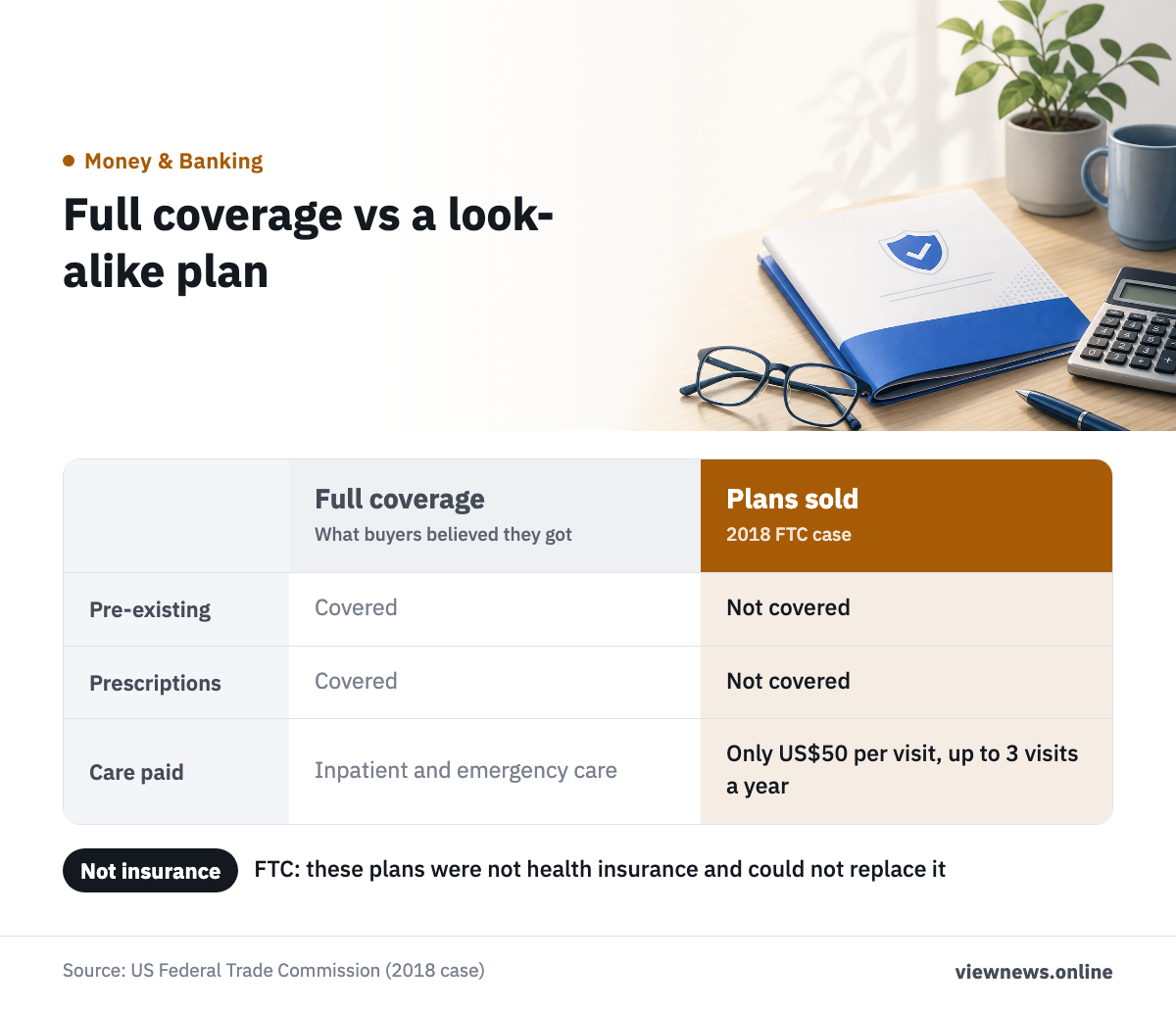
A 2018 FTC case shows the gap. The FTC said the plans sold by the defendants were not health insurance and could not replace it. They did not cover pre-existing conditions or prescription drugs, and they paid only US$50 toward a doctor visit, up to 3 visits a year. The full coverage buyers believed they were getting would have covered pre-existing conditions, prescription drugs, and inpatient and emergency care.
On qualifying primary coverage under US law, the FTC explained in its 2022 case against Benefytt Technologies that a qualifying plan must provide certain benefits, such as preventive care, and must cap what consumers pay out of pocket. Those two features are a quick test of whether an offered plan has them.
What to read in a health or travel insurance quote
The FTC's four warnings can serve as a checklist for both health insurance and overseas travel insurance. Ask for the full plan document and do not rely on the ad or the seller's verbal summary. Look for these items:
- The benefit schedule, showing what is paid and the limits
- The exclusions, showing what is not covered
- Caps on treatment costs per visit and per year
- Any waiting period, and how long it lasts
- The total cost to you, including fees other than the premium
- The terms of any gift or cash-back offer
Ask the seller directly whether what you are buying is an insurance policy or a medical discount program. If the answer is unclear or the seller dodges, delay the decision. If the ad says everything is covered but the benefit schedule and exclusions say otherwise, go by the document and put your questions to the seller in writing.
For overseas travel insurance, compare the exclusions and treatment caps with your actual trip, such as the destination and the activities you plan to do.
Where to complain in Thailand
Insurance complaints go to the Office of the Insurance Commission (OIC), the Thai insurance regulator. Its online complaint system, PPMS, is at complaintportal.oic.or.th. According to the Thai report, users must first register through ThaID, the national digital ID, and through the OIC's LINE account (Thai name: คปภ. รอบรู้), which requires approval before use. The OIC hotline is 1186.
For misleading ads or unfair sales practices, the Office of the Consumer Protection Board (OCPB) has a hotline at 1166 and an online complaint system at complaint.ocpb.go.th. Complainants log in, enter details of the party being complained about and can track the status of the case.
Foreign residents should ask the agency by phone whether they can use the online systems without ThaID. Before filing, keep screenshots of the ad, the quote and your messages with the seller as evidence.
Source: The US Federal Trade Commission (press releases and consumer alert), the Office of the Insurance Commission and the Office of the Consumer Protection Board.
This article is adapted from ViewNews' Thai-language report.