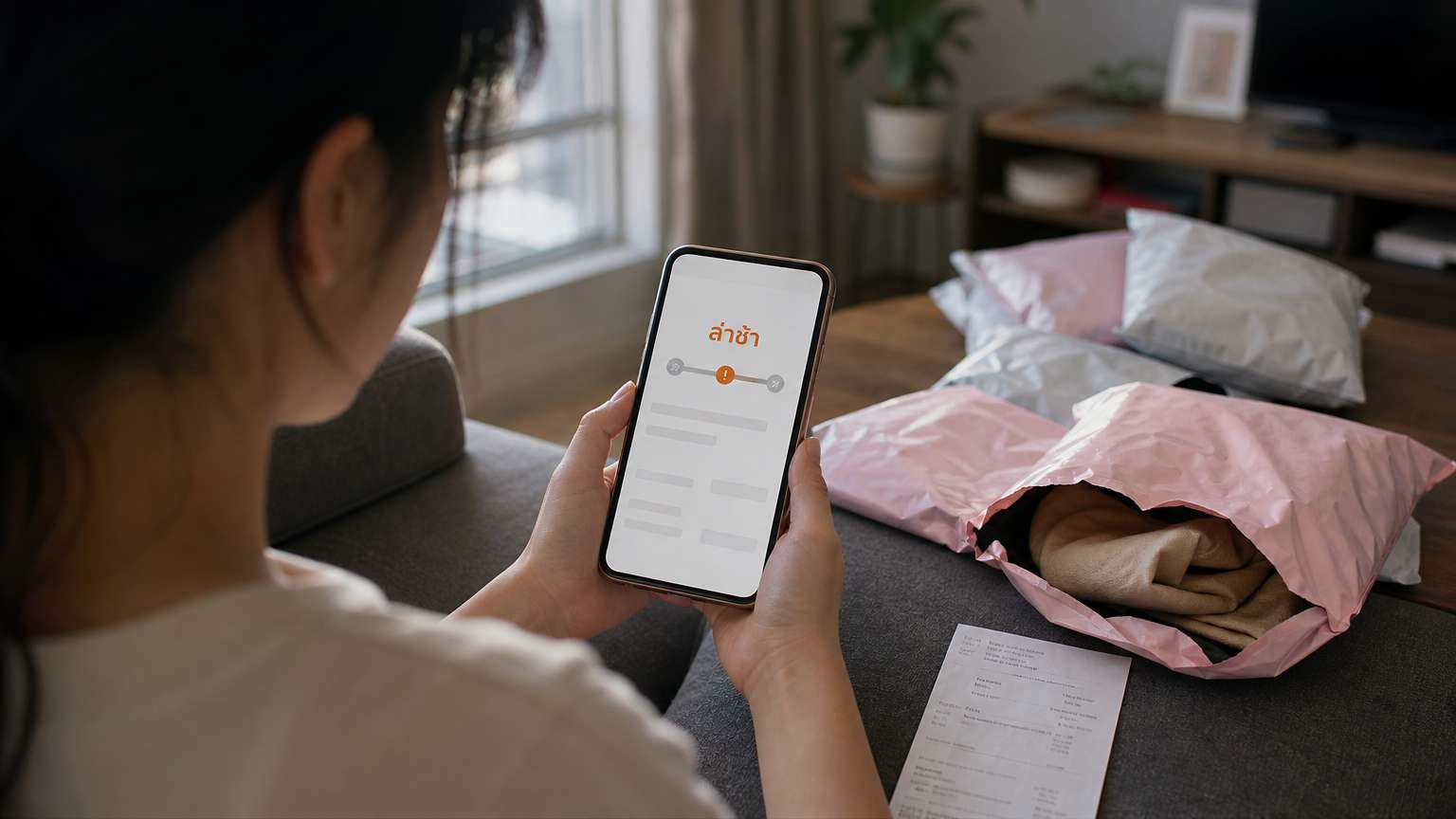
Anyone in Thailand who orders from SHEIN or other cross-border platforms can use the latest US settlement as a guide to what to check before buying. On 24 November 2026, the US Federal Trade Commission (FTC) announced that SHEIN agreed to pay US$100 million for consumer redress. The FTC alleges the company made it hard for customers to get problems resolved and delivered goods late. It also alleges the company suppressed negative reviews and made sourcing claims without evidence. The settlement concerns US consumers and gives no refund to buyers in Thailand.
The deal is a proposed settlement filed in court, not a ruling that SHEIN broke the law. Everything below is an allegation by the FTC, as stated in the agency's own press release.
The four FTC allegations
The FTC says SHEIN violated 3 laws and rules: Section 5 of the FTC Act, the Mail, Internet, or Telephone Order Merchandise Rule, and the Rule on the Use of Consumer Reviews and Testimonials.
The first allegation is about delivery. The FTC says SHEIN advertised fast, transparent and reliable shipping. But tens of thousands of consumers reported that orders arrived days, weeks or months late, and some never arrived. The FTC also says SHEIN did not give adequate updates on delivery progress, including the delay notices that US law requires.
The second is about customer service. The FTC says SHEIN shipped nearly 1 million parcels a day into the United States. Yet as of September 2025 it had only 5 staff taking phone calls from American customers, and it did not show a phone number on its website. Customer requests often went unanswered.
The third is about reviews. The FTC alleges SHEIN systematically blocked some reviews from appearing on its website. It allegedly showed positive reviews but withheld or removed those from customers who complained or returned items.
The fourth is about where products come from. The FTC says SHEIN advertised its evoluSHEIN line as coming from suppliers with above-average social audit scores, meant to guard against child labor and forced labor. According to the FTC, the company could not produce a single audit document to back this up. Cotton that SHEIN said was grown in the United States was allegedly found to come from China, and the cotton in some items could not be traced at all.
What the settlement bars, and why it is not a verdict
Under the settlement filed in the US District Court for the Central District of California, SHEIN would be barred from misstating delivery times, suppressing negative reviews, denying proper customer service, and falsely claiming supplier audits or product traceability. The US$100 million would be paid to the FTC to compensate harmed consumers. The FTC says nothing more about where the money will go.
The filing is a stipulated final order. The parties agree the terms first, then ask the court to approve them. Such an order takes legal effect only when a judge approves and signs it. The FTC commissioners voted 2-0 to have staff file the complaint and the settlement. So for now this remains a set of allegations awaiting court approval.
Christopher Mufarrige, director of the FTC's Bureau of Consumer Protection, said SHEIN lured shoppers with promises of cheap clothes, fast delivery and suppliers with high labor ratings. In reality, he said, the company misled millions of consumers about its products, suppliers and the authenticity of its reviews, and made customer service very hard to reach.
Are buyers in Thailand affected?
Not directly. The settlement covers US consumers, so it gives no refund or other right to buyers in Thailand.
What is useful is the list of problems a US regulator chose to allege: delivery times that did not match reality, no way to reach the company, selectively shown reviews, and sourcing claims with no evidence. Shoppers can check these themselves before buying on any cross-border platform, not just SHEIN.
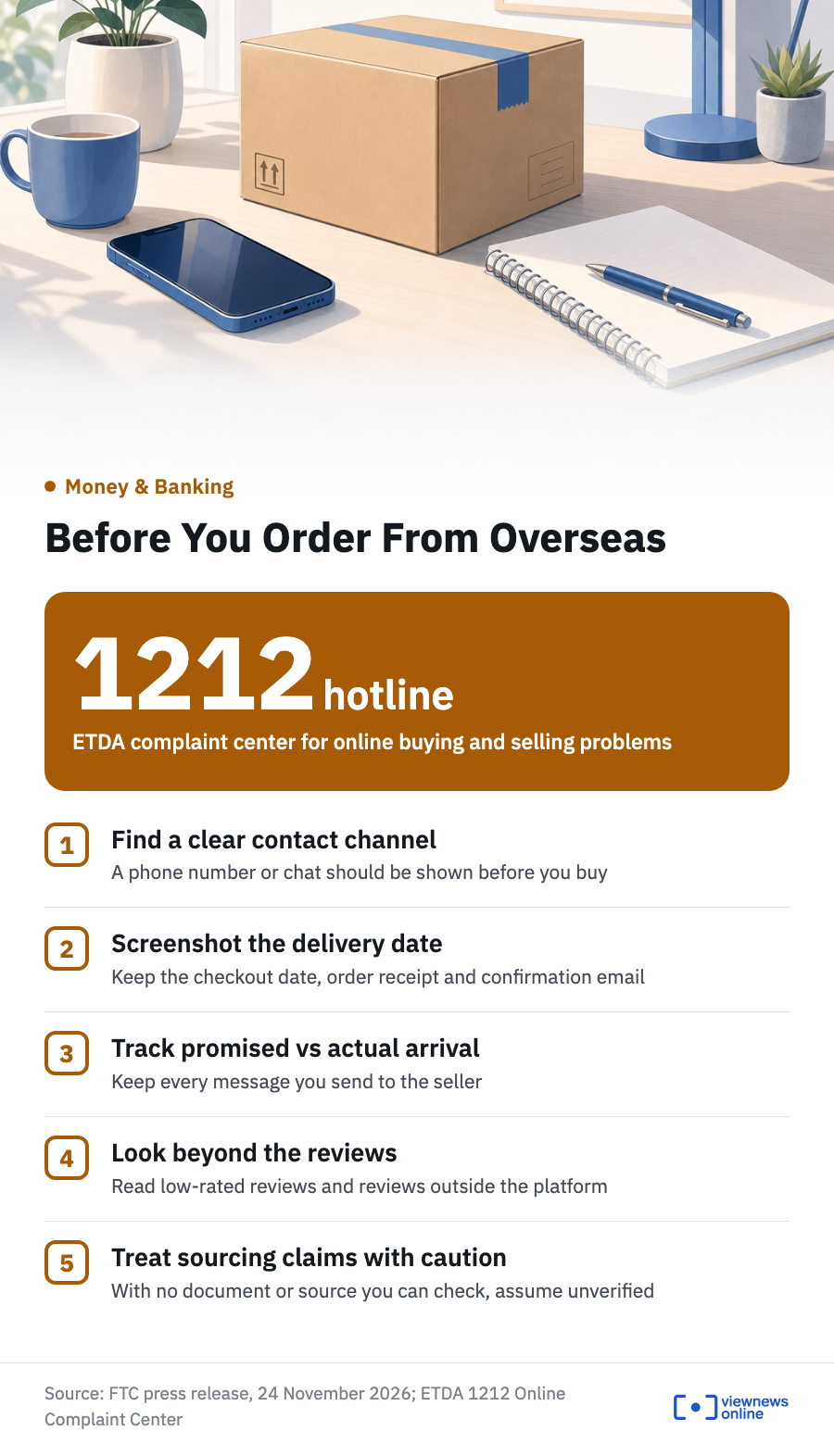
A checklist before you order from overseas
The FTC's allegations help you ask sharper questions of any online store. The steps below are things buyers can do themselves, and each links to an allegation the FTC described.
- Check that the website or app shows a clear contact channel, such as a phone number or chat, before you buy.
- Screenshot the advertised delivery date at checkout, and keep the order receipt and confirmation email.
- Note the date the goods should arrive against the date they actually arrive, and keep every message you send to the seller.
- Do not judge by reviews alone. Look at low-rated reviews and reviews outside the platform too.
- Treat claims about sourcing or labor audits with caution. If there is no document or source you can check, assume the claim is unverified.
Sourcing claims are the hardest for a buyer to check. The FTC says the company cited supplier audits without supporting documents and claimed US cotton that allegedly came from China. A line saying a product passed labor checks or uses materials from a given country is just advertising until a document or third-party audit confirms it.
If you run into a problem with an online purchase in Thailand, the 1212 ETDA Online Complaint Center of the Electronic Transactions Development Agency (ETDA) takes complaints in the online buying and selling category. You can reach it through the 1212 hotline, LINE at @1212etda, and the website 1212.etda.or.th. Reporting takes 3 steps: choose a topic, fill in the form, and track progress with a reference code. Screenshots and order records you have kept will help you file a complete report. If you need service in English, check with the agency.
Source: FTC press release dated 24 November 2026 (ftc.gov) and the 1212 ETDA Online Complaint Center website (1212.etda.or.th).
This article is adapted from ViewNews' Thai-language report.