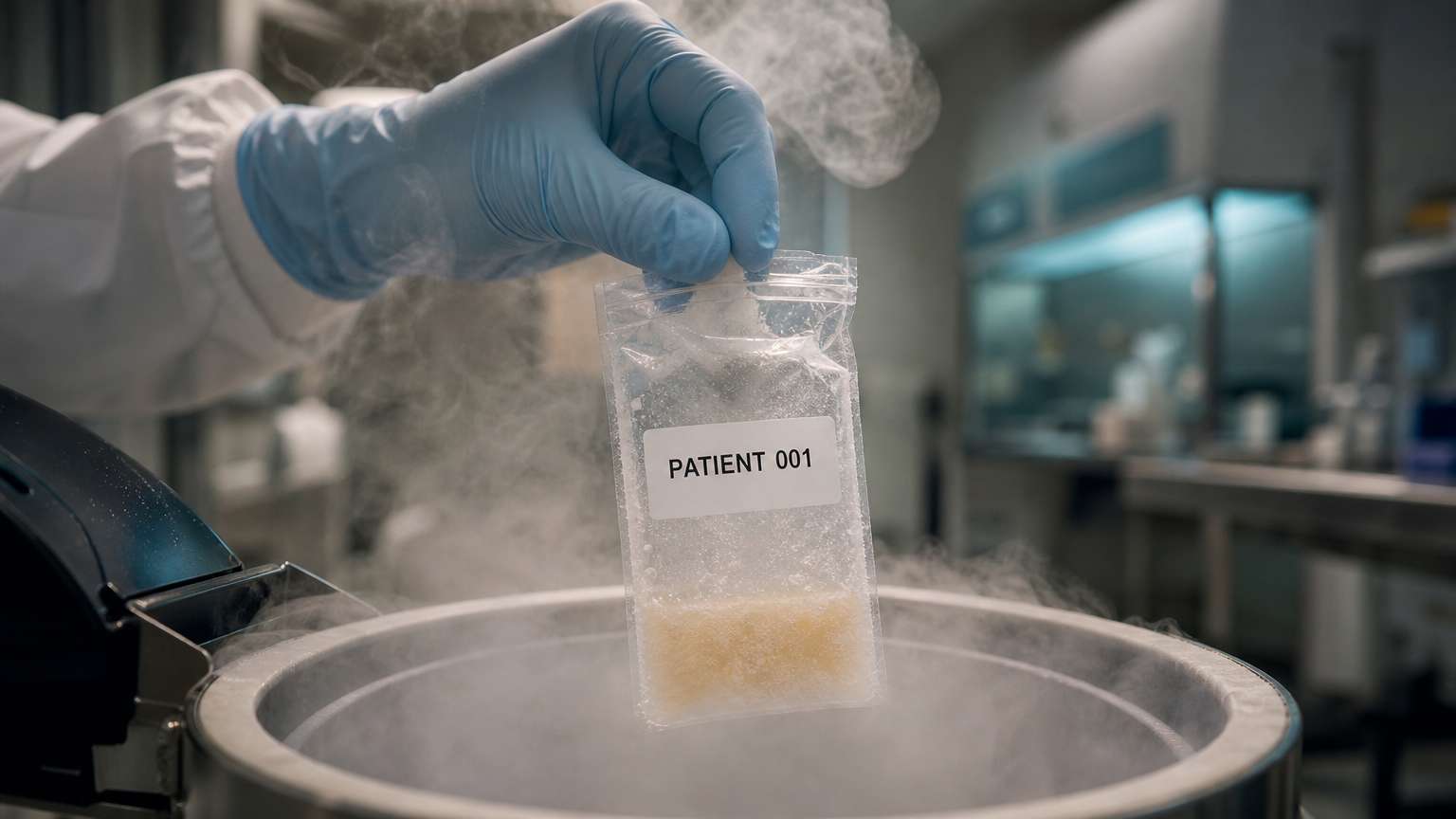
On 26 November 2026, Health Minister Pattana Promphat handed a registration certificate for a CAR-T cell therapy to Genepeutic Bio Co., Ltd. The Thai Food and Drug Administration (FDA) says it is the first advanced therapy medicinal product (ATMP) researched and developed inside Thailand. Patients and families in Thailand, including foreign residents, should know what CAR-T is and what this announcement does not yet say.
Registration does not mean patients can get the treatment right away. The FDA has not yet disclosed the product's name, approved uses, price or treatment coverage.
How CAR-T is made from a patient's own cells
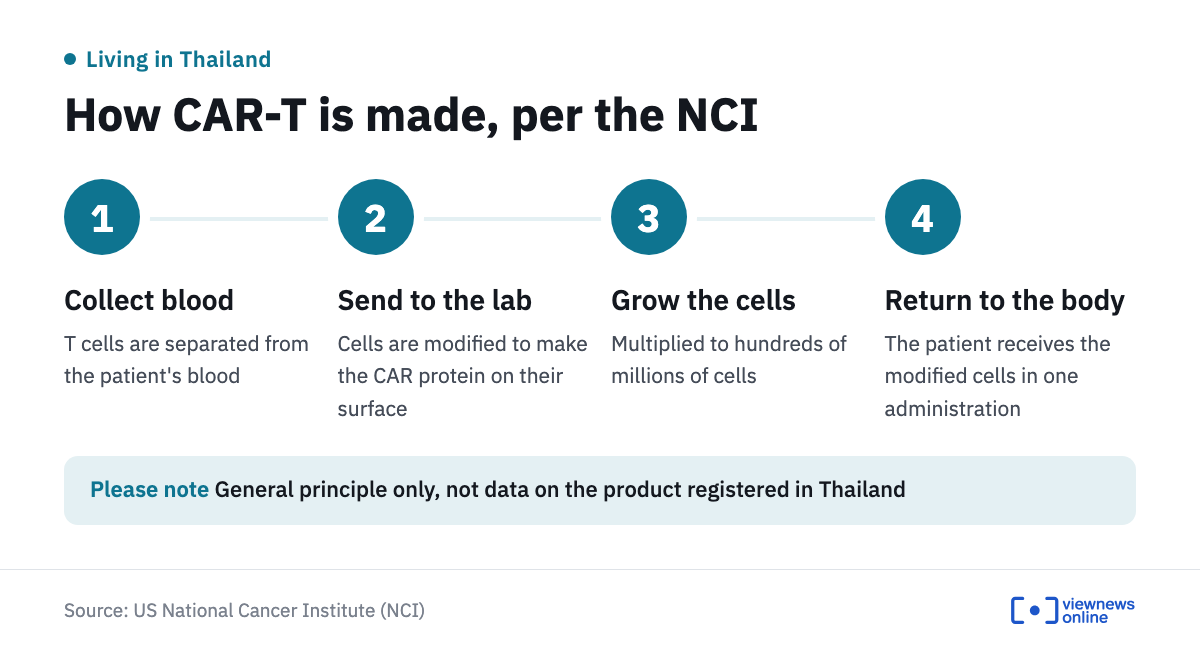
The US National Cancer Institute (NCI) explains that CAR-T is a treatment made from a patient's own T cells. T cells are immune system cells that destroy infected or abnormal cells. Each CAR-T dose is therefore made for one individual patient.
As the NCI describes it, doctors first collect blood from the patient and separate out the T cells. The cells are sent to the manufacturer's laboratory and genetically modified to produce a special protein on their surface, called a chimeric antigen receptor (CAR). The protein helps the T cells latch onto a target protein on cancer cells and improves their ability to destroy them.
The modified cells are grown to hundreds of millions, then returned to the hospital and given back to the patient in a single administration. The NCI says the whole process takes about 3 to 5 weeks. This is a general description of how CAR-T works. It is not information about the product registered in Thailand.
The minister described ATMPs as advanced therapies covering cell therapy, gene therapy and tissue-engineered products. He said they are creating new hope for patients with genetic diseases, rare diseases and conditions where current treatment is limited. According to the FDA, the newly registered CAR-T falls under cell therapy.
What registration means
The minister presented the certificate at the opening of Thailand ATMP Regulatory Connect 2026 at IMPACT Muang Thong Thani. The two-day event drew more than 850 registered participants. The FDA says the product is the first ATMP researched and developed in Thailand. The minister said this shows Thai researchers and companies can develop advanced medical products and that the country has a regulatory system that supports innovation.
The FDA says Thailand now has 3 ATMP manufacturing sites certified to the GMP PIC/S standard, an international manufacturing quality standard. It also says 16 ATMP clinical research projects have applied for approval. The agency runs an ATMPs center, an online consultation system and an ATMP Roadmap for researchers and product developers.
The minister said the government and the ministry aim to make Thailand one of the world's ATMP hubs, in line with the ministry's MOPH PLUS+ policy on access to treatment. He said the ministry will work with relevant agencies, health funds and the health service system to develop ways for people to access innovative treatment fairly and sustainably. No details on how, or when it would start, have been given.
What is still unknown
The FDA announcement does not give the product name, approved uses or registration number. It is therefore not clear which disease this CAR-T treats, which patients would qualify, or what clinical study results support it. Response rates and trial results have not been announced.
Costs and coverage are also unknown. The announcement does not state a price, which hospitals could offer the treatment, or whether public health schemes would cover it. Patients should not assume that registration automatically means coverage.
What patients and families should do for now
If you or a family member is under a doctor's care, ask your treating doctor directly whether this CAR-T is relevant to the condition and what the hospital knows about referral options. Only a doctor can judge which treatment suits an individual patient. This report is not a basis for making treatment decisions on its own.
Be cautious about advertisements or sales pitches claiming CAR-T is ready to use or can cure a disease. The FDA has not disclosed approved uses, price or treatment sites, and patients should not try to seek out or order cell therapy products on their own. Foreign residents who rely on private insurance should check with their insurer and hospital, since nothing has been announced about access or coverage. Watch for the FDA's product details and for guidance from the Ministry of Public Health and health funds on coverage. Consult a doctor or pharmacist before starting or changing any treatment.
Source: Thai Food and Drug Administration and Ministry of Public Health announcement on the opening of Thailand ATMP Regulatory Connect 2026 and the CAR-T registration certificate; US National Cancer Institute (NCI) page on CAR T cells.
This article is adapted from ViewNews' Thai-language report.