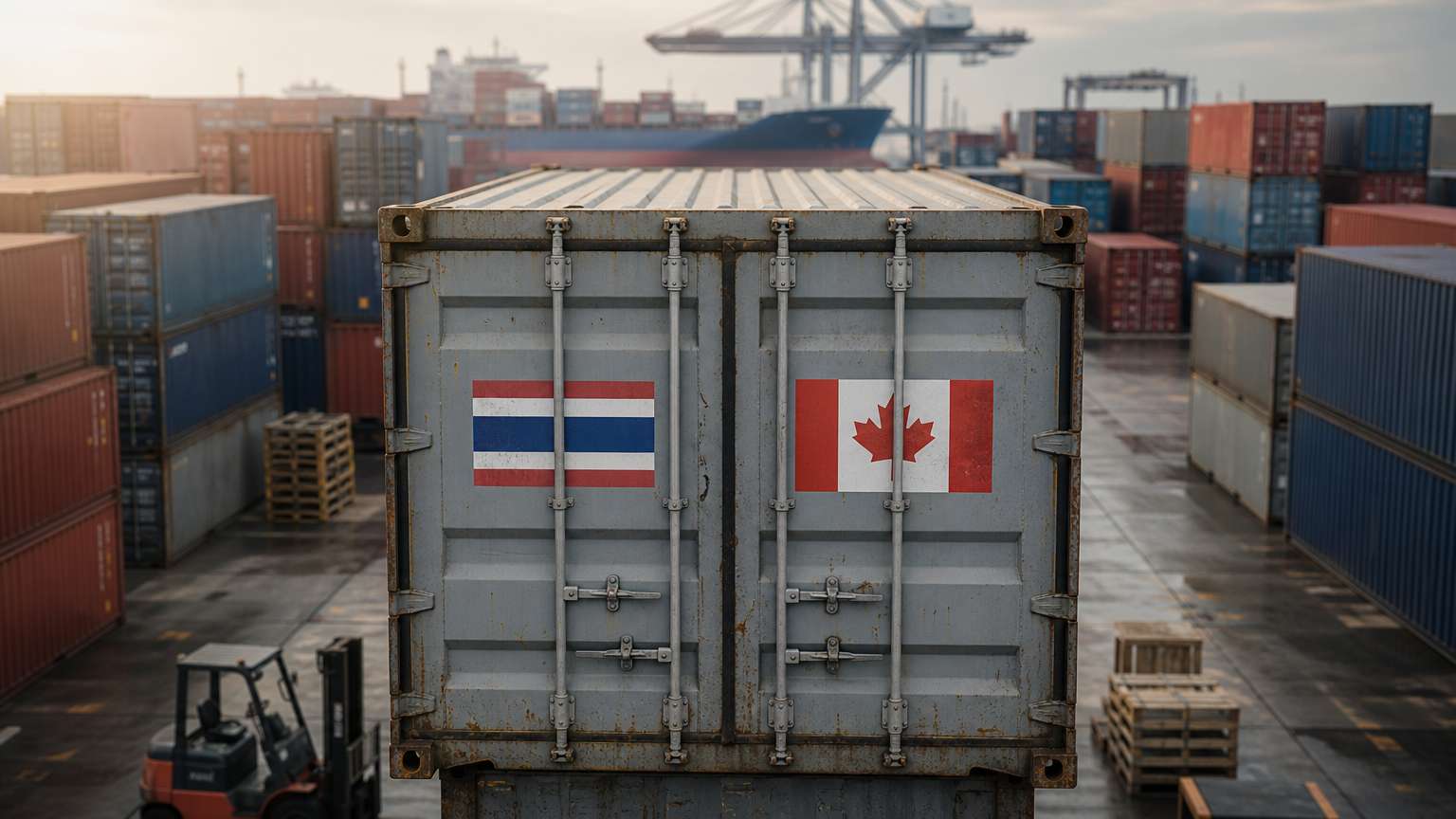
Thailand and Canada held the first round of negotiations on a free trade agreement (FTA) in Toronto from 26 to 30 October 2026. The Department of Trade Negotiations at the Ministry of Commerce said both sides aim to conclude the talks by 2027. Exporters and small businesses looking at the Canadian market have a new process to follow.
This is only the first round. The agreement is not in force, and there is no guarantee the talks will finish on schedule.
Thai delegation starts in Toronto
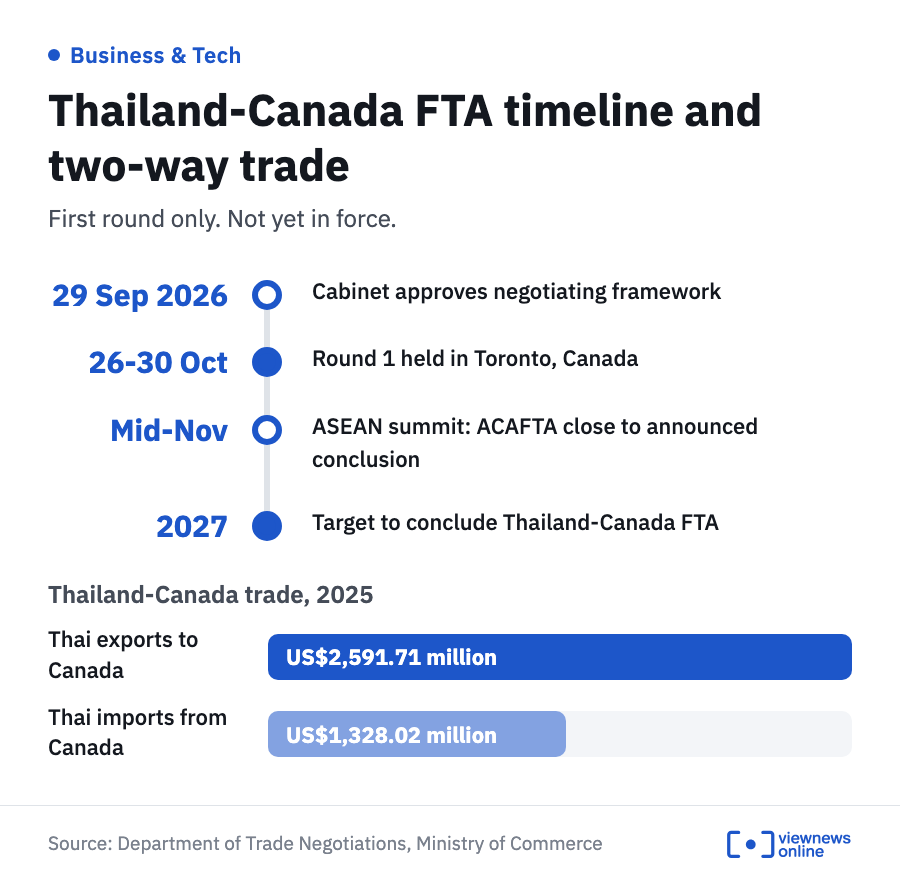
Khwannapa Phiwnin, a deputy director-general of the department, led the Thai delegation. The talks came after the Cabinet approved the negotiating framework on 29 September 2026, about a month before the team travelled to Toronto.
The department said the aim is to strengthen economic ties, widen export markets, increase investment opportunities and link Thailand with North America. It said the deal should create trade opportunities for agricultural and processed food products, industrial goods and services, and support cooperation on technology and innovation.
The department also stressed supply chains. It said the agreement should help Thai companies connect with Canadian supply chains and compete better, especially small and medium-sized enterprises (SMEs).
What is on the table
The talks go beyond tariffs. According to the department, both sides discussed market access for goods, services and investment, digital trade, labour, the environment, intellectual property, competition and government procurement.
Other topics include technical barriers to trade, sanitary and phytosanitary measures (food safety and plant and animal health rules), and trade facilitation. In practice, the outcome could affect goods exporters, service businesses, online trade and firms that want to bid for government contracts.
The agreement is not starting from scratch. The department said it will build on the ASEAN-Canada Free Trade Agreement (ACAFTA), which is close to announcing a conclusion of its own negotiations around the ASEAN summit in mid-November 2026. That announcement is still expected, not confirmed. The department said building on ACAFTA should let Thai businesses make fuller use of both frameworks.
Trade with Canada is growing
In 2025, two-way trade between Thailand and Canada totalled US$3,919.71 million, up 21.6%. Thailand exported US$2,591.71 million to Canada and imported US$1,328.02 million from it, so exports were nearly twice imports.
The trend continued into 2026. From January to July 2026, total trade was US$2,634.80 million, up 20.5%. Thailand's five main exports to Canada are:
- Computers, equipment and parts
- Iron and steel products
- Canned and processed seafood
- Rice
- Rubber products
On investment, data from the Canadian side show Thai direct investment in Canada was US$643 million in 2025, in areas such as energy and processed food. Canadian direct investment in Thailand was US$448 million, in sectors such as aviation, finance, technology and innovation.
The department sees Canada as a promising market. Its GDP was about US$2.32 trillion in 2025, its population is about 41 million, and it is advanced in technology, industry and innovation. The department said an FTA would help Thai businesses expand and spread trade risk.
What to watch next
The department has not announced results for specific goods or services from the first round, and it gave no details on the next round.
The first thing to watch is the ASEAN summit in mid-November 2026, where ACAFTA is expected to be announced as concluded. Once that happens, the framework for the Thailand-Canada deal will be clearer.
Second is the schedule for the next round. Exporters of computers, steel, processed seafood, rice and rubber products, as well as service and digital businesses, should follow announcements from the Department of Trade Negotiations.
Source: Department of Trade Negotiations, Ministry of Commerce, Thailand.
This article is adapted from ViewNews' Thai-language report.