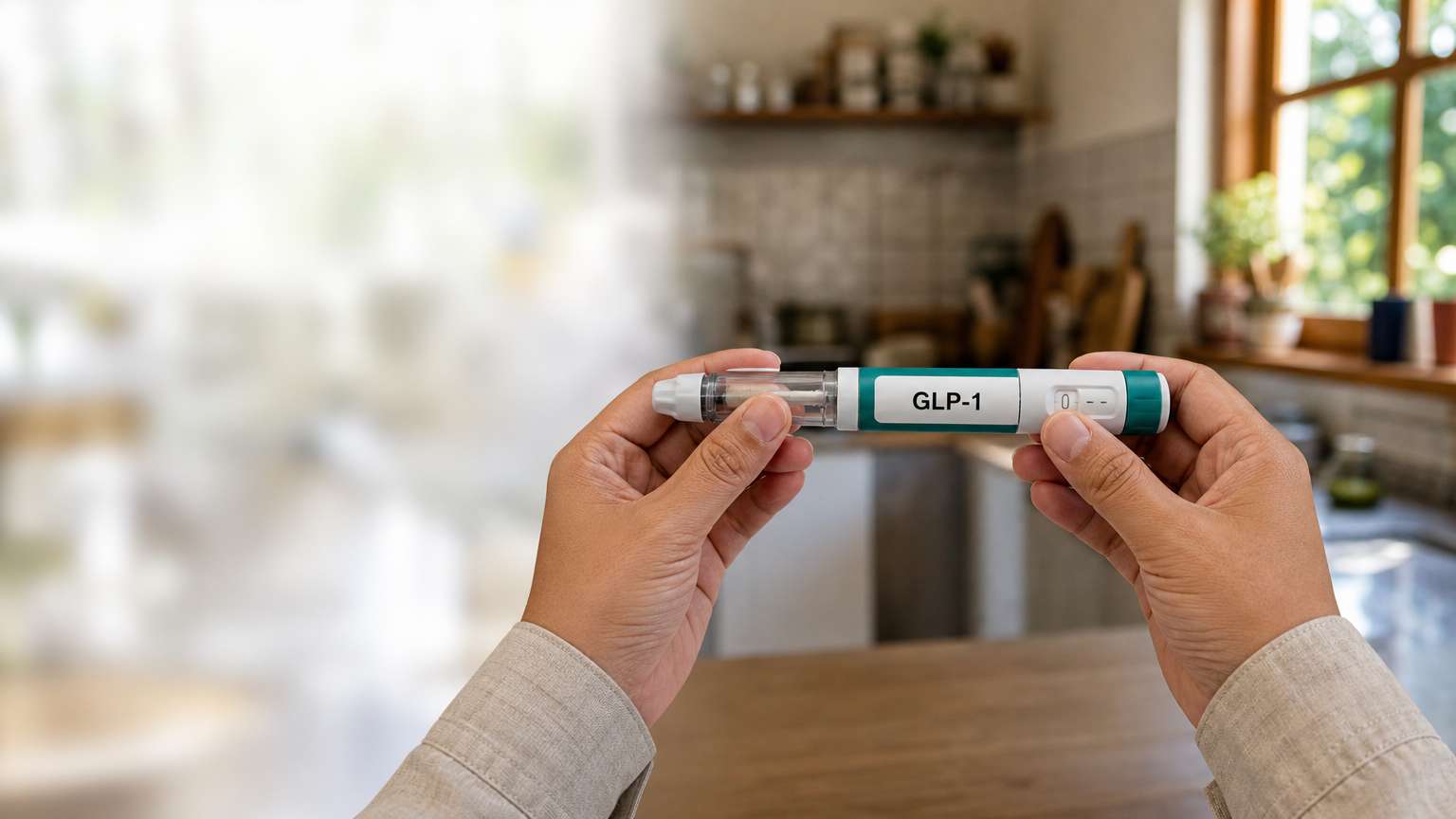
The US Food and Drug Administration (FDA) has ordered a new eye-related warning on the labels of every GLP-1 drug, including Ozempic, Wegovy, Mounjaro and Zepbound. The agency issued a drug safety communication on 9 November 2026. It covers non-arteritic anterior ischemic optic neuropathy (NAION), a rare condition that can cause sudden vision loss in one eye. The FDA calls it a potential risk. It has not concluded that the drugs cause it.
The notice corrects the information printed on the drug label. It is not a recall, and it does not tell patients to stop taking the drugs. If you or someone you know uses one of these medicines in Thailand, here is what the notice says.
What NAION is and what to watch for
The FDA describes NAION as a rare condition. The main symptom is a rapid loss of vision in one eye, with no pain. In some cases the lost vision does not return, which means the loss is permanent.
The features to look for, according to the FDA, are that it comes on quickly, it does not hurt and it affects only one eye. Anyone who uses a GLP-1 drug and notices this should contact a doctor promptly. It cannot be assessed at home.
The FDA says reports of NAION have been seen with every drug in this class that is on the market. That is why the order covers the whole group, not just semaglutide, the ingredient in Ozempic, Rybelsus and Wegovy. Semaglutide was the subject of earlier research on the issue.
Which drugs are covered
GLP-1 receptor agonists (glucagon-like peptide-1 receptor agonists) mimic a natural hormone released by the gut. The hormone helps lower blood sugar after meals and acts on the part of the brain that controls appetite. The FDA says the class is widely used to treat type 2 diabetes and to reduce excess body weight and keep lost weight off.
The FDA list covers these active ingredients and brands:
- Semaglutide: Ozempic, Rybelsus and Wegovy
- Tirzepatide: Mounjaro and Zepbound
- Liraglutide: Victoza and Saxenda
- Dulaglutide: Trulicity
- Exenatide: Byetta
- Combination products: Xultophy (liraglutide with insulin degludec) and Soliqua (lixisenatide with insulin glargine)
- Foundayo (orforglipron), a new drug approved in 2026
The application to market Byetta was voluntarily withdrawn for reasons unrelated to safety or effectiveness, because the brand is no longer sold. Only generic exenatide remains. Tirzepatide acts on both the GLP-1 receptor and the GIP (glucose-dependent insulinotropic polypeptide) receptor, but the FDA lists it in the same group.
The FDA also notes that some drugs in the class have other adult uses. These include reducing the risk of serious heart and blood vessel events in people who already have heart disease, slowing kidney decline in diabetes patients with chronic kidney disease, treating moderate to severe sleep apnea in people with obesity, and treating MASH, a liver disease with moderate to advanced scarring. The new warning therefore concerns many groups of patients, not only people who take the drugs to lose weight.
What the FDA found, and how strong the evidence is
The FDA ordered the information added to the Warnings and Precautions section of the label. Doctors and pharmacists use that section when prescribing. This is different from a boxed warning, the strongest level of label warning. The notice does not use that level.
The figures come from a combined analysis of 126 randomized controlled trials with 134,253 patients in total. This type of evidence is generally more reliable than retrospective studies. Even so, only 15 likely NAION events were found. Ten occurred in people given a GLP-1 drug and 5 in people given a placebo. The rate was 6.4 per 100,000 person-years in the drug groups, against 3.8 per 100,000 person-years in the comparison groups. A person-year combines the number of people with the length of time they were followed. With only 15 events, the results need to be read with care.
Real-world data from the FDA's Sentinel system is not fully consistent. Compared with SGLT-2 drugs, another class of diabetes medicines, the difference was not statistically significant. Compared with DPP-4 drugs, a further class of diabetes medicines, the risk was higher, with a hazard ratio (HR) of 1.43. Animal studies have not found a mechanism that explains how the drugs might raise the risk, so they do not help confirm a link.
The FDA began its review after a retrospective study was published in JAMA Ophthalmology in August 2024. It reported an association between semaglutide and NAION among patients at a single academic institution. That kind of study can show that two things occur together, but it cannot prove that one causes the other. The overall picture is a potentially increased risk, not a proven cause. It should not be read as saying these drugs cause blindness.
What users should do, and the situation in Thailand
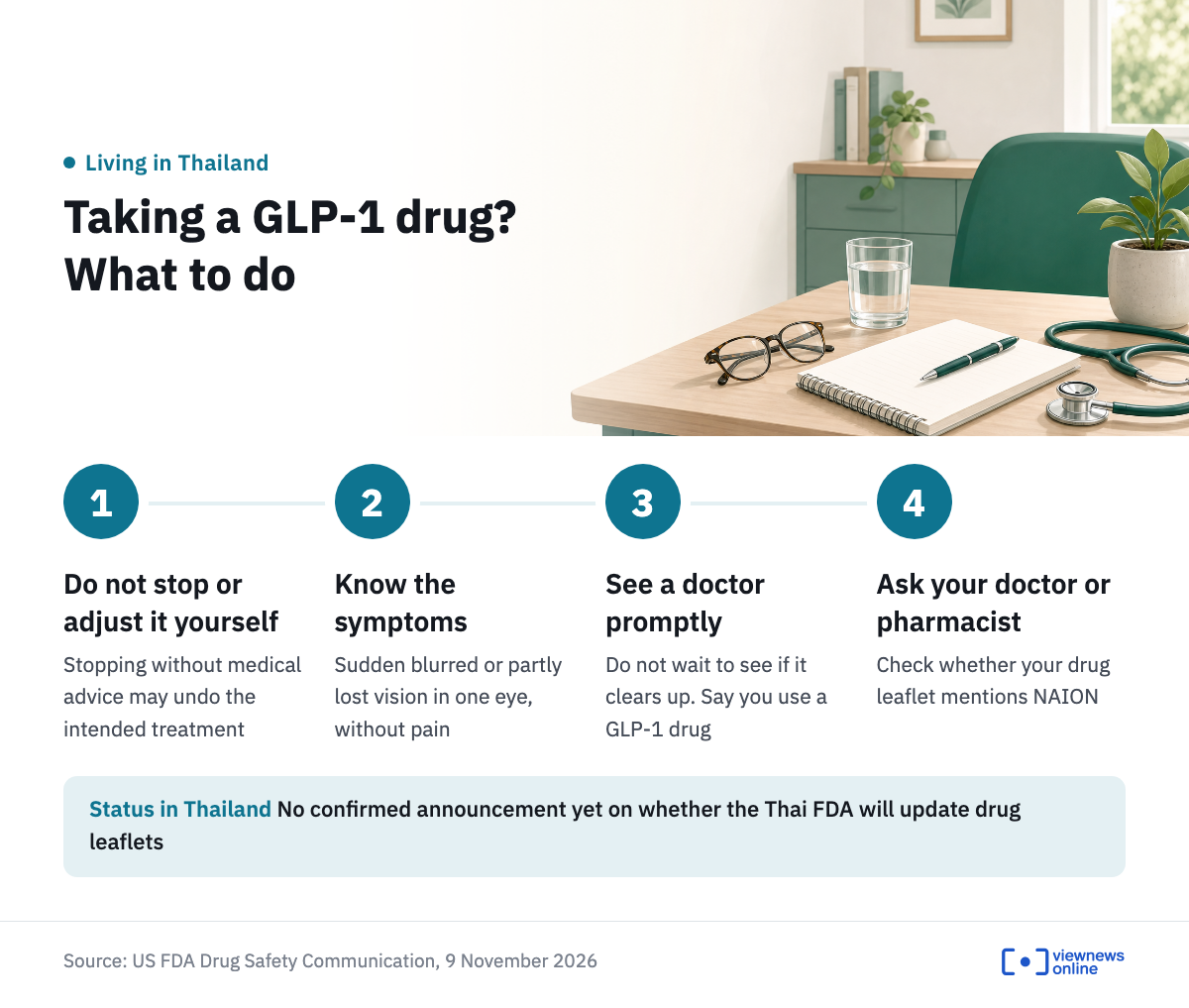
First, do not stop the drug or change the dose on your own. These drugs are used to control blood sugar or conditions linked to weight and the heart. Stopping without medical advice could undo the treatment. If you are worried, arrange to talk to your doctor. Mention any past eye conditions and any other medicines you take, so the doctor can assess your case individually.
Second, know the symptoms. If one eye suddenly becomes blurred, or you lose part of your vision in one eye without pain, see a doctor promptly. Do not wait to see whether it clears up. Tell the doctor that you use a GLP-1 drug.
As for Thailand, there is no confirmed announcement yet on which of these drugs are registered with the Thai Food and Drug Administration (Thai FDA), or on whether it will update the leaflets that come with the drugs here. Ask your doctor or pharmacist to check the leaflet for the drug you use and see whether it includes NAION information. If you buy these drugs abroad or through a clinic, ask the same question there.
This article is general information, not advice for any individual. Talk to a doctor or pharmacist before starting, stopping or changing treatment.
Source: the US Food and Drug Administration (FDA), Drug Safety Communication dated 9 November 2026, and the FDA's Drug Safety Communications page.
This article is adapted from ViewNews' Thai-language report.