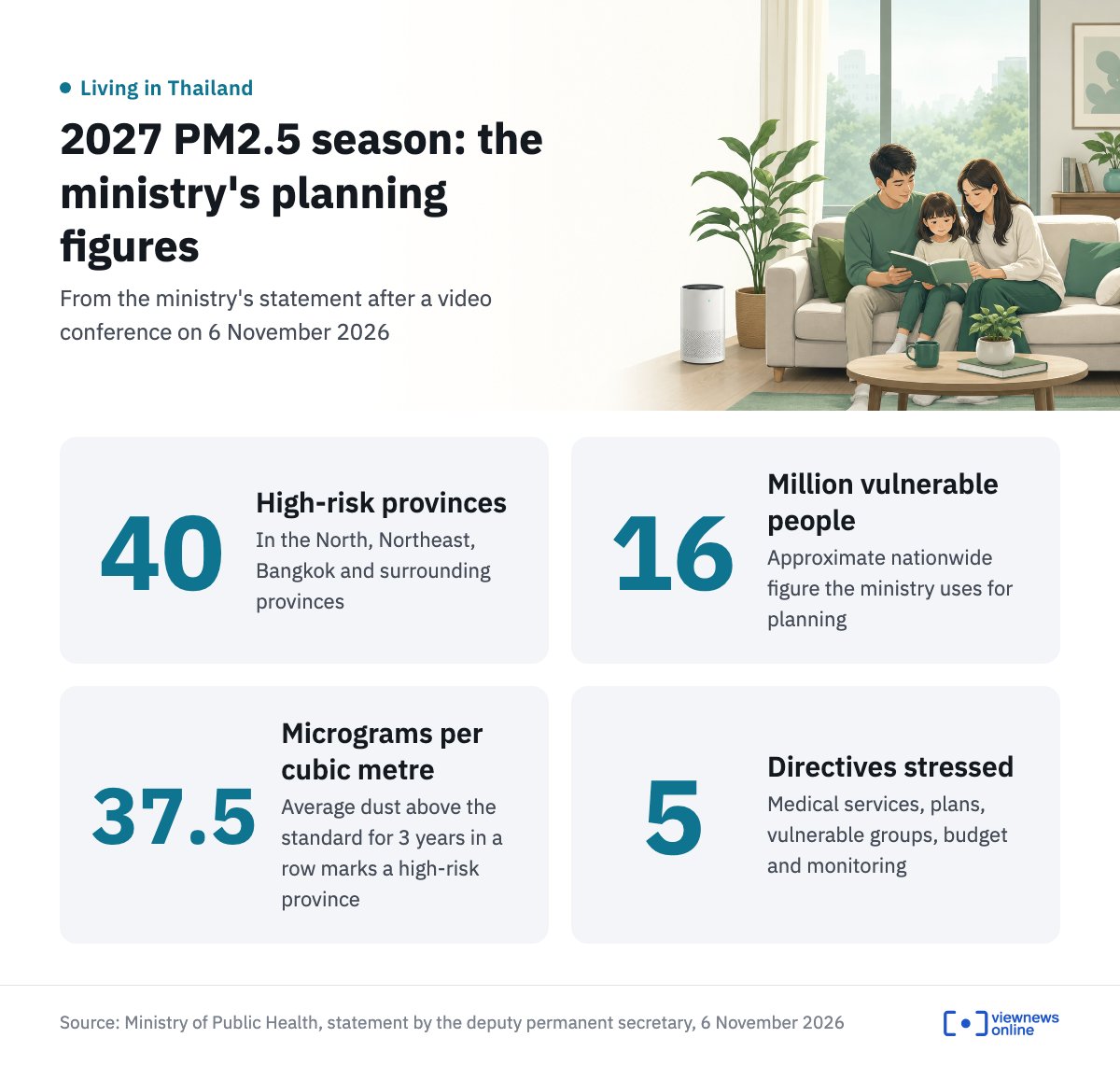
Thailand's Ministry of Public Health has told 40 high-risk provinces to get ready for the 2027 PM2.5 dust season. The ministry says about 16 million vulnerable people nationwide are the basis for its planning. The group includes people with respiratory illness, allergies or heart disease, as well as young children, pregnant women and older people. The ministry's deputy permanent secretary announced the plan on 6 November 2026 after a video conference.
The statement is an overview of the ministry's medical and public health plan. It is not a formal announcement or an official order document, so details on when each service will open are still unclear.
Which provinces are high risk, and how the ministry decides
The ministry says dust exceeded the standard in more than 60 provinces over the past three years (2024 to 2026). Of these, 40 are classed as high risk. They are in the North, the Northeast, Bangkok and the surrounding provinces.
The test is an average dust level above the standard of 37.5 micrograms per cubic metre for three years in a row. In plain terms, these are provinces where dust has exceeded the standard every year for three years. The statement did not list the 40 provinces by name. If you want to know whether your province is on the list, wait for information from your local public health office.
The ministry also pointed to a forecast of a Super El Niño, a stronger El Niño that brings a longer drought. It says this could make the 2027 dust season worse than last year's, and it calls for special vigilance from November to May. This is the ministry's forecast, not a certainty that next year's dust will be worse.
The vulnerable groups the ministry is most concerned about
The ministry listed these groups as priorities for proactive health care:
- People with respiratory disease
- People with allergies
- People with heart and blood vessel disease
- Young children
- Pregnant women
- Older people
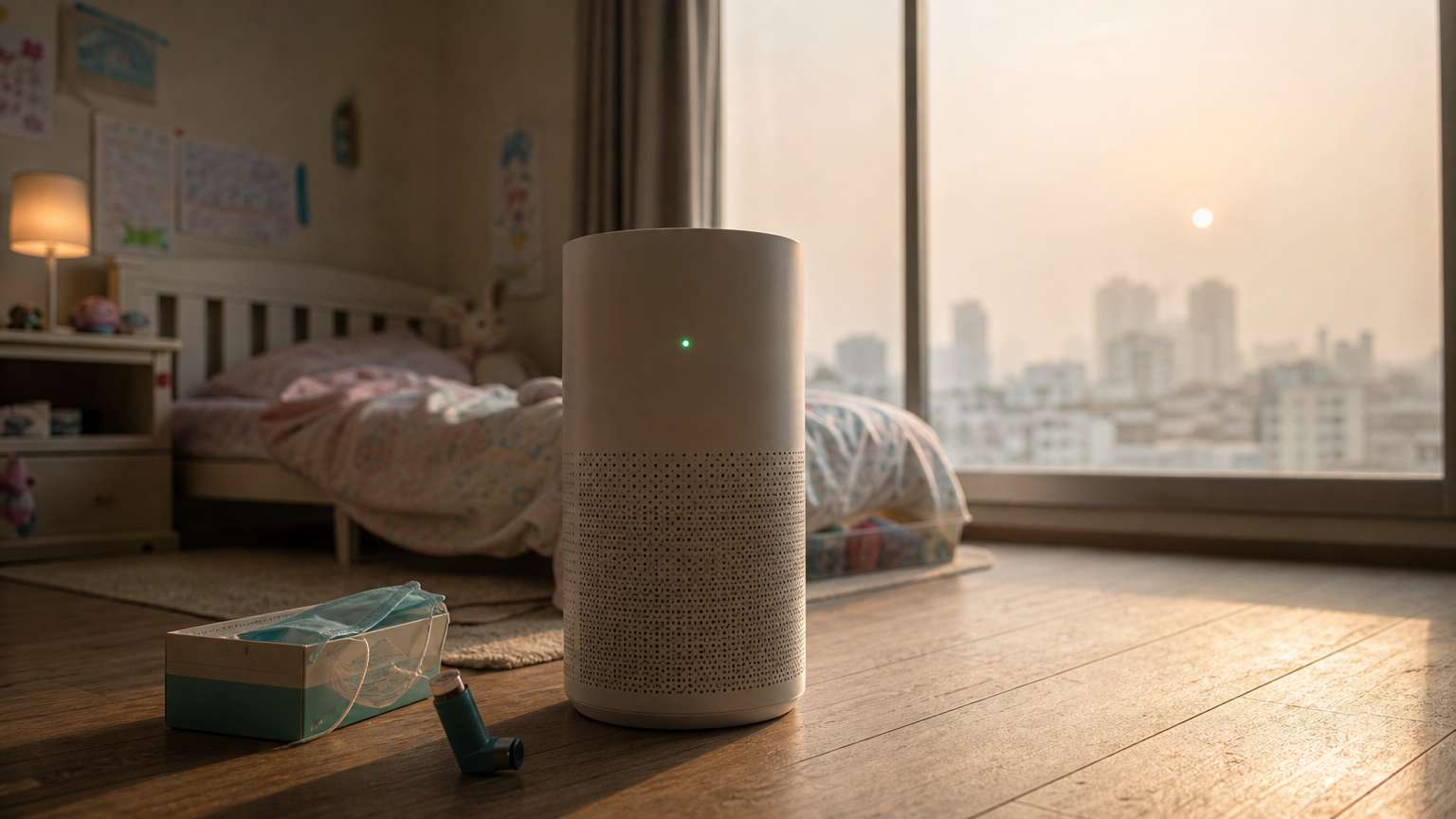
If someone in your household is in one of these groups and you live in a high-risk province, treat November to May as a period for extra care. The ministry gave no individual advice. People with existing conditions should ask their own doctor in advance how to prepare medication and what to do when dust levels are high.
The ministry also wants the Department of Health, the Department of Disease Control, regional academic centres and provincial offices to build a map and register of at-risk people. The goal is a personalised health alert system and medical teams that visit homes. For now these are development goals. Nothing has been announced about who will receive home visits or individual alerts.
The ministry's five directives
The ministry stressed five areas.
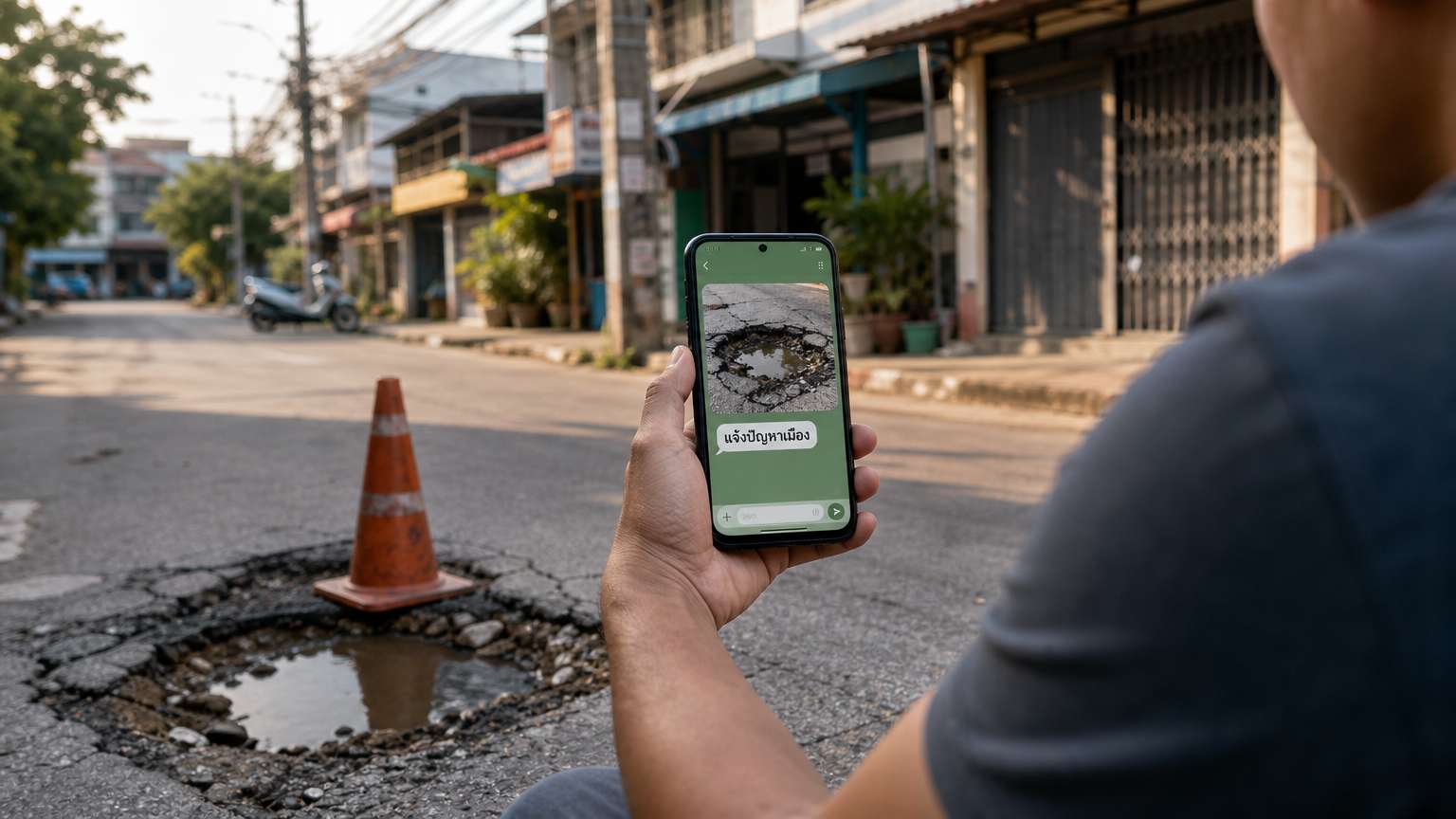
- Medical services. The main tool is a "safe area" app (Thai name: พื้นที่ปลอดภัย). It is meant to bring together the locations of clean-air rooms (ห้องปลอดฝุ่น), dust-protection nets (มุ้งสู้ฝุ่น), and access to pollution clinics. Access would be both in person and online through telemedicine. The ministry says people could consult a doctor and have symptoms assessed without travelling.
- Risk assessment and plans. Every province and health region must assess its risk and prepare a plan, especially the 40 high-risk provinces.
- Proactive care of vulnerable groups. This relies on the risk map and register described above.
- Budget coordination. The ministry will work with provincial governors, provincial disaster prevention offices, local government bodies and the local health funds of the National Health Security Office. The aim is to reduce overlap and use money efficiently.
- Monitoring. Health inspectors, hospital directors and regional academic centres will oversee and coordinate at provincial and central levels.
The first directive is the one residents are most likely to feel directly, because it covers services the public can use. The risk assessment, budget and monitoring directives are mostly internal work. You may see indirect effects, such as hospitals being better prepared for patients, but the ministry has not said what each province will do or when.
What is still unknown, and what you can do now
The ministry did not give a start date or deadline for any measure. There has been no announcement on whether the safe area app is live or where to download it. The locations of clean-air rooms and pollution clinics have not been published province by province.
The statement also does not say whether foreign residents and visitors can use these services, or whether the app will be available in English. Check with your provincial public health office or your hospital. Wait for an official announcement before installing any app, and do not download one from a link forwarded in a message, because no official link has been confirmed.
In the meantime, you can check daily dust levels for your area on Air4Thai. This can help you decide which days family members in a risk group should cut back on outdoor activity. People in a risk group should speak to a doctor or pharmacist before starting or changing treatment, and should not adjust medication based on advice passed along informally.
Source: Thailand's Ministry of Public Health, based on a statement by its deputy permanent secretary after a video conference on 6 November 2026.
This article is adapted from ViewNews' Thai-language report.