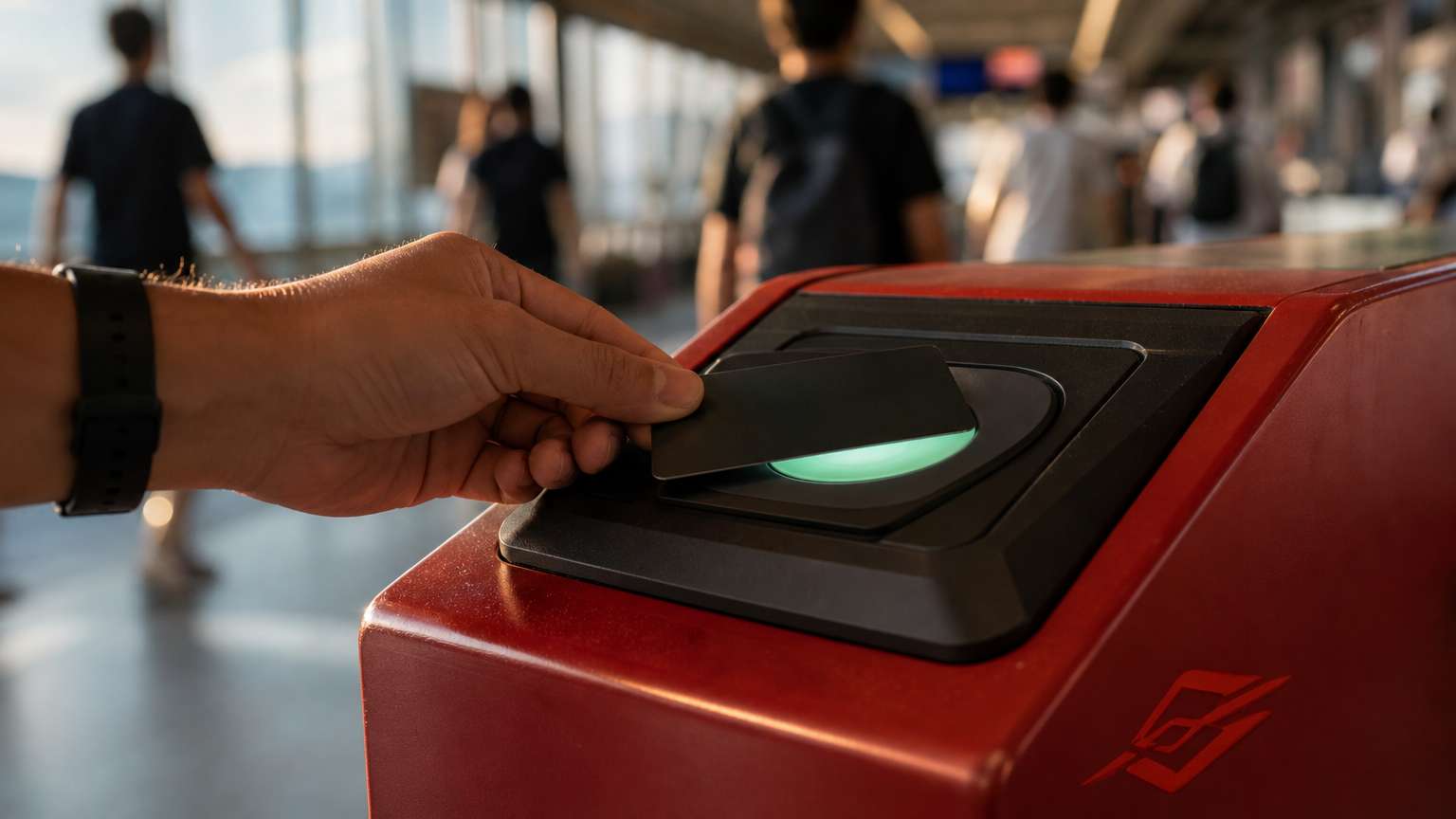
The 40-baht daily pass for Bangkok's Red Line suburban trains will stay available until the end of 2027. But from 1 January 2027, riders who want a discount must register a contactless bank card in the Paotang app and choose one of two options: the day pass or a new joint fare of 17 to 45 baht. The scheme was due to end this month, so regular Red Line riders now have time to work out which option suits their trips.
Board extends the pass to December 2027
The board of the State Railway of Thailand (SRT) agreed on 13 November 2026 to extend the Red Line daily pass from 1 December 2026 to 31 December 2027, a total of 13 months. Prices are unchanged. The pass costs 40 baht a day for the general public and 30 baht a day for school and university students.
Nothing changes in December. Riders who tap in with a contactless EMV bank card can keep using the day pass under the current terms. The new rules start in early 2027. Anyone who wants to use the discount must register their EMV card in the Paotang app (เป๋าตัง) and pick either the day pass or the joint fare.
The registration details have not yet been announced. Check SRT's official channels before you try to register. Foreign residents and visitors should check with SRT whether their cards and accounts can be registered once the details are out.
What the day pass covers
The day pass allows travel along the whole Red Line suburban network on the day it is used, under the stated conditions. It covers the Dark Red Line from Krung Thep Aphiwat to Rangsit and the Light Red Line from Krung Thep Aphiwat to Taling Chan.
The price and coverage are not changing. What changes is how you claim the discount. The day pass will no longer be the only option. You must choose either the day pass or the joint fare, and you cannot use both.
How the 17-45 baht joint fare works
The joint fare comes from a Cabinet resolution of 3 November 2026. The Cabinet is Thailand's council of ministers. The resolution sets a starting fare of no more than 17 baht and bars a second starting fare when you change lines. It also caps the total fare at 45 baht per trip for rail travel in Bangkok and surrounding provinces.
For SRT, two lines are involved: the Red Line and the Airport Rail Link. Other lines depend on announcements from the agencies concerned. The joint fare is charged per trip, while the day pass is charged per day. That difference matters when you compare them.
Which option may suit your trips
No station-by-station fare table has been announced. Only the starting fare of no more than 17 baht and the 45-baht cap have been set. The examples below are our own illustrative calculations, not official fares.
- One trip a day: the joint fare is capped at 45 baht. It would be cheaper than the 40-baht pass if that trip costs less than 40 baht, and the pass would be cheaper if it costs more.
- Round trip, 2 trips a day: the joint fare could reach 90 baht at the cap (45 baht each way). It would beat the pass only if the two trips total no more than 40 baht, or about 20 baht each. If both trips hit the cap, the pass is cheaper.
- Short, occasional trips: paying by distance may be cheaper if the actual fare is below 40 baht. Check the real fare once it is announced.
Do not assume 45 baht is the price of the Red Line alone. It is the cap on the total fare when you change lines. If your trip involves the Airport Rail Link, check the rules first. The SRT announcement says the day pass is for the Red Line suburban trains, while the joint fare covers both the Red Line and the Airport Rail Link.
Students can use the 30-baht day pass, which is confirmed. No information has been released on student rates under the joint fare. If your travel varies, for example a round trip one day and a single trip the next, log your actual trips for one to two weeks and compare them with the fares once they are published.
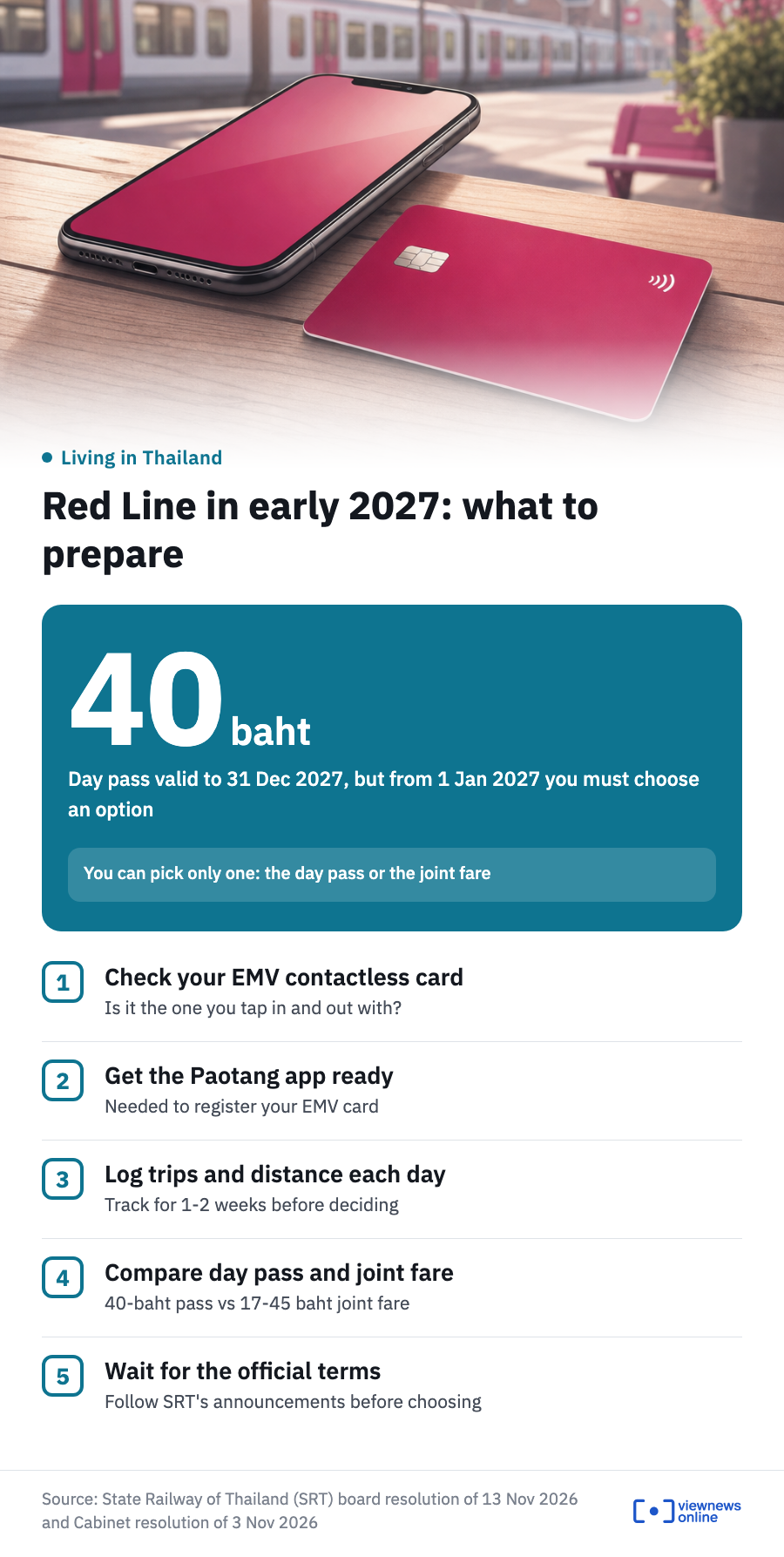
What to prepare before January
- Check that you tap in and out of the Red Line with an EMV contactless card.
- Install the Paotang app on your phone. Foreign residents and visitors can also ask SRT about registering their cards and accounts.
- Record the number of trips and distance you actually travel each day.
- Compare your trips with the 40-baht pass and the 17-45 baht joint fare.
- Wait for the official terms and conditions before you choose an option.
You do not need to change anything in December, so you have time to collect your own travel data. Once the registration details and conditions are out, the decision should be easier.
Source: State Railway of Thailand (SRT) announcement on its board resolution of 13 November 2026, and the Cabinet resolution of 3 November 2026 on the joint fare of 17 to 45 baht.
This article is adapted from ViewNews' Thai-language report.