Southern Thailand faces five days of continuous rain from 18 to 22 November 2026, with heavy falls in many areas and very heavy falls in some. The Thai Meteorological Department (TMD) has issued a weather warning, and residents, long-stay visitors and tourists in the south are advised to prepare before 18 November.
The warning is titled "Heavy to Very Heavy Rain in Southern Thailand", Notice No. 1 (309/2569). It says the south will see continuous rain, with heavy falls in many areas and very heavy falls in some places. The TMD asks the public to be careful of the danger from rain that keeps accumulating over several days.
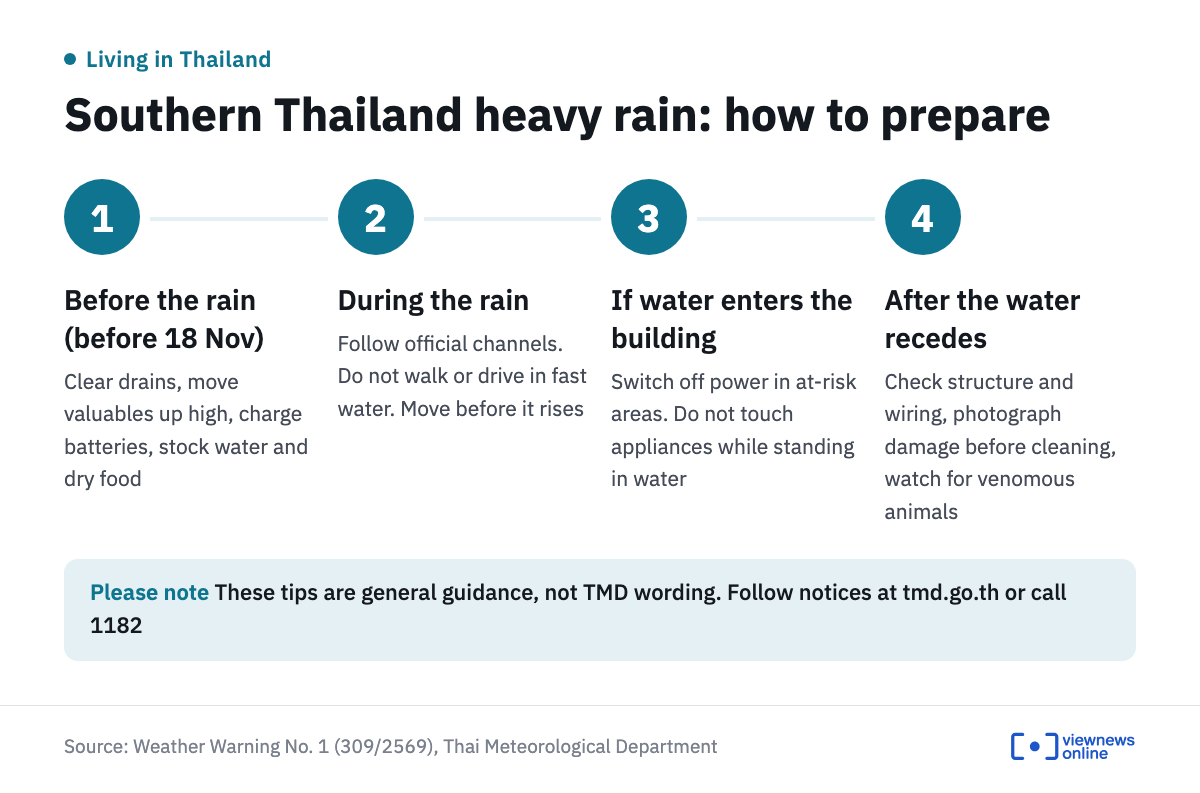
The checklist below is split into three stages: before the rain, during the rain and after the water recedes. These tips are general guidance for heavy rain and apply in any monsoon season. They are not wording from the TMD.
What the warning says
The warning is Notice No. 1 and covers 18 to 22 November 2026. It is posted on the weather warnings page of the TMD website.
Its main message is that the south will have continuous rain, with heavy falls in many areas and very heavy falls in some. The warning covers the south as a whole rather than naming provinces. Treat the whole of southern Thailand as needing preparation. If the TMD or disaster-prevention agencies issue later notices or province-level information, use that to guide your decisions.
Why several days of rain is harder to judge
The warning refers to rain that accumulates continuously. That means rain falls repeatedly over several days and the water adds up, rather than ending in one day. A short, heavy downpour is different. It falls and stops, and people can usually judge the risk from what they see in front of them.
Multi-day rain is harder to read. On some days the rain may not feel heavy enough to be dangerous, but over time the water keeps building up. Do not judge the risk by that day's rain alone. Keep following updates through all five days.
The TMD says continuous accumulated rain can cause flash floods and runoff from the hills.
Areas near streams and rivers, at the foot of hills and in low-lying ground need extra care. Water gathers quickly there and drains more slowly than elsewhere. If you live, stay or work in such an area, prepare early and watch the situation closely.
Prepare before the rain arrives
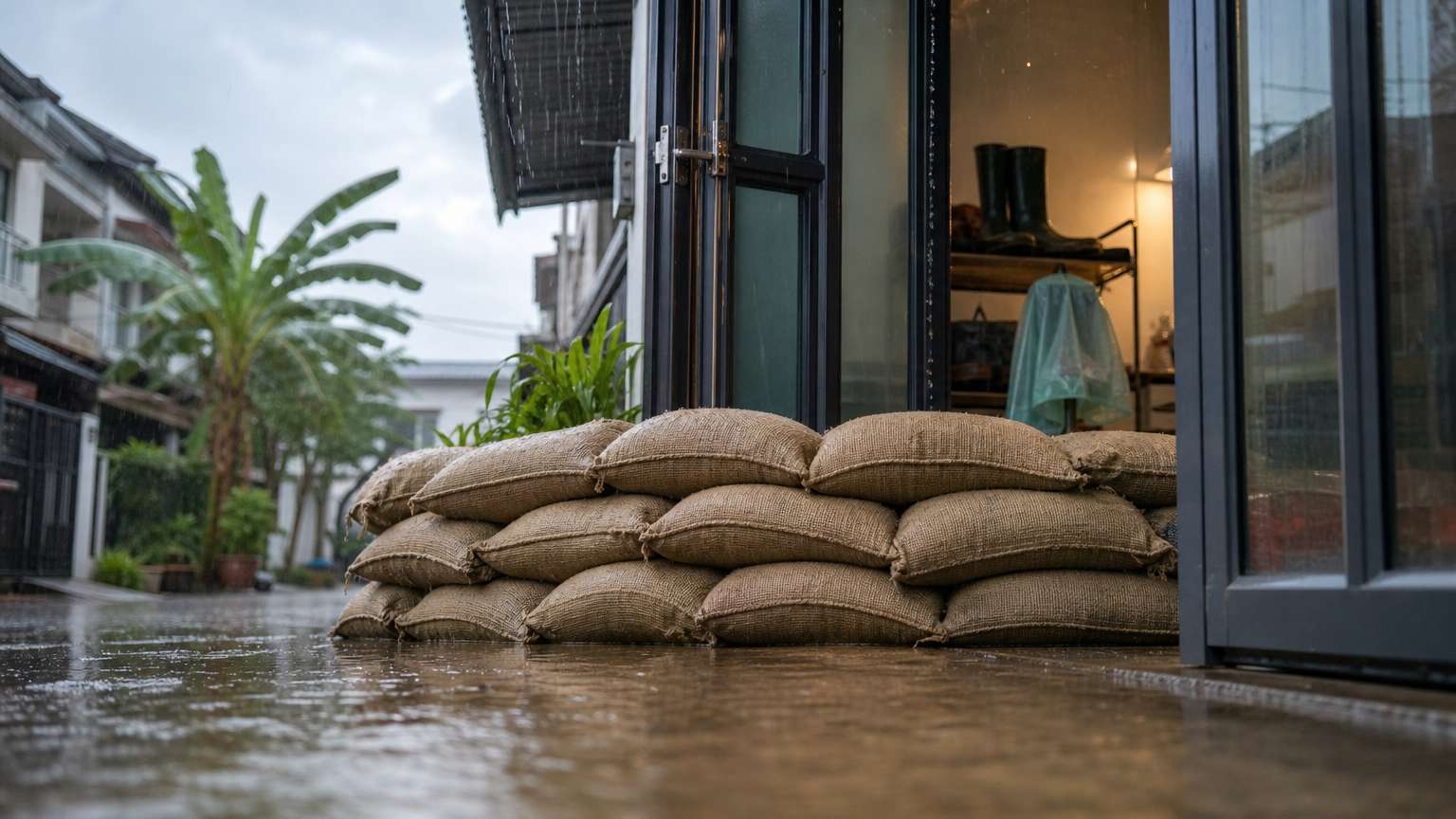
The days before 18 November are when you can do the most, because travel and shopping are still easy. Start by checking around your home, hotel or workplace for spots where water has pooled or flowed during heavy rain, and deal with those first.
- Check gutters, drains in front of the building and water channels. Clear leaves and rubbish that block them.
- Move important documents, electrical equipment and valuables to a higher place. Put them in waterproof bags. Passports and visa papers are worth including.
- Fully charge your phone and power bank. Have a flashlight ready.
- Stock drinking water, dry food and regular medicines to last several days.
- Write emergency numbers and the numbers of people close to you on paper, in case your phone stops working.
- Agree with the people you live or travel with on where to meet if you have to leave.
If you must travel between 18 and 22 November, allow extra time. Do not drive through roads covered by water or where you cannot see the road surface. Farmers and business owners with goods or equipment in low places should move them higher before the heavy rain starts. If you are a tourist, check with your hotel, tour operator or transport provider about your plans.
During the rain and after the water recedes
While it rains, follow official channels regularly. Do not walk or drive into fast-flowing water. If the water level rises quickly or the rain does not stop, decide to move to a safe place before the water gets so high that you cannot leave. Waiting until water enters the building and then moving is usually riskier.
If water starts to enter the building, switch off the power for the parts most at risk from water first. Do not touch electrical appliances while standing in water. Children, older people and anyone who has difficulty moving should be taken to safety before others.
When the water has gone down, do not rush back in. First check the structure, the electrical system and the area around the building to see whether it is safe. Photograph the damage before you clean up, because you may need the pictures if you have to report damage to the relevant agencies. Watch out for venomous animals that may have taken refuge indoors to escape the water.
Where to follow later notices
Notice No. 1 is only the first for this spell of rain. The TMD may issue later notices if conditions change. You can follow them on the weather warnings page of the TMD website, tmd.go.th, the same page that carries this notice. The TMD hotline, 1182, is shown on the same website.
If later notices or province-level information appear from the TMD and disaster-prevention agencies, rely on those rather than on messages forwarded on social media.
Source: Weather Warning "Heavy to Very Heavy Rain in Southern Thailand", Notice No. 1 (309/2569), Thai Meteorological Department.
This article is adapted from ViewNews' Thai-language report.