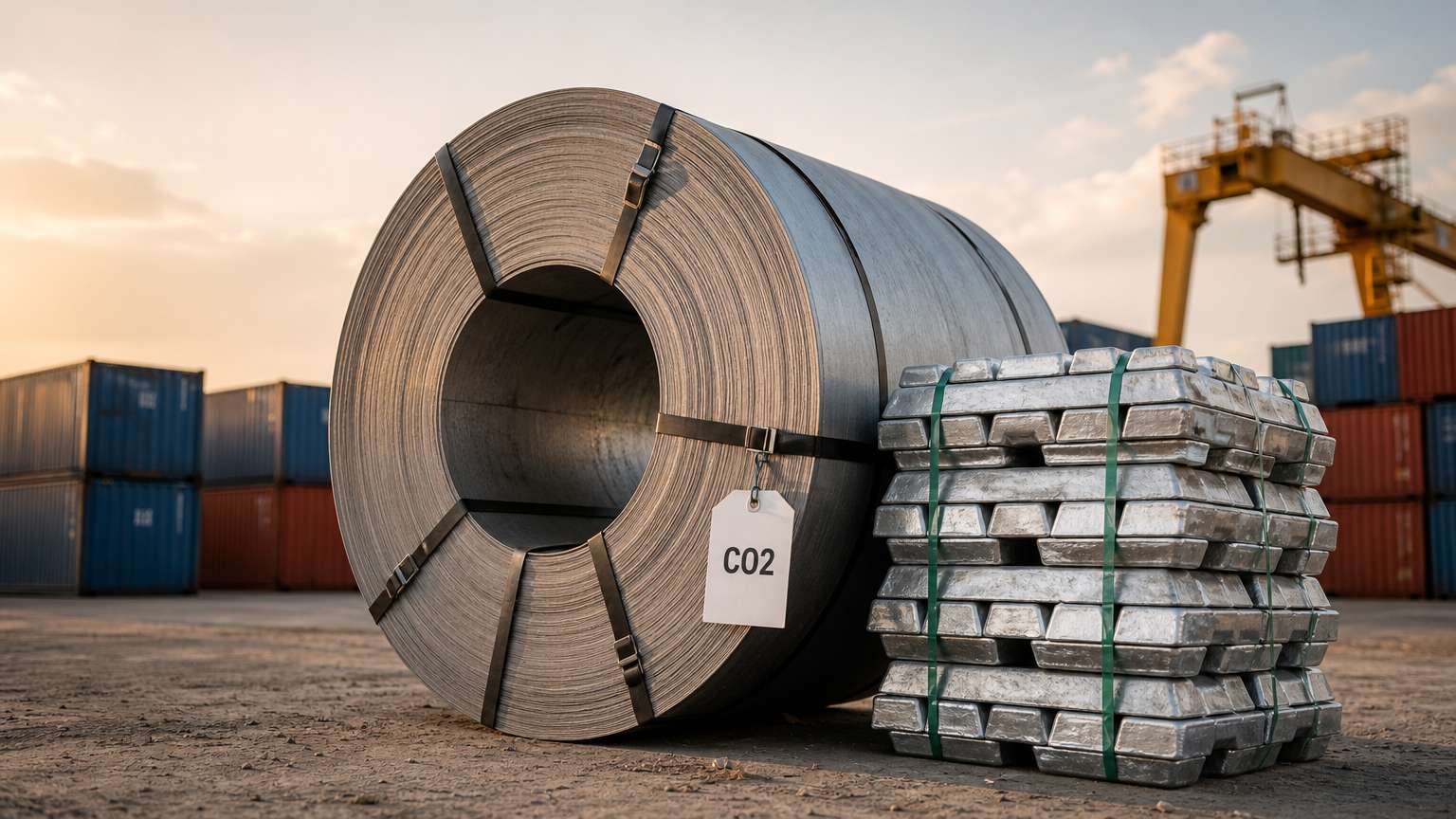
The European Union's Carbon Border Adjustment Mechanism (CBAM) has applied in full since 1 January 2026. Importers bringing steel, aluminium, cement, fertiliser, electricity and hydrogen into the EU must buy CBAM certificates to offset the carbon emitted in making those goods. Thai exporters selling these products to EU buyers must therefore pass on verified emissions data. If they cannot, buyers may order from other suppliers instead.
The measure is often called the EU carbon tax. In practice, the importer in the EU pays directly. Thai exporters feel the effect indirectly, through data requests, verification costs and pricing pressure. The topic matters to foreign business owners and managers at export-oriented factories in Thailand, and to anyone whose supply chain includes EU customers.
How CBAM works for imported goods
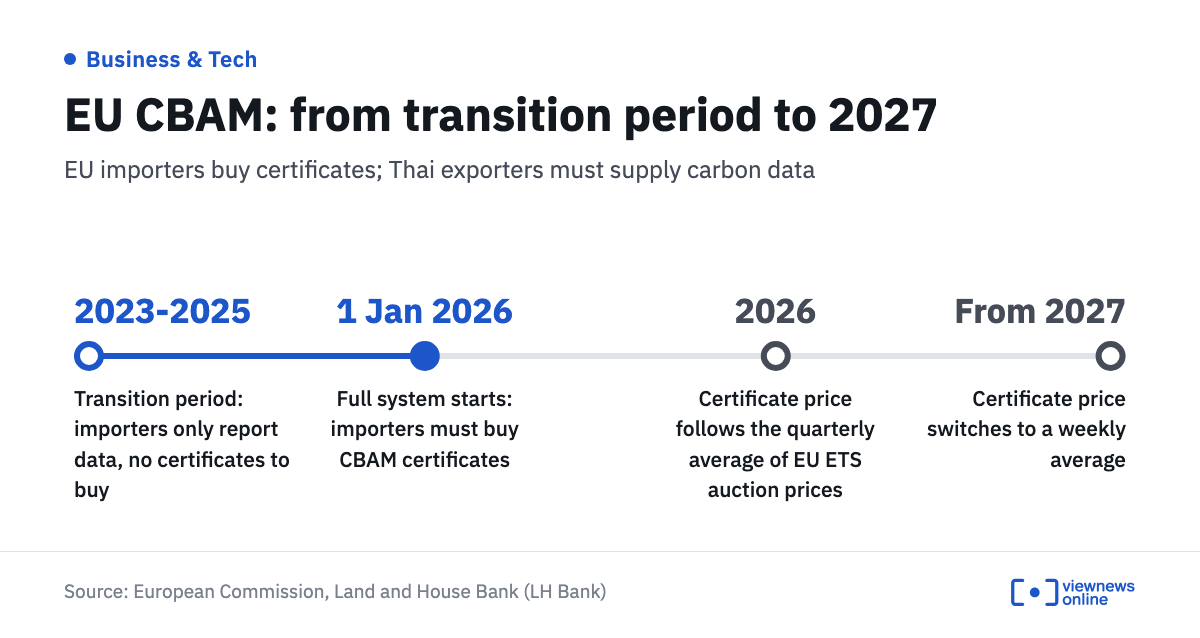
The European Commission says CBAM ran through a transition period from 2023 to 2025 and entered the full system on 1 January 2026. During the transition, importers only reported data and did not have to buy certificates or pay. Land and House Bank (LH Bank), which published a report on the impact on Thai industry, says that period let businesses worldwide get used to the system and prepare their carbon measurement methods.
Under the full system, an importer bringing more than 50 tonnes of CBAM-covered goods into the EU needs status as an authorised CBAM declarant before it can import them. The importer must buy CBAM certificates matching the carbon embedded in the goods and file a report every year. Certificate prices follow auction prices for emission allowances in the EU's mandatory carbon market, the EU Emissions Trading System (EU ETS). In 2026 the price is a quarterly average. From 2027 it is a weekly average. Each quarter's price is published on the Commission's CBAM certificate price page.
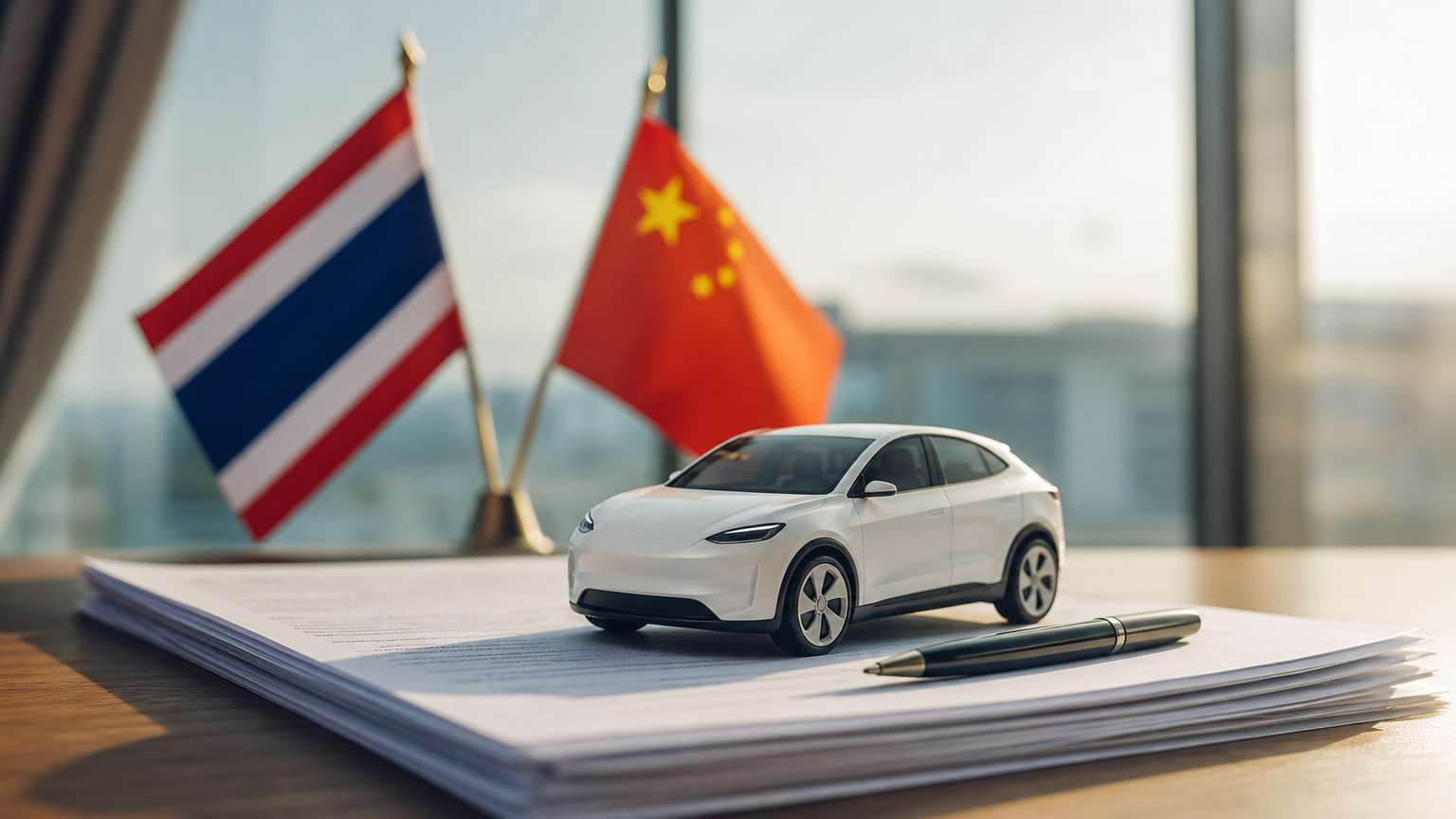
On the exporter side, data on greenhouse gases embedded in the goods must be given to the importer. It must also be verified by an accredited verifier in an EU member state. If the goods have already carried a carbon price in the country of origin, the exporter must supply evidence so the importer can claim a deduction when buying certificates. As a result, EU buyers may turn to countries that already have a mandatory carbon price, because what has been paid there can be deducted.
Steel and aluminium face the most direct impact
LH Bank assesses that steel and aluminium will bear the most direct impact. Its report uses Trade Map data from the International Trade Centre. It shows that in 2024 Thailand exported steel products worth US$277.8 million to the EU, or 5.3% of Thailand's total steel exports. Aluminium exports to the EU were US$67.6 million, or 2.7%.
Other covered goods are barely tied to the EU market. Cement exports to the EU were only US$0.005 million. Thailand exports no fertiliser to the EU, and no electricity or hydrogen. In the short term, CBAM's effect on the Thai economy as a whole is therefore limited, because the share of these exports going to the EU is low. Individual exporters still face cost burdens and the risk of lost orders if they cannot measure or cut their emissions. Small operators are most exposed, since they must hire consultants and verifiers.
Indirect effects may be wider. Industries that use steel or aluminium as a main raw material, such as auto parts, electrical appliances, canned packaging and construction, may see higher input costs. Farming that uses chemical fertiliser, and food processors that use aluminium containers, could also be affected. EU partners may also ask suppliers for emissions data even when the product is not yet on the CBAM list.
What businesses need to prepare
The National Metal and Materials Technology Center (MTEC), part of the National Science and Technology Development Agency (NSTDA), advises exporters to start by checking the customs tariff code (CN Code) of each product, because reporting requirements differ by product type. They should then fill in data using the EU's latest CBAM communication template, which is an Excel file.
MTEC warns that calculations must follow the CBAM method. That means counting direct emissions from burning fuel and from the production process, plus indirect emissions from electricity and heat. Using a product or organisational carbon footprint figure as it is may give a number that is too high. If upstream suppliers have no actual emissions data, exporters can use default values, but these are set higher than typical benchmarks.
To cut emissions, LH Bank suggests installing solar power, signing direct renewable electricity purchase contracts, improving energy efficiency in plants, and using scrap metal instead of raw ore in smelting. The report also notes that voluntary carbon credits cannot be used to offset the purchase of CBAM certificates.
On policy, LH Bank proposes that the government speed up climate change legislation, develop a domestic carbon pricing mechanism, increase the number of verifiers the EU accepts, build a database of carbon intensity values for Thai industry, and negotiate with the EU for flexibility for developing countries. Its reasoning is that countries with their own mandatory carbon price are more attractive to buy from, because EU importers can deduct what has already been paid. Where there is no such mechanism, importers must pay a higher offset.
What to ask EU buyers and what to watch
Because importers above the 50-tonne threshold need authorised declarant status to bring in CBAM goods, Thai exporters should ask their EU buyers whether that status is in place and what data they need from the Thai side. That helps exporters supply emissions data in the right format from the start.
One thing to watch is the scope of covered goods. LH Bank says the EU plans to keep reviewing and expanding the list. Products that have been discussed include petrochemicals, plastics, chemicals and ceramics, and downstream goods such as auto parts, machinery and electronics. No official announcement has been made.
Source: European Commission (CBAM pages), the National Metal and Materials Technology Center (MTEC), NSTDA, and Land and House Bank's Business Research unit (report: EU CBAM Impact Analysis and Implication).
This article is adapted from ViewNews' Thai-language report.