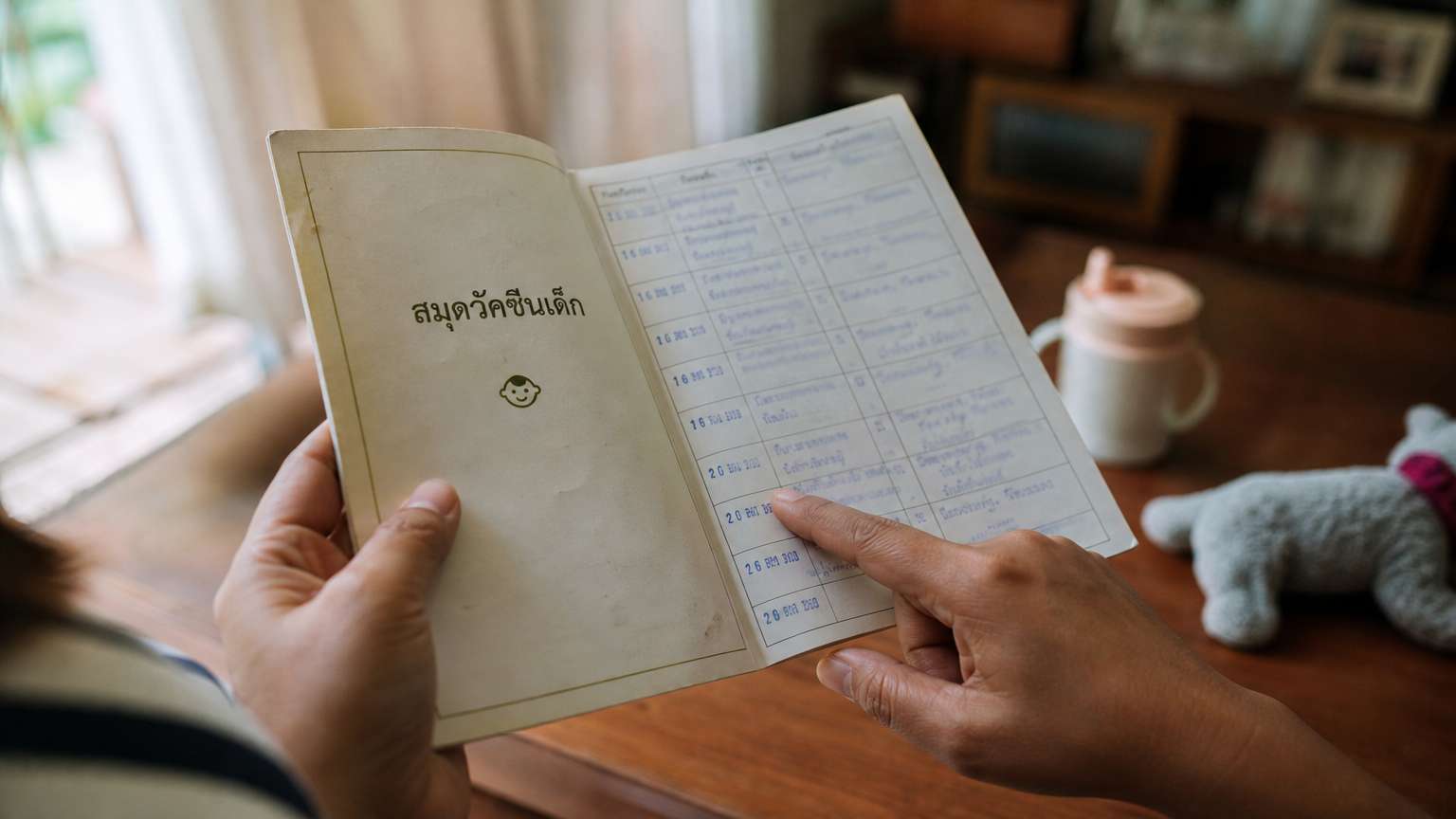
Parents of young children in Thailand should check their child's vaccination record. On 11 November 2026, the Department of Disease Control (DDC) under the Ministry of Public Health said that from 1 January to 9 November 2026 the country received reports of 61 suspected diphtheria cases, including 8 deaths. The department said there is no evidence of a nationwide outbreak, but more cases may appear, especially in communities where children are unvaccinated or only partly vaccinated.
The figures are not a reason to panic. They are a prompt to check the easiest protection available: your child's vaccine history, and to know which symptoms need a hospital visit.
Reading the numbers: 61 suspected cases, 8 deaths
The 61 cases are suspected diphtheria, not all confirmed by laboratory tests. The ratio of male to female patients is 1.14 to 1. The youngest patient is 8 months old and the oldest is 82. The median age, meaning the middle age when all patients are lined up from youngest to oldest, is 18. The most affected group is children under 4.
Cases are spread across several provinces, but they cluster in the three southern border provinces and four districts of Songkhla. That area accounts for 21 cases, about one in three of the total, and 5 deaths. Laboratory tests confirmed 3 of those cases. Narathiwat has the most cases, at 10.
The figure that stands out is 8 deaths among 61 cases, which the department puts at a case fatality rate of 13 percent. It is based on a small number of suspected cases, so a few more cases or deaths would change the percentage quickly. It should not be compared directly with the 5-10 percent figure the department uses for severe cases, because the two figures use different bases.
Symptoms and when to see a doctor
Diphtheria is caused by bacteria. The incubation period is about 2-5 days. It spreads through coughing, sneezing or contact with an infected person's secretions. The main symptoms are fever, sore throat and difficulty swallowing. A grey-white membrane often sticks tightly in the throat.
In severe cases the membrane can block the airway, or complications affecting the heart and nervous system can cause death. The DDC stresses that treatment from an early stage reduces severity and deaths. The disease is common in children, but adults can fall ill too. The oldest patient this year is 82.
If you or someone in your home has suspected symptoms, the department advises wearing a face mask to limit spread and seeing a doctor promptly. At the hospital or clinic, tell the doctor whether you have been in contact with a patient and which vaccines you have had. These two facts help the doctor assess risk and diagnose.
On the way and while waiting, wash your hands regularly and do not share drinking glasses or personal items. This is the department's general advice for everyone.
Child vaccine schedule and catching up on missed doses
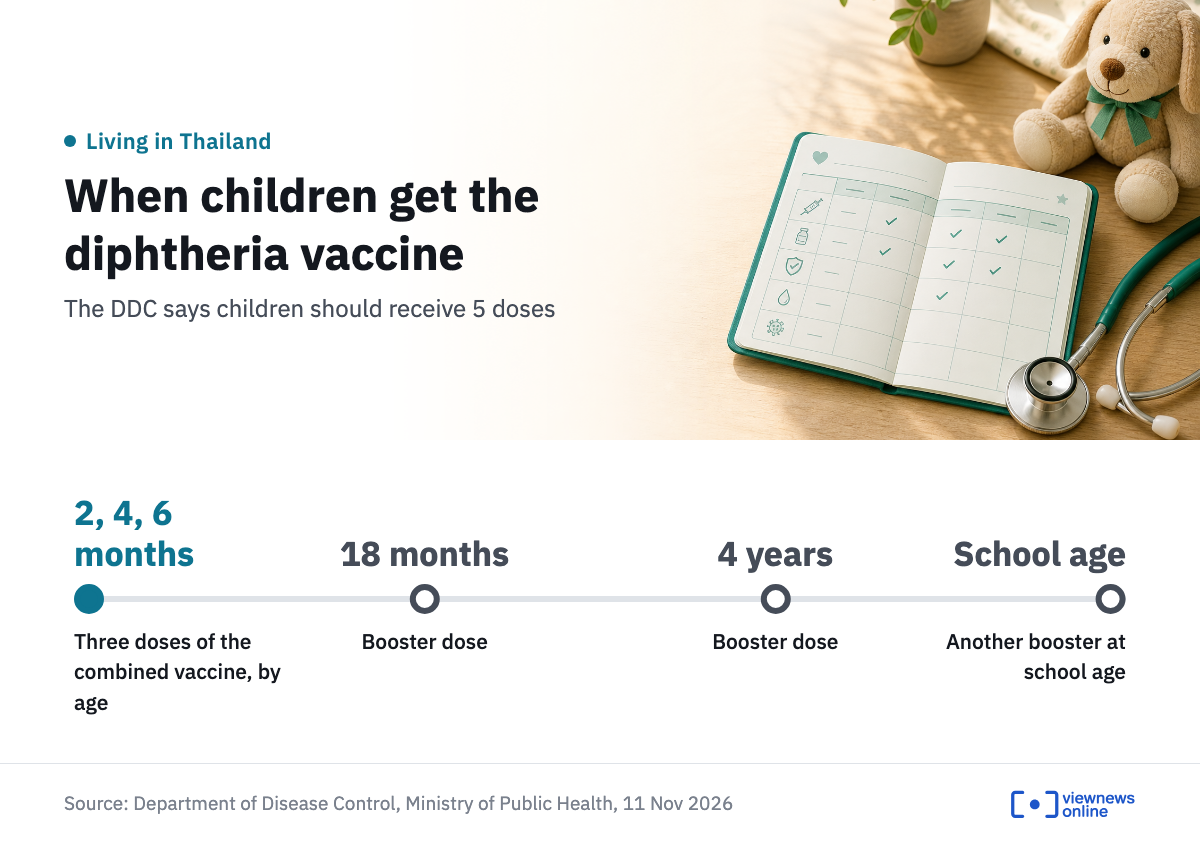
The DDC says diphtheria is preventable with vaccines. Children should receive 5 doses: at 2, 4 and 6 months, then booster doses at 18 months and 4 years. The vaccine is a combined vaccine given according to the child's age. Children also need another booster at school age.
Adults should also have booster doses of the diphtheria and tetanus vaccine (dT). If you are unsure when you last had one, ask a local public health officer whether you need a booster.
If a child's vaccines are incomplete, or you are not sure, take the vaccination record to a local public health officer to arrange catch-up doses. Checking now is better than waiting until there are cases in your community. Things to check in the record:
- Whether all three doses at 2, 4 and 6 months were given
- The booster at 18 months
- The booster at 4 years
- The school-age booster
- If any dose is missing or hard to read, take the record to a local public health officer
Where to get catch-up doses and what they cost vary by area, so ask the local public health officer directly. If your child was vaccinated abroad, the schedule may differ from Thailand's. Bring the record to a clinic or hospital and ask whether anything is missing. Foreign residents should also check with the clinic or hospital about what it can offer them.
What the Department of Disease Control is doing
The DDC is monitoring diphtheria nationwide and stepping up measures in risk areas. It has asked local health agencies to find cases quickly, investigate outbreaks and track close contacts. It is also preparing treatment, including diphtheria antitoxin, to reduce deaths.
The department is working with local administrators, local government bodies, schools and community leaders to find children who missed vaccines, and it is supporting active vaccination services, especially in the southern border provinces.
For more information, call the DDC hotline on 1422. Check with the hotline whether English-language service is available. For individual treatment or vaccination, consult a doctor or pharmacist before starting or changing treatment.
Source: Department of Disease Control, Ministry of Public Health, announcement of 11 November 2026, and the DDC hotline 1422. This article is adapted from ViewNews' Thai-language report.