Bird flu in people can range from eye inflammation or mild flu-like illness to severe respiratory disease and death. Anyone who has contact with infected animals or contaminated places needs to take particular care. The World Health Organization (WHO) rates the risk to the general public as low, according to its 24 November 2026 report on infections among dairy farm workers in the United States.
Where Thailand and its neighbour Cambodia stand
Thailand's Department of Disease Control (DDC) said in information dated 1 April 2026 that the country had reported no human cases of bird flu since 2006. It had reported none in poultry since 2008.
Neighbouring Cambodia has had cases this year. A WHO table showed five confirmed human H5N1 cases there in 2026, including one death, as of 7 October. Globally, the table listed 1,005 cases in 25 countries since 2003, including 479 deaths.
Symptoms and who is at risk
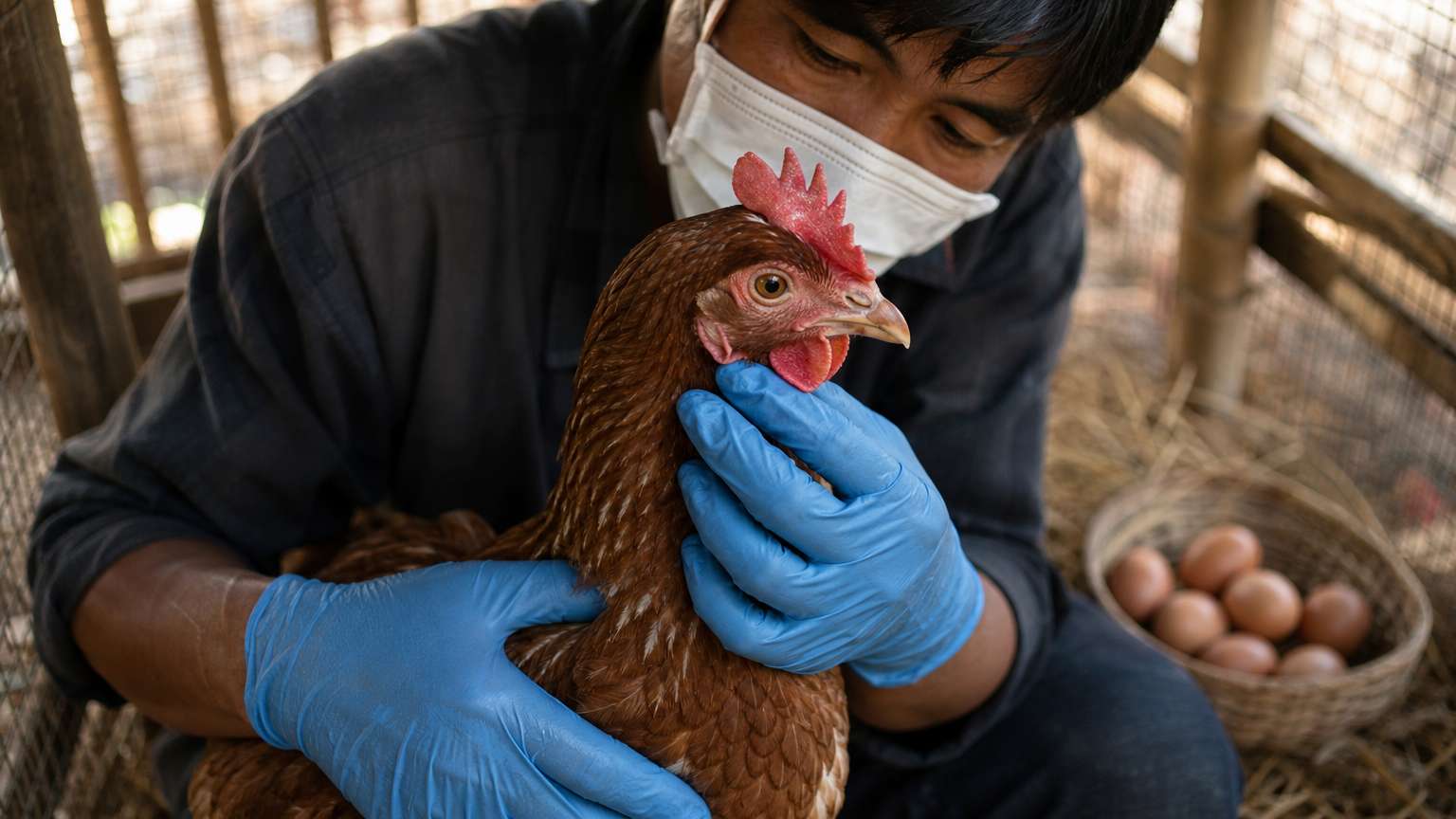
Most human infections come from contact with infected animals or contaminated environments. Risky activities include handling, culling, slaughtering or processing poultry, preparing infected birds for food, especially at home, and spending time in contaminated places such as live bird markets.
WHO rates the risk for people exposed through their work as low to moderate. The assessment could change as more information emerges.
Limited spread between people has been reported in a few events worldwide, but sustained human-to-human transmission has not been found. Occasional human cases can be expected where the virus is present in poultry.
Symptoms can include:
- Conjunctivitis (eye inflammation)
- Upper respiratory symptoms
- Stomach and gut symptoms
- Less commonly, brain inflammation or other brain disorders
Some exposed people are infected without showing symptoms. A laboratory test is needed to confirm the disease. Symptoms alone are not enough.
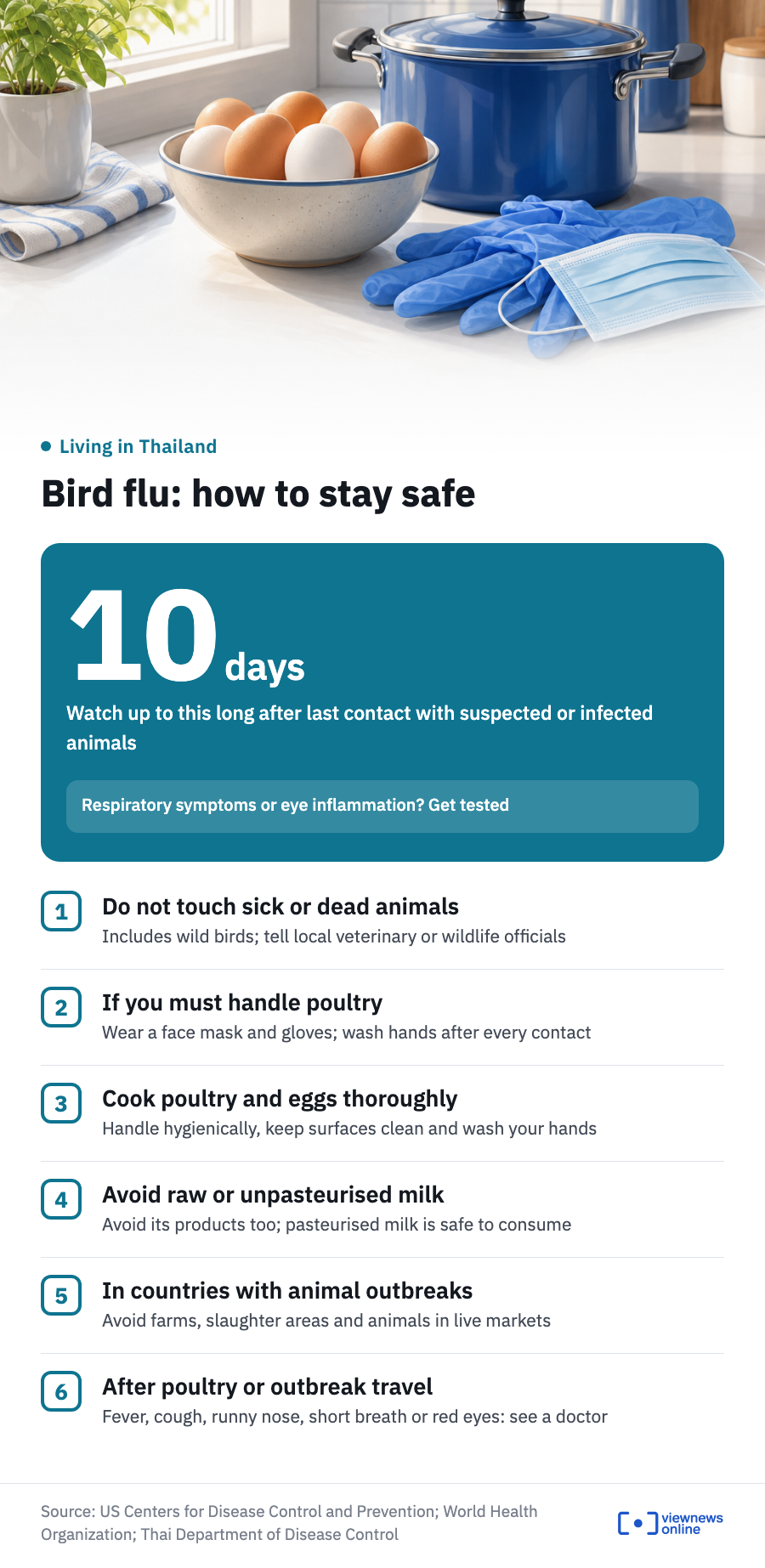
The US Centers for Disease Control and Prevention (CDC) advises people exposed to birds or other animals with suspected or confirmed infection to watch for symptoms for up to 10 days after their last contact. Those who develop respiratory symptoms or conjunctivitis should be tested.
How to eat chicken, eggs and dairy safely
Cook eggs, chicken and other poultry products thoroughly and handle them hygienically. WHO says there is no evidence that bird flu spreads to people through properly prepared and cooked poultry or eggs. Store ingredients properly, keep surfaces clean and wash your hands while cooking.
The DDC advises buying meat and eggs from clean shops that meet standards. Meat should have no bruises or blood spots, and eggs should not be soiled with droppings. Eat food that is cooked, particularly poultry, eggs and dairy products.
Only healthy animals should be used for food. Animals that died abnormally should not be eaten and must be disposed of according to national rules.
Avoid raw or unpasteurised milk and products made from it. Pasteurised milk is safe to consume. If it is not available, bringing raw milk to a boil makes it safer.
Sick or dead animals and travel precautions
Do not touch sick or dead animals, including wild birds. Notify local veterinary or wildlife authorities so they are aware or can collect them. The DDC advises anyone who must handle poultry to wear a face mask and gloves and to wash their hands after every contact.
Poultry farmers who find unusual illness or deaths should quickly tell local livestock officials and should not use the carcasses for food. Farm staff and others who work with animals should wear suitable protective equipment and follow infection control measures.
If you are travelling to a country with animal outbreaks:
- Avoid visiting animal farms
- Avoid contact with animals in live animal markets
- Avoid slaughter areas
- Avoid surfaces that may be contaminated with animal droppings
- Wash your hands often with soap and water
- Practise good food hygiene
See a doctor promptly if you have a fever, cough, runny nose, shortness of breath or red eyes after contact with poultry or after returning from an outbreak area. Tell the doctor about your animal contact and travel history, as the DDC and WHO advise. Travellers returning from outbreak areas who have respiratory symptoms and suspect they caught an infection from animals should inform local health services.
In Thailand, the DDC lists 1422 as its hotline for questions. For an ambulance, call 1669.
In connection with the US cases, WHO does not recommend special screening at border points or restrictions on travel or trade. H5 vaccines are not recommended for the general public, although guidance exists for targeted groups based on exposure risk. Seasonal flu vaccines are unlikely to protect against H5.
Recent cases in the US and Vietnam
The United States had reported 75 human H5 cases since 2022 as of 4 November 2026. They included three confirmed cases in Washington state, all adults working on dairy farms in the Yakima area, where a highly pathogenic H5N1 virus had recently been detected in dairy cattle.
Two of the three did not need hospital care. The third, who had underlying health conditions, developed severe illness, was admitted to hospital and died. WHO said it was the first reported death following exposure to infected dairy cattle or a contaminated environment. Investigations and contact tracing were continuing, with no evidence of human-to-human spread.
In a separate case, a man living in Vietnam's Quang Ninh province, who regularly travels to China for trade, was found with a cough, stuffy nose and runny nose at the Dongxing border checkpoint in early November. A sample taken there tested positive for H5N1 in China, but a later sample taken in Vietnam was negative.
Information from the same period showed he was in stable condition without fever, cough or breathing difficulty. No exposure to poultry, other potentially infected animals or contaminated environments was found. His two household contacts had no symptoms and tested negative for influenza A.
Source: World Health Organization; Division of Epidemiology, Department of Disease Control; US Centers for Disease Control and Prevention; UK Government (GOV.UK). This article is adapted from ViewNews' Thai-language report.