The Thai Cabinet has approved in principle a draft ministerial regulation that would create an environmental protection zone at the Bang Pakong River mouth. The zone would cover 4 sub-districts in Chachoengsao and Chonburi provinces. The Cabinet made the decision on 24 November 2026, on a proposal from the Ministry of Natural Resources and Environment. The draft bans discharging untreated pollution, bans encroachment on mangrove forest, and requires certain projects to file an Initial Environmental Examination (IEE) report. It is still a draft and is not in force.
The people most directly affected are operators of hotels, condominiums, retail and wholesale buildings and piers in the area. Local communities and fishers on the river and coast are also affected. The government says legal fishing can continue. Foreign residents, investors and business owners with property or plans in the area should follow the final text.
The 4 sub-districts and the government's reasons
The Deputy Spokesperson of the Prime Minister's Office said the draft covers 4 sub-districts. Three are in Bang Pakong district, Chachoengsao: Song Khlong, Bang Pakong and Tha Kham. The fourth is Khlong Tamru in Mueang Chonburi district, Chonburi.
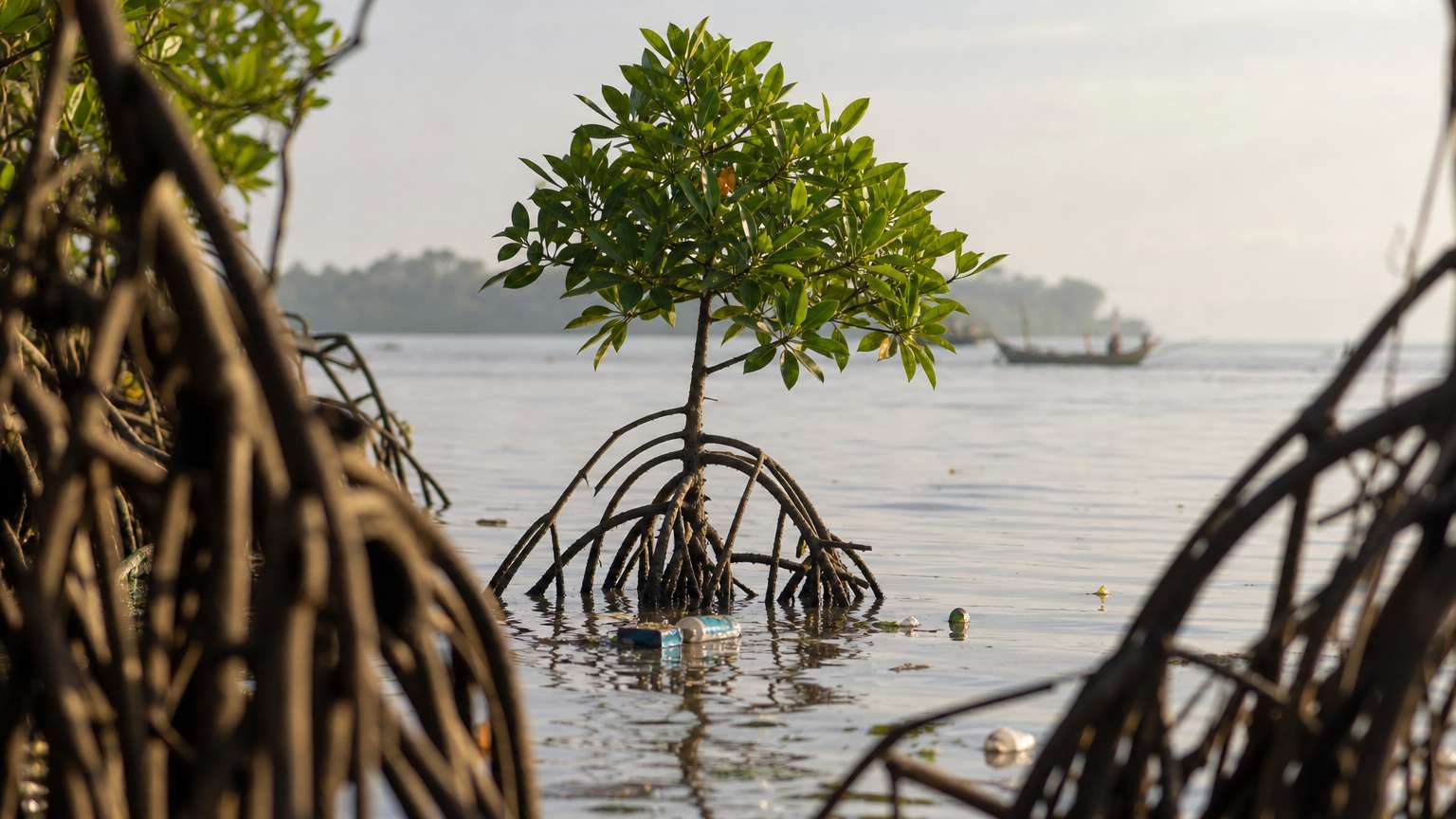
The government says the aim is to strengthen protection of natural resources and the ecosystem at the Bang Pakong River mouth and along the coast of the upper Gulf of Thailand. It also wants to stop environmental decline and protect habitat for aquatic animals and rare marine species, especially the Irrawaddy dolphin.
According to the government, the area faces pressure from human activity and natural factors. These include wastewater, growing amounts of solid waste and sewage, coastal erosion, discolored seawater, and expanding communities and industry. It says these problems harm the ecosystem and that sightings of rare marine animals appear to be falling. The government concluded that systematic protection measures are needed to prevent damage and restore natural resources over the long term.
Two zones with different rules
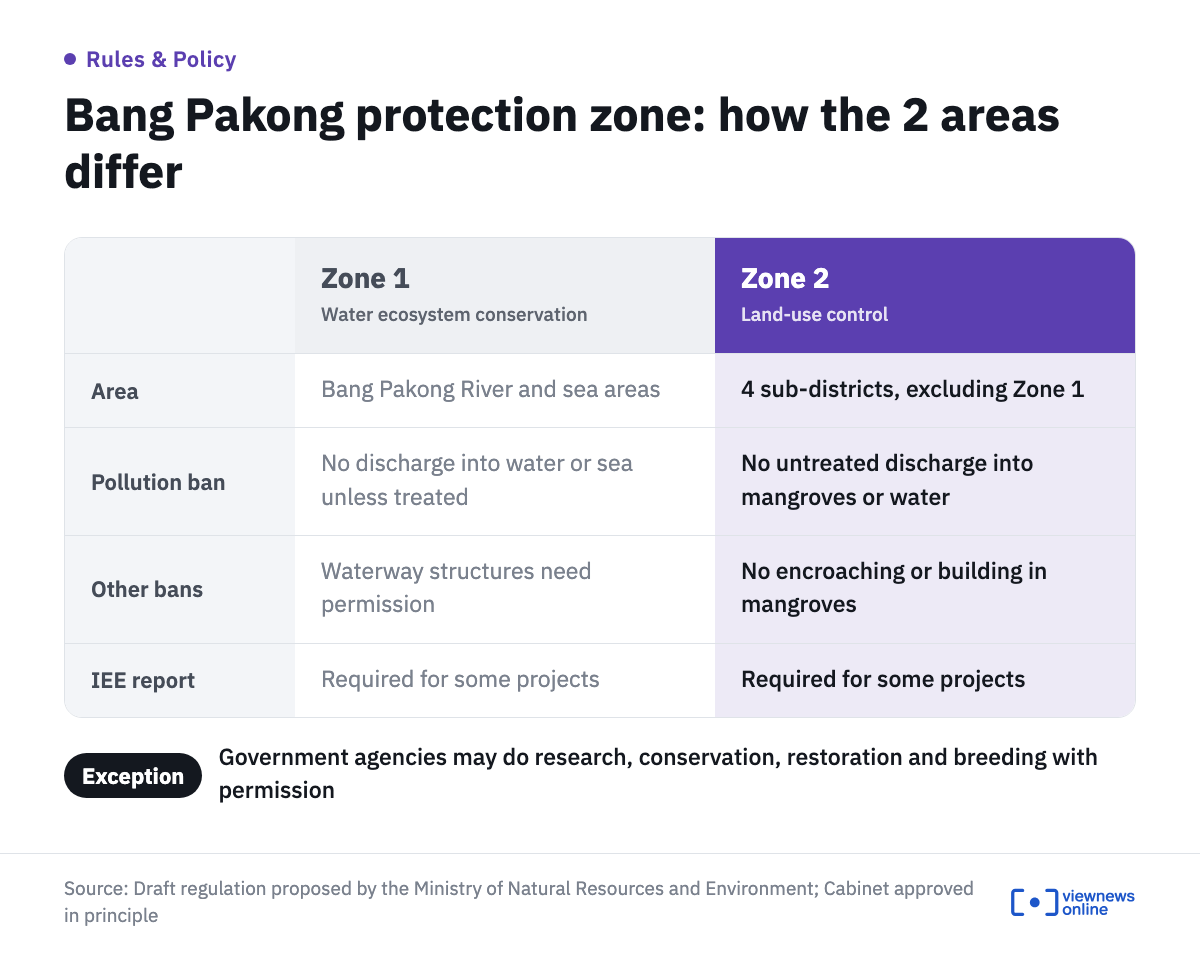
The draft divides the protection area into 2 zones.
Zone 1 is an area to conserve water ecosystems and aquatic species. It covers the Bang Pakong River in Bang Pakong and Tha Kham sub-districts in Chachoengsao, Khlong Tamru in Chonburi, and sea areas along the boundaries of the two provinces. Pollution may not be discharged into water or the sea unless it has been treated to the legal standard. Structures that extend into waterways are controlled and need permission under the relevant laws.
Zone 2 is an area where land use is controlled. It covers Song Khlong, Bang Pakong, Tha Kham and Khlong Tamru, but not the land and water already in Zone 1. Pollution may not be released into mangrove forest or water sources without treatment to standard. The draft also bans acts or businesses that change the natural condition of mangrove forest or harm the ecosystem, such as encroaching on mangroves or building structures in them.
Government agencies may carry out research, conservation, restoration and breeding of aquatic plants and animals in the area. They still need permission under the relevant laws.
Projects that would need an IEE
Under the draft, certain projects in both zones must prepare and submit an IEE report. This is a first-stage environmental impact assessment done before a project goes ahead. The draft lists 4 project types and sizes:
- Hotels, multi-unit residential buildings or condominiums with 50 to 79 rooms, or total usable floor area of 2,500 to under 4,000 square metres.
- Retail or wholesale buildings with total floor area of 5,000 to 10,000 square metres across all floors.
- Piers that can handle vessels of 100 to under 500 gross tons, or that have a frontage of 20 to under 100 metres, or a total area of 200 to under 1,000 square metres.
- Marinas and recreational piers that can hold 5 to under 50 boats, or that have a total area of 100 to under 1,000 square metres.
Developers planning projects close to these thresholds should check the final published regulation. These figures come from the draft the Cabinet approved in principle, and the wording may change before it is issued.
Fishing and existing businesses, and what is not yet known
The government says the protection zone does not ban all fishing. Legal fishing can continue under fisheries law and related rules. Businesses that were properly licensed before the regulation takes effect can keep operating until their permits expire.
Several points are still unknown. The date of publication in the Royal Gazette and the start date have not been announced. The statement also did not give penalties or fines for violations, so it is not clear what offenders would face.
The matter is at the stage of approval in principle of a draft regulation. Business operators and local residents should watch for the final announcement to see the exact areas, prohibitions and IEE thresholds.
Source: Office of the Prime Minister (Cabinet resolution briefing), on a proposal from the Ministry of Natural Resources and Environment.
This article is adapted from ViewNews' Thai-language report.