Importers of milk, skimmed milk powder and instant coffee from Europe's EFTA countries will get new import rules under the Thailand-EFTA free trade agreement. The Cabinet approved the principle of a draft Commerce Ministry announcement on 24 November 2026. The government aims to have the agreement take effect on 1 January 2027.
The rules are still a draft. Nothing has changed at Thai customs yet. This article explains what the Cabinet approved, which products are covered, how a quota differs from full liberalisation, and what importers, farmers and shoppers should watch next.
Where the process stands
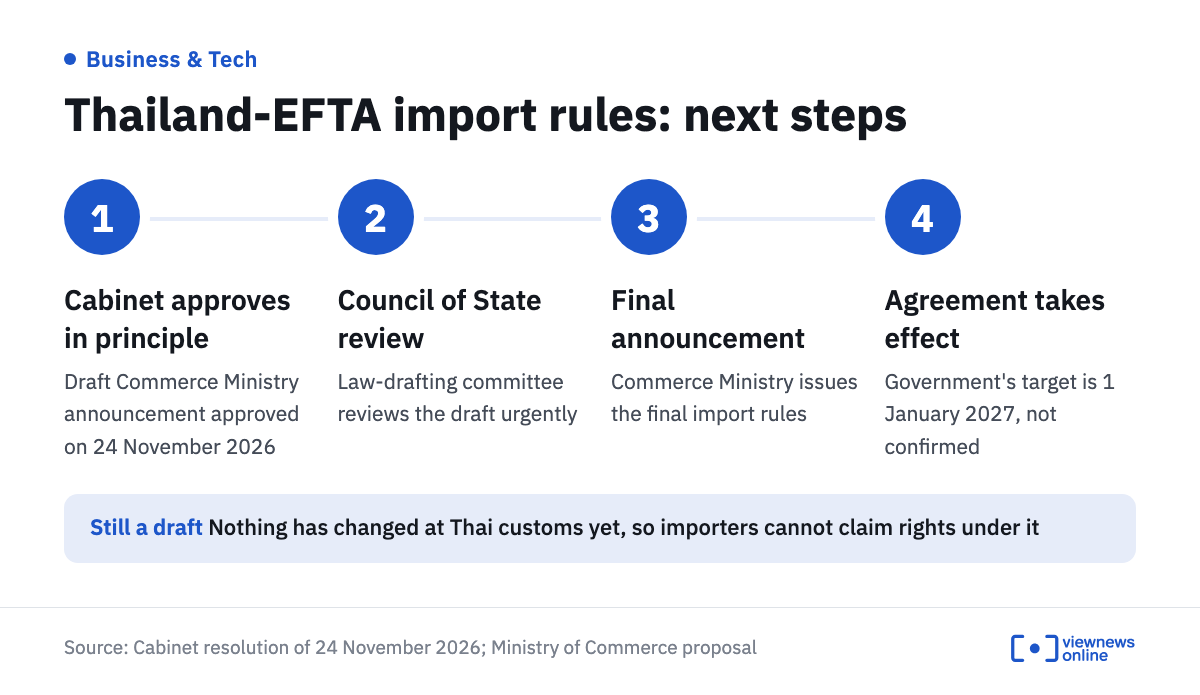
A deputy spokesperson for the Prime Minister's Office said the Cabinet approved the principle of a draft Commerce Ministry announcement, as proposed by the ministry. The draft sets out the rules and methods for importing agricultural goods that Thailand has committed to manage under the World Trade Organization's agriculture agreement. It is meant to bring those rules in line with the new trade deal.
Approval in principle means the Cabinet agrees with the approach. It does not make the draft a binding announcement, so importers cannot yet claim any rights under it. According to the report, the draft will go to the Council of State's law-drafting committee for an urgent review. The Commerce Ministry will then issue the final announcement.
The 1 January 2027 date is the government's target, not a confirmed start date. Anyone affected needs to wait for both the final announcement and clarity on when the agreement actually takes effect.
What the deal covers
The European Free Trade Association (EFTA) has four members: Iceland, Liechtenstein, Norway and Switzerland. Thailand and EFTA signed the agreement on 23 January 2025 at the World Economic Forum in Davos, Switzerland. The government says it is Thailand's first free trade agreement with a group of European countries. It covers trade in goods and services, investment, intellectual property, economic cooperation, and trade and sustainable development.
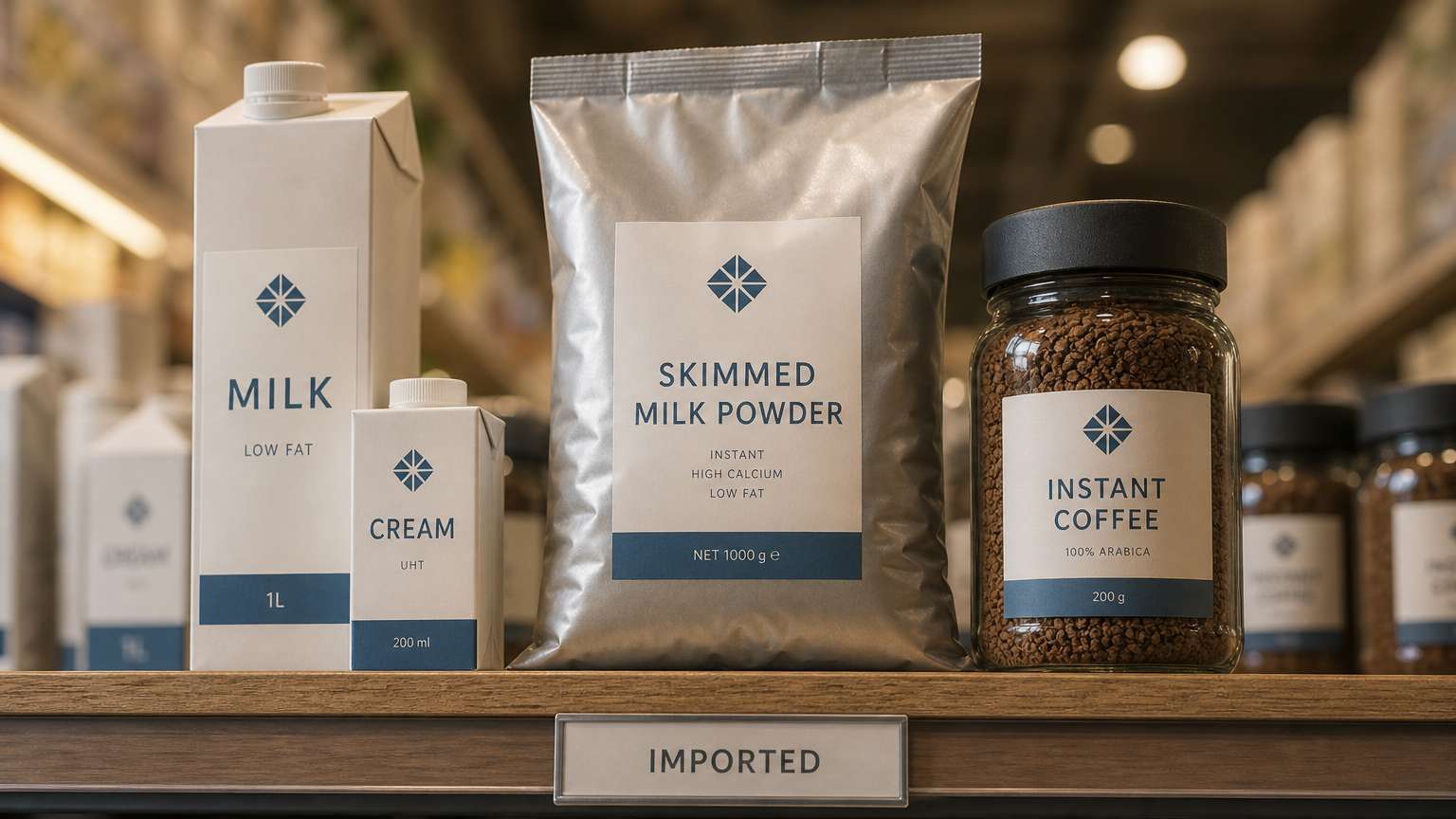
The draft announcement deals with three groups of farm products: milk and cream, skimmed milk powder, and instant coffee. The milk and cream group includes flavoured milk drinks. All three groups would be exempt from import duty and from import licensing, under the conditions set in the agreement.
A duty exemption means no import tax at the normal tariff rate. A licensing exemption means importers do not need an import licence for these goods. Both benefits depend on the agreement's conditions. They do not apply automatically to every shipment.
Across the whole deal, tariffs are cut on both sides. EFTA members will waive customs duty on about 90% of Thai product lines on average. Thailand will waive duty on about 83.59% of EFTA product lines on average, phased in or removed within 15 years. These are averages for the full agreement. Which items are cut at once and which are phased in will depend on the final announcement.
On the Thai export side, the government says rice, cereal flour, noodles, processed food, seasoned products, pet food, fresh and processed seafood and canned fish could benefit. So could industrial goods such as gems and jewellery, clothing, rubber, electrical appliances and vehicles.
Quota versus full liberalisation
Farm imports can be handled in different ways. With full liberalisation, a product can be imported normally with no cap on volume. A quota is a volume or entitlement set in advance, so the special treatment applies only within the agreed limit. Importers need to know whether their product falls within a preferential group and what conditions come with it.
For this draft, the government statement says the three product groups get duty and licensing exemptions under the agreement's conditions. That wording matters. The details for each product will be in the final announcement and the agreement's schedule of commitments. Importers should not assume from the news that every item can be imported freely and without limit.
What importers, farmers and shoppers should watch
Importers of milk, skimmed milk powder and instant coffee should wait for the final Commerce Ministry announcement. The rights, conditions and procedures will be set out there. Placing orders in advance on the strength of an unenforced draft may be risky. Points to watch:
- The final Commerce Ministry announcement that follows the draft approved in principle
- The outcome of the law-drafting committee's review
- The date the Thailand-EFTA agreement actually takes effect
- The conditions for claiming the duty exemption
Thai farmers who compete with imports, such as dairy producers, may be affected. The government has not released figures on the impact, so the scale is unknown. Any support measures the government announces later are worth following.
For shoppers, there is no data yet showing when or by how much milk or instant coffee prices might change. Prices depend on many factors besides import duty, and the agreement is not yet in force.
Several steps remain, including the final announcement and the agreement's start date. Those affected should follow updates from the Commerce Ministry and related departments, then plan imports around the announcement as issued.
Source: Cabinet resolution of 24 November 2026, as presented by a deputy spokesperson for the Prime Minister's Office, and a proposal by the Ministry of Commerce. This article is adapted from ViewNews' Thai-language report.