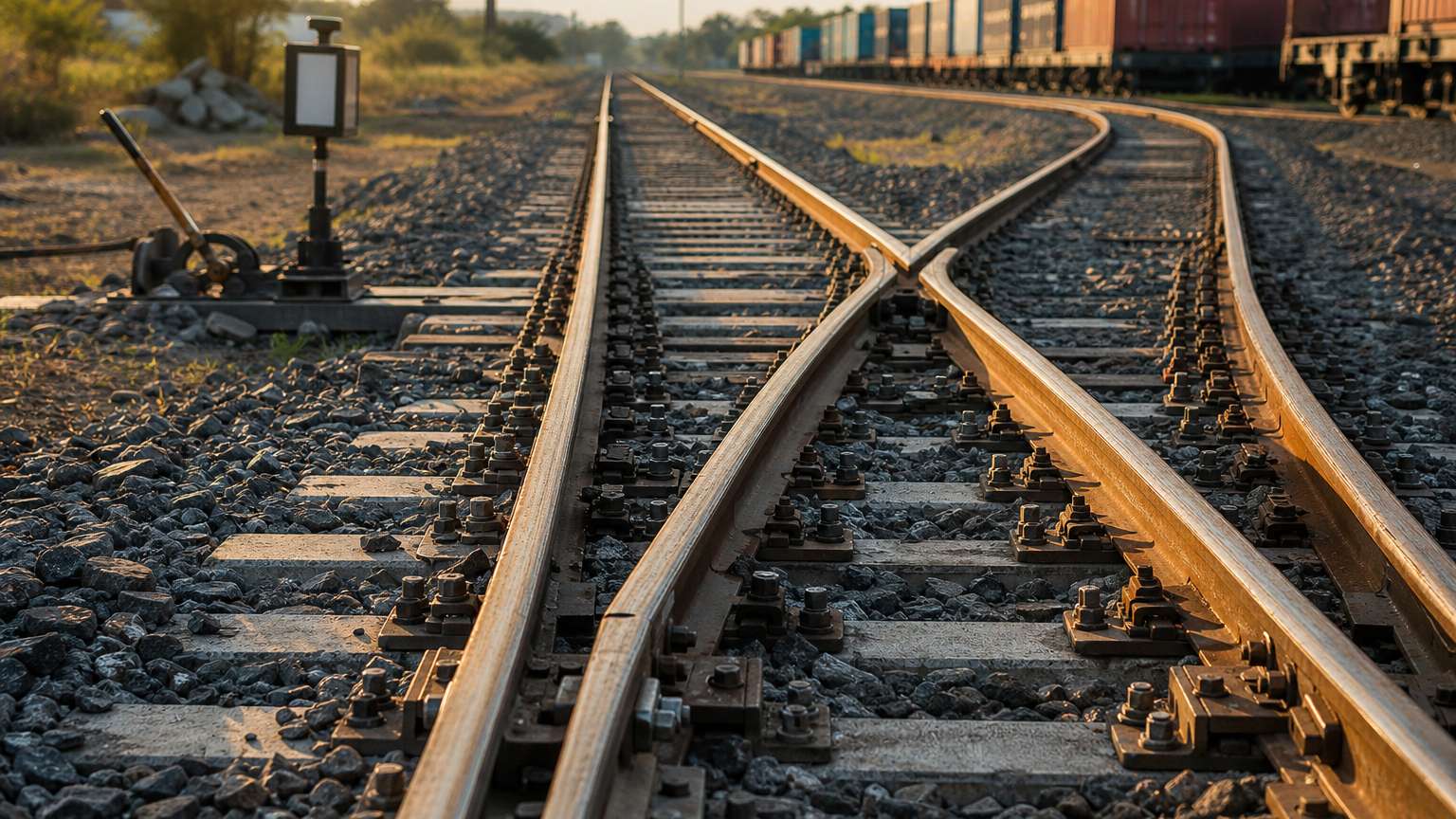
Thailand's Cabinet on 24 November 2026 approved in principle a draft ministerial regulation that sets rules for connecting private rail tracks and spurs so that several operators can run trains on shared lines. The draft was proposed by the Transport Ministry. It is not yet in force. It must first be reviewed by the Office of the Council of State, the government's legal drafting body, so it will not change freight costs right away.
The rule matters most to two groups: owners or managers of track who must open it to others, and companies that want to link their own track to another network so trains can run through. Freight forwarders and shippers should treat this as a first procedural step, not a cut in freight rates or a new service.
What the Cabinet approved and what happens next
A deputy spokesperson for the Prime Minister's Office said the Cabinet approved the draft in principle and sent it to the Office of the Council of State for review. The Transport Ministry must also consider the views of the National Economic and Social Development Council (NESDC), the government's main planning agency.
According to the government, the aim is to make shared rail transport clear and fair, give all parties a common framework, and allow efficient use of shared infrastructure while keeping the public interest in mind. The Interior Ministry and the NESDC have agreed with the principle.
Approval in principle is not a binding rule. There is no date yet for publication in the Royal Gazette or for the rule to take effect. The final wording could still change.
The steps the draft sets for track owners
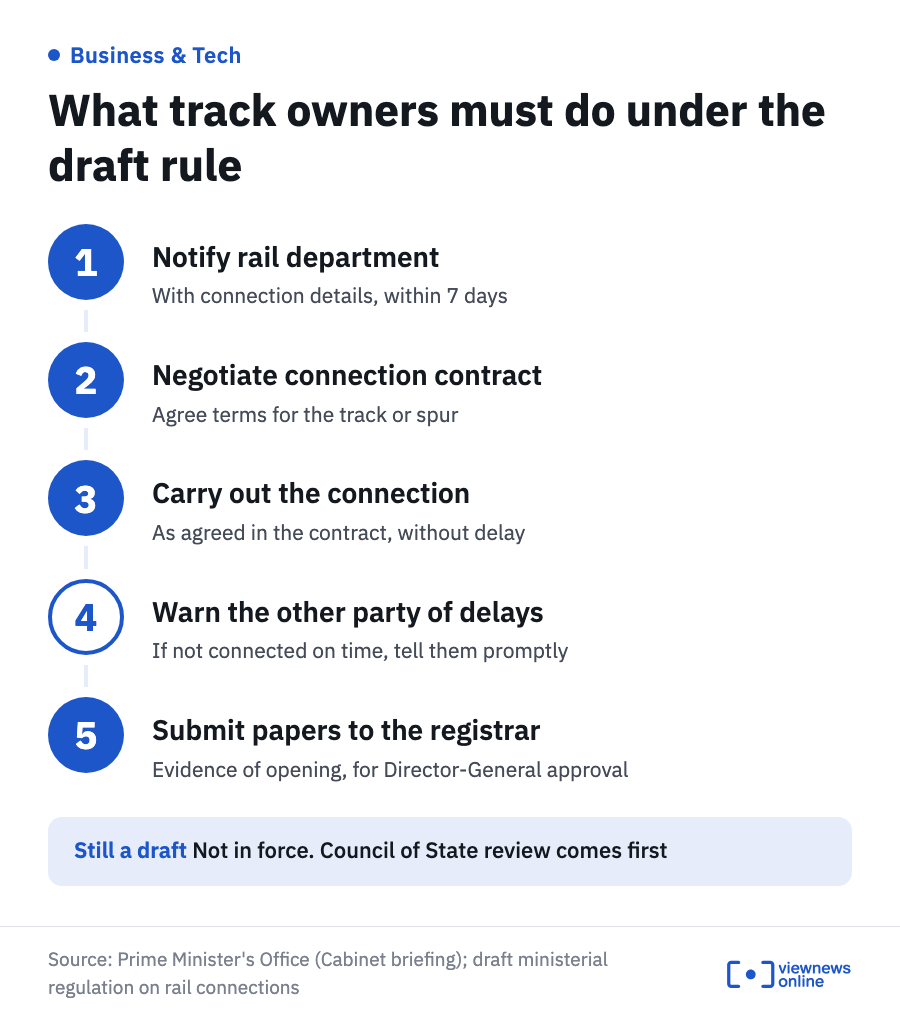
Under the draft, the first duties fall on those who own or manage the track. This covers project owners, private owners of tracks or spurs, and infrastructure managers. The duties apply when they receive a written request, or when they plan to open a track or spur for connection. The steps are:
- Notify the Department of Rail Transport of the intention to connect, with a document giving the connection details, within 7 days.
- Negotiate a connection agreement for the track or spur.
- Carry out the connection as agreed in the contract, without delay.
- Tell the other party promptly if the connection cannot be finished on time.
- Submit evidence that the connection has been opened to the registrar, so the Director-General can consider approval.
The 7-day period runs from the date of the request, or from the date the track or spur opens for use, depending on the case. For track owners this is a deadline that starts as soon as a written request arrives or the track opens.
On maintenance, the draft says the party requesting the connection is responsible for maintaining the track switches and equipment at the connection point, unless the parties agree otherwise. Anyone planning to request a connection should include this cost in their business plan. It can be negotiated differently in the contract.
The government's statement gave no figures for connection fees or other contract terms, so the cost of any single negotiation is unknown.
NESDC comments on track-use fees and train timetabling
Besides endorsing the principle, the NESDC asked the Transport Ministry to revise a separate draft notice from the rail transport policy committee. That notice would set a maximum rate for track-use charges for freight trains. The NESDC also asked that the committee approve it quickly.
The NESDC proposed that the Department of Rail Transport set a maximum rate that reflects infrastructure investment and track maintenance costs, and that also encourages more private operators to enter rail transport. The cap is still a draft. No figure has been announced.
The NESDC also urged the government to set up a committee to allocate train running times. According to the NESDC, the committee would set the rules for allocating slots, review how tracks and spurs are used, and mediate and rule on disputes over slots and track connections. The NESDC said this would raise operators' confidence.
Where things stand and what to watch
As of 24 November 2026, the draft has been approved in principle and is waiting to go to the Council of State. Companies cannot yet apply under it or rely on it legally. What they can do is prepare route information and details of planned connection points, because the draft requires a document with those details when notifying the Department of Rail Transport.
Three things are worth watching. The first is the final wording after the Council of State review and the Royal Gazette date. The second is the cap on track-use fees for freight trains, including when it is approved and at what level. The third is the committee that allocates running times, since it will decide how each operator gets its slots.
For shippers, there is no information yet on how freight rates may change. The fee cap, connection charges and start date are all undecided. Once the rule is published, its details will need another look to see who must do what, and within how many days.
Source: Prime Minister's Office (Cabinet resolution briefing) and the NESDC's comments presented with the resolution.
This article is adapted from ViewNews' Thai-language report.