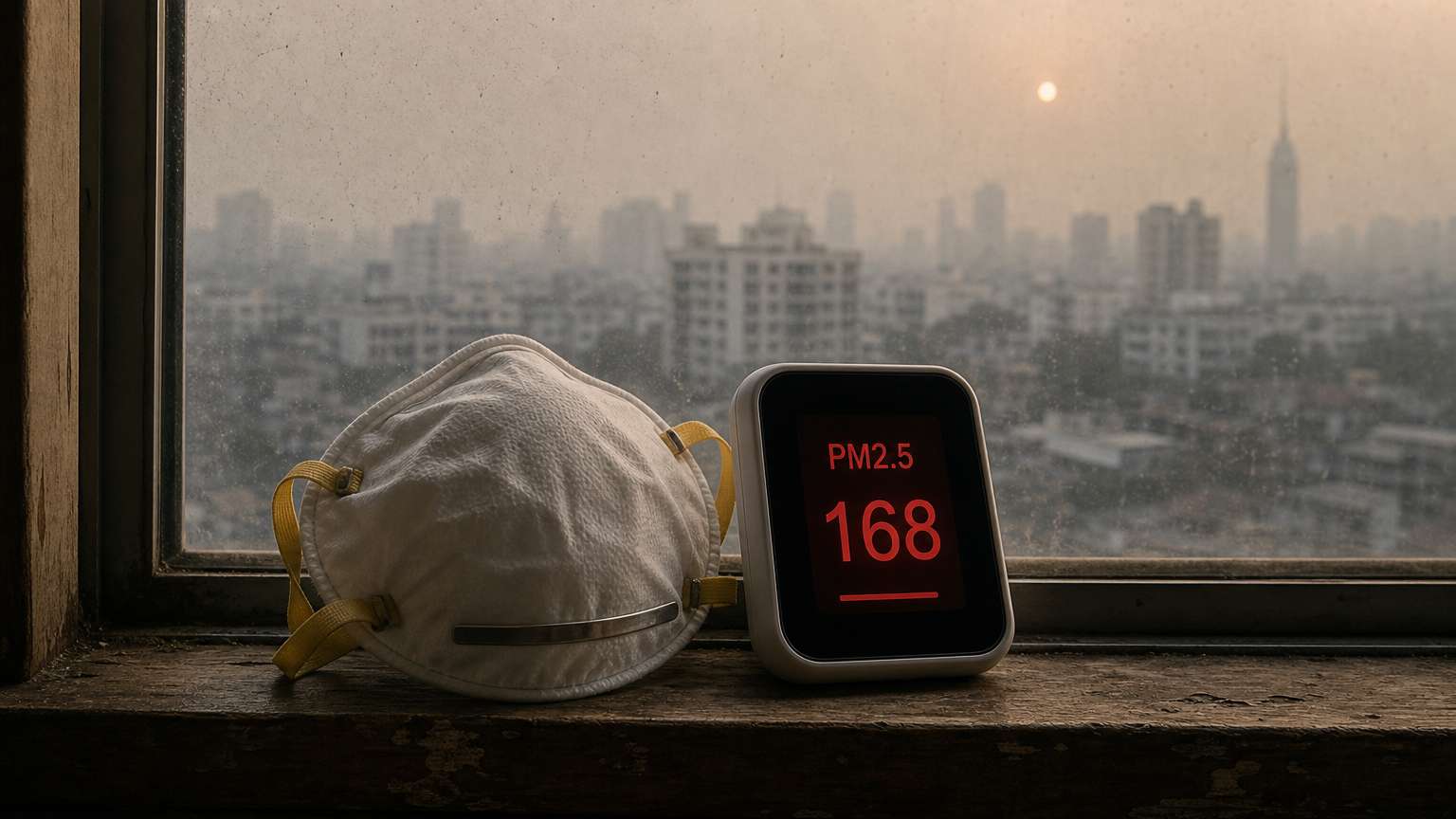
Fine dust known as PM2.5 was behind about 29,000 premature deaths in Thailand in 2021, according to an analysis by Greenpeace Southeast Asia based on data from the air quality platform IQAir. The figure covers 2021 only. For Bangkok alone, the report estimates about 4,400 deaths in the same year.
The findings matter for anyone living in or visiting Thailand, especially in the capital, where dust levels regularly draw attention. The report is also set against global estimates from the World Health Organization (WHO), which has laid out several ways to reduce dust.
What the Greenpeace report found for Thailand
The report is titled The Burden of Air Pollution in Thailand 2021. It says PM2.5 was behind about 29,000 deaths in Thailand in 2021. The number is Greenpeace's own analysis, drawing on IQAir data.
The report also compares causes of death. It says deaths from air pollution, measured against the size of the population, were higher in Thailand in 2021 than deaths from road accidents, drug use and homicide combined.
Bangkok exceeded the WHO guideline every month in 2021
According to Greenpeace, average PM2.5 levels in Bangkok were above the WHO annual Air Quality Guideline in every month of 2021. February was the worst month. The average then reached 9 times the guideline level.
The report estimates that air pollution caused about 4,400 deaths in Bangkok. It also says residents of the capital faced a 13% higher risk of dying prematurely than they would if the air were clean.
What fine dust does to the body, according to the WHO
The WHO estimates that outdoor air pollution caused about 4.2 million premature deaths worldwide in 2019. It attributes these to exposure to fine particulate matter, which can lead to cardiovascular disease, respiratory disease and cancer. The figure comes from a WHO fact sheet last updated on 24 October 2024.
The WHO breaks down that global total as follows. These shares are worldwide figures and are not specific to Thailand.
- 68% died from ischaemic heart disease and stroke.
- 14% died from chronic obstructive pulmonary disease.
- 14% died from acute lower respiratory infections.
- 4% died from lung cancer.
The WHO also says 89% of premature deaths from outdoor air pollution occur in low-income and middle-income countries. The heaviest burden falls on the WHO's South-East Asia and Western Pacific regions. In 2019, 99% of the world's population lived in places where air quality did not meet WHO guideline levels.
When outdoor and household air pollution are combined, the WHO links them to 6.7 million premature deaths a year. It lists air pollution as one of the biggest environmental risks to children's health. The WHO says particulate matter is a commonly used indicator of air pollution and that there is clear evidence that exposure to it harms health.
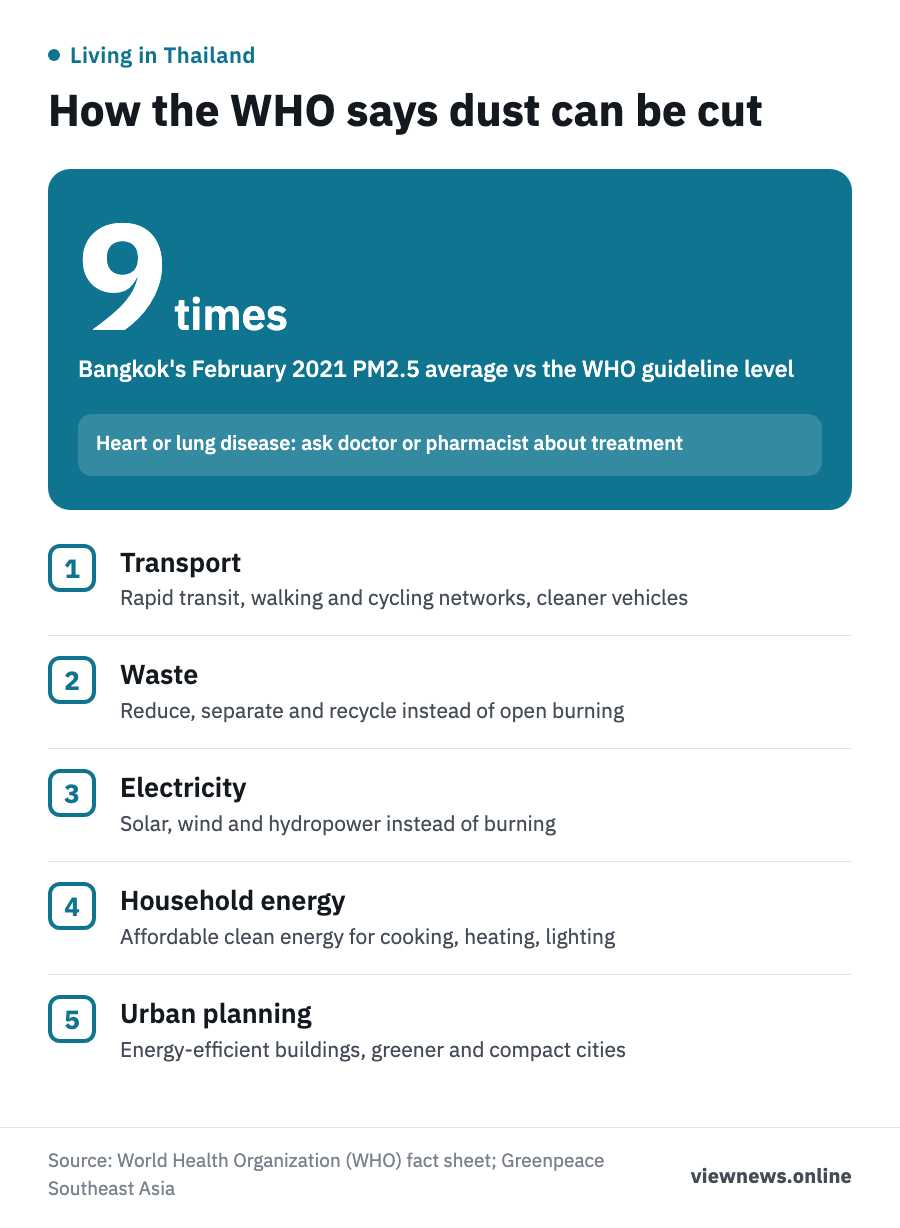
How the WHO says dust can be reduced
The WHO says most sources of outdoor air pollution are beyond the control of individuals. Cutting dust therefore needs coordinated action by policymakers at local, national and regional levels. The sectors involved are energy, transport, waste management, urban planning and agriculture.
The WHO gives examples of policies that work. In transport, it points to rapid urban transit, networks for walking and cycling in cities, and a shift to cleaner heavy-duty diesel vehicles or low-emission vehicles. On waste, it recommends reducing, separating and recycling instead of burning rubbish in the open. For electricity, it recommends renewable sources that do not involve burning, such as solar, wind and hydropower.
On energy use, the WHO says households should have affordable access to clean energy for cooking, heating and lighting. In urban planning, it points to more energy-efficient buildings and greener, more compact cities, which also help energy to be used more efficiently.
The WHO adds that policies and investment in clean transport, energy-efficient homes, power generation, industry and better municipal waste management can cut major sources of dust. People with heart disease, lung disease or unusual symptoms during high-dust periods should talk to a doctor or pharmacist before starting or changing treatment.
Source: Greenpeace Southeast Asia, The Burden of Air Pollution in Thailand 2021, and the World Health Organization (WHO) fact sheet on ambient (outdoor) air pollution. This article is adapted from ViewNews' Thai-language report.