Thai flood warnings use several different terms, and they describe different dangers. According to the Thai Meteorological Department (TMD), a flash flood arrives fast near the mountains where rivers begin. Waterlogging is water that collects or stands in an area. River overflow happens when heavy, continuous rain is more than a river can carry. All three are classed as floods and can occur during the rainy season.
Knowing which type is coming helps you judge how exposed your home is and what to prepare before the rain starts.
How Thailand classifies floods
A flood, in the TMD's definition, is the harm caused by floodwater or flash flooding. The cause is heavy or long-lasting rain. That rain can come from several weather systems: low-pressure areas, tropical cyclones (tropical depressions, tropical storms and typhoons), monsoon troughs, the southwest monsoon and the northeast monsoon. In some cases a dam failure is the cause.
The TMD divides floods into three groups: flash floods (น้ำป่าไหลหลาก), waterlogging (น้ำท่วมขัง) and river overflow (น้ำล้นตลิ่ง). Thai speakers often say "nam pa" (forest water) and "nam lak" (surging water) as if they were separate things. Both fall under the same flash flood group. Water that spills out of a river is called river overflow.
Flash floods come fast from rain over the mountains
Flash floods usually hit low plains near the mountains where rivers start. When heavy rain falls over the mountains for a long time, the water runs quickly down onto the plains below. People living near mountains or in low-lying foothill areas should follow warnings closely during heavy rain.
The Narathiwat Provincial Disaster Prevention and Mitigation Office, which publishes data through the government open data portal (data.go.th), adds that mudslides often occur together with flash floods or just after them. When soil and rock can no longer hold the water, the mass slides downhill under gravity. People near the foot of a mountain need to watch for both water and earth at once.
Waterlogging is a drainage problem, and river overflow is a volume problem
Waterlogging is a large amount of water flowing across flat ground from higher to lower areas, or water standing in a city. The TMD lists three causes: poor drainage, obstructions in the water's path, and high sea levels pushing water inland in coastal areas.
River overflow comes from a large volume of water after heavy, continuous rain, more than the river can discharge. The difference is one of emphasis. A flash flood is about how fast the water runs down to the plain. River overflow is about how much water the waterway cannot hold. If your home has flooded before, the basic advice is to move people, pets and belongings to a place higher than the previous flood level.
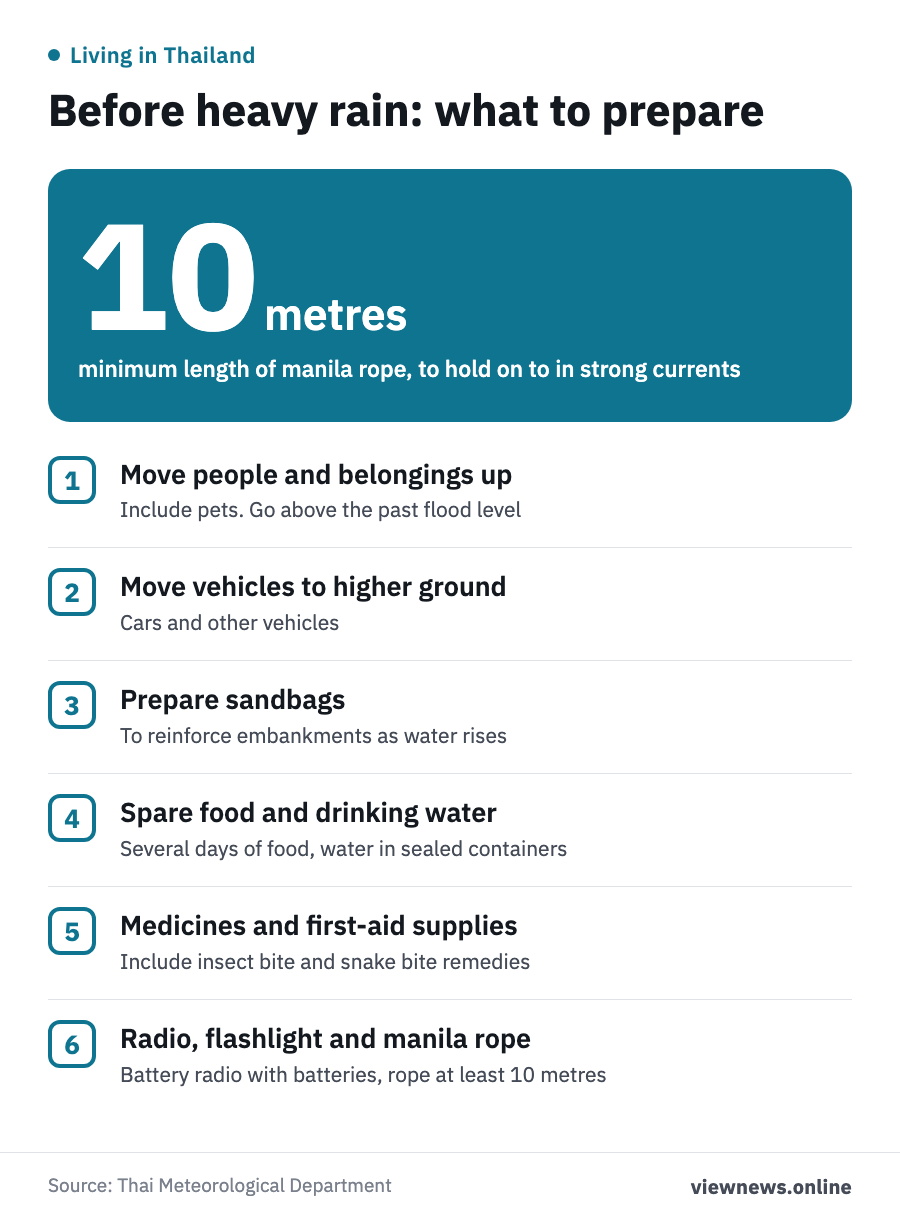
What to prepare before heavy rain
Get essentials ready ahead of time, follow official warnings and keep checking TMD reports. The TMD recommends the following before a flood:
- Move people, pets and belongings to higher ground, above the level of any previous flood.
- Move cars and other vehicles to higher ground.
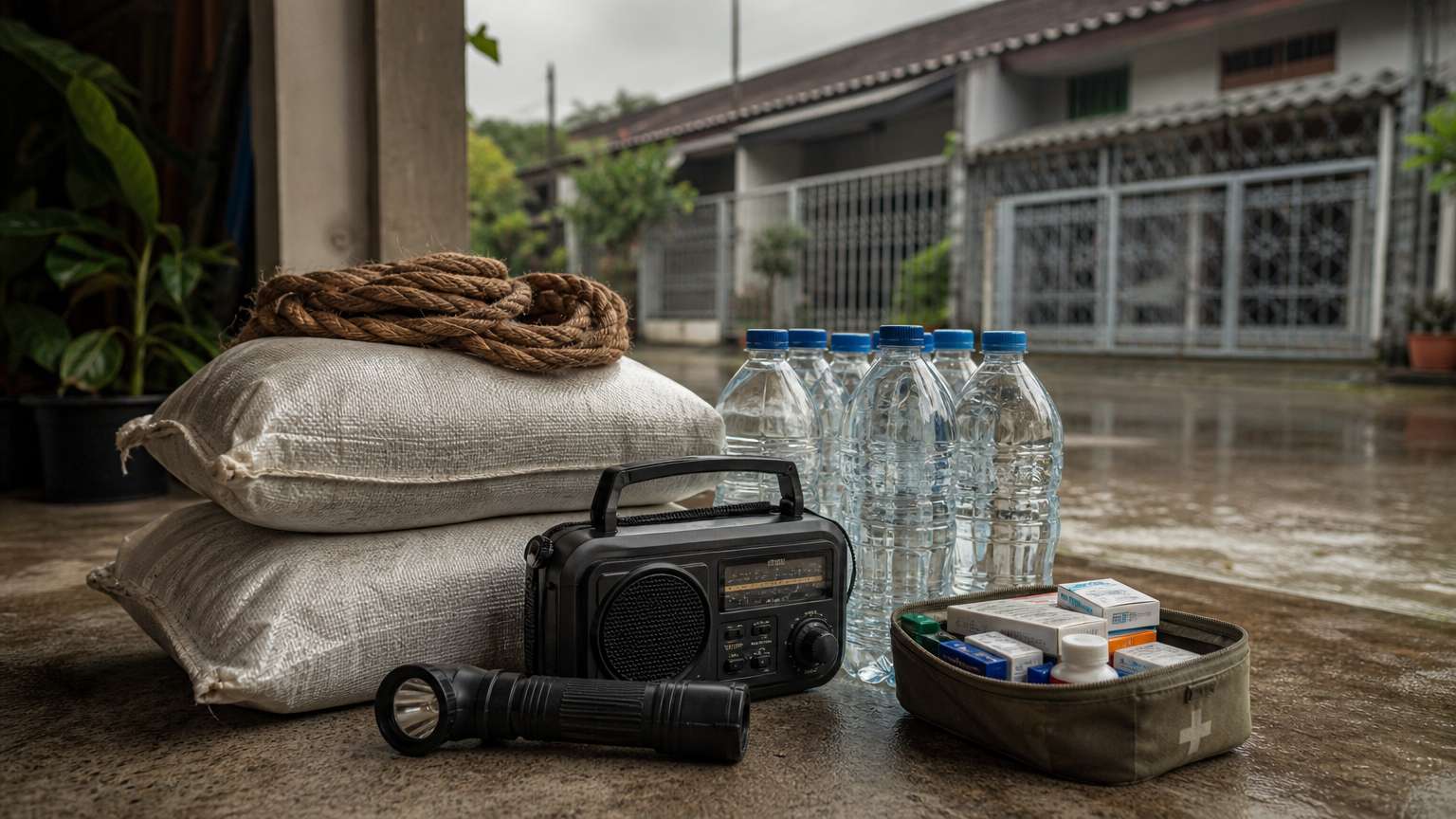
- Prepare sandbags to reinforce embankments as the water rises.
- Keep several days of food and drinking water in sealed containers.
- Keep medicines and first-aid supplies, including remedies for insect bites and snake bites.
- Have a battery-powered radio, a flashlight, spare batteries and manila rope at least 10 metres long to hold on to when the current is strong.
Homes in areas that have flooded for long periods should also keep a wooden boat, inflatable boat or raft, plus carpentry tools, planks and rope for building a raft. Prepare all of this before heavy rain, not after a warning is issued.
During a flood and after the water drops
When flooding starts, switch off the electricity and turn off cooking gas. Stay in a sturdy building, above the old water level, and keep your body warm. Do not drive through flowing floodwater, and do not play or swim in it. Watch for venomous animals that flee the water and climb into houses and onto roofs. If the situation becomes dangerous, be ready to evacuate or follow official instructions, and put lives before property.
After the water goes down, the first job is clearing mud and debris and cleaning homes and roads. Electricity, water supply and telecommunications should then be repaired as soon as possible. Victims need help with clothing, food and daily living. Watch for illness and disease outbreaks that can follow changes in the environment.
Source: Thai Meteorological Department (flood information page) and the flood and landslide situation report dataset of the Narathiwat Provincial Disaster Prevention and Mitigation Office on the government open data portal (data.go.th).
This article is adapted from ViewNews' Thai-language report.