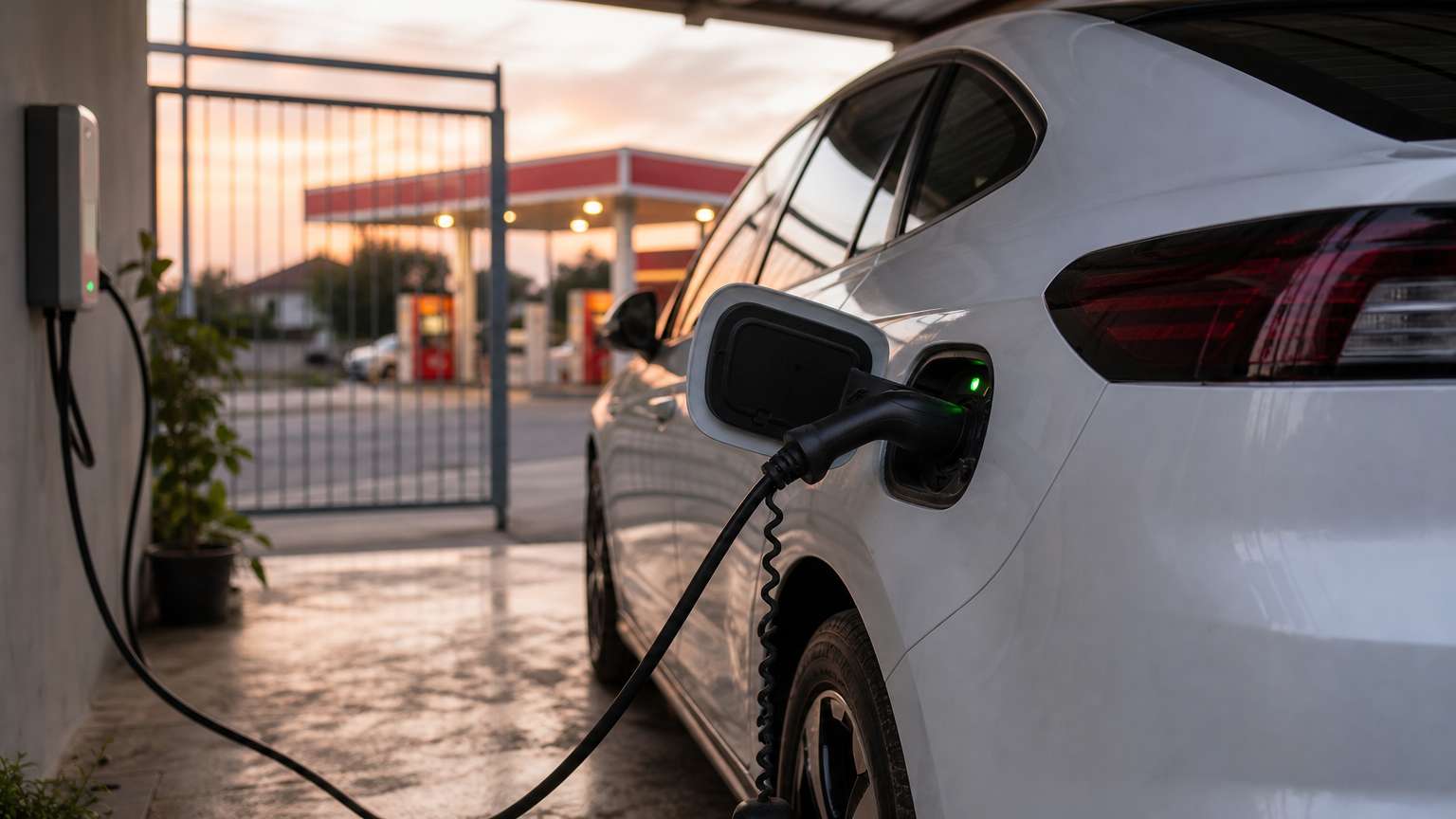
Whether an electric car or a petrol car is the better deal in Thailand depends on more than resale value. It depends on how you drive, where you can charge, and how long you plan to keep the car. The biggest change in the past two years is the purchase price. The International Energy Agency (IEA) says in its Global EV Outlook 2026 that electric car prices in Thailand have been close to petrol car prices for two years.
With prices this close, the decision shifts to other things: government incentives that affect the real price, how easy charging is, and how comfortable you will be using the car every day for several years.
Purchase prices are close, but resale value is still unproven
The IEA reports that electric car sales in Southeast Asia more than doubled in 2025, reaching a market share of almost 20%. Vietnam, Indonesia and Thailand led the growth. The same report says electric and petrol car prices in Thailand have been similar for 2 years, while Indonesia still had a price gap of about 40% in 2025.
Resale value is the point that worries many buyers most. There are no public figures comparing resale prices of electric and petrol cars in Thailand's used-car market. So do not accept claims that electric cars lose value fast, or that they hold their value well, without evidence. A practical approach is to ask several used-car dealers what they would pay for the model you are considering. You should also ask the seller whether the battery warranty can be transferred to the next owner, because that affects how confident a used-car buyer will be.
Ask yourself whether you will actually resell. If you plan to keep the car for many years, resale value matters less. If you plan to change cars every 3 to 4 years, it matters a lot, and you should look at real market prices for that model before you decide.
EV 3.5 incentives cut costs, but terms may change
The second phase of Thailand's electric vehicle support scheme, known as EV 3.5, runs for 4 years, from 2024 to 2027. It covers electric cars, electric pickup trucks and electric motorcycles, according to Thai Rath and Thai Post, which agree on the main points of the scheme.
For electric passenger cars priced up to 2 million baht with a battery of at least 50 kilowatt-hours (kWh), the subsidy ranges from 50,000 to 100,000 baht per car. Cars with smaller batteries receive less. The actual amount depends on the year of purchase and the terms for each model. Ask the dealer to put in writing which incentives your model qualifies for before you pay a deposit.
On tax, fully imported electric cars priced up to 2 million baht get an import duty cut of up to 40% in the first 2 years, 2024 to 2025. The excise tax rate is cut from 8% to 2% for electric cars priced up to 7 million baht. Carmakers that import cars must make vehicles in Thailand to offset them, and the offset rate rises over time. That obligation falls on manufacturers, but it can affect pricing strategy and how many imported models are sold here in future.
These details are the terms announced when the scheme began and may be adjusted later. If you are interested in an imported model, or one that depends on the subsidy, check the latest status with the Excise Department or the Thailand Board of Investment (BOI) before deciding. If you are not a Thai citizen, ask the dealer whether your nationality or residency status affects eligibility for these incentives.
City or long distance, home charging or not: the real deciding factors
Charging technology is changing fast. The IEA says the first cars using a 1,000-volt system reached the market in 2025, and charging times of under 10 minutes have been announced through 2026. But the same report says electric cars able to use chargers above 250 kilowatts make up less than 5% of all electric cars on the road. Fast-charging technology exists, but most cars on the road cannot use it yet. Real charging time depends on the model you buy, so check the charging specifications of that model directly instead of relying on news about new technology.
If you mostly drive in the city and have a parking space where a charger can be installed, charging overnight at home means you never need to visit a fuel station. If you live in a condominium or a rented home where you cannot install a charger, you depend entirely on public stations, and the convenience drops quickly. If you often drive long distances to other provinces, plan your routes and check where charging stations are along the way, and decide how much uncertainty you are comfortable with. Petrol cars still have the advantage of needing no advance planning.
How a car feels to drive is personal. Quick acceleration, a quiet cabin, or the comfort of refuelling almost anywhere cannot be settled by official figures. The best approach is to test drive both types on the routes you use every day, and compare how they feel afterward, not what the brochures say.
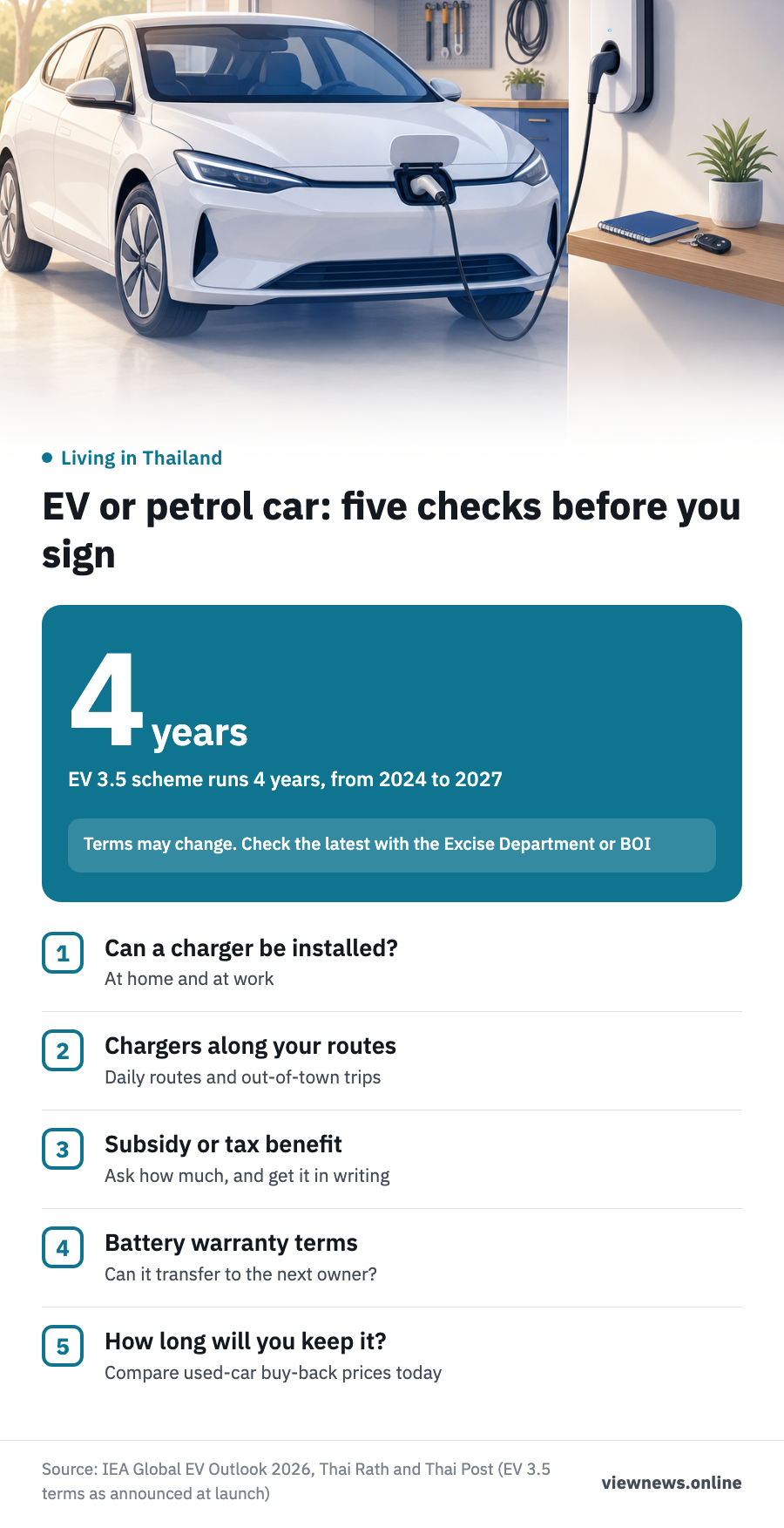
Five checks before you sign
The value of a car is not measured by resale price alone. It is what each person is willing to pay to make life easier and more comfortable. Before you decide, run through this list.
- Do you have parking at home or at work where a charger can be installed?
- How well do charging stations cover your regular routes and trips to other provinces?
- How much subsidy or tax benefit does your chosen model receive, and is it clearly documented?
- What are the battery warranty terms, and can the warranty be transferred to the next owner?
- How many years do you plan to keep the car, and what would dealers pay for the same model on the used market today?
If you can answer these clearly, you will know whether an electric or petrol car suits you better. You will not need to decide out of fear of missing a trend or because of rumours about resale prices.
Source: International Energy Agency (IEA), Global EV Outlook 2026 executive summary; Thai Rath and Thai Post reports on the EV 3.5 scheme (terms as announced when the scheme began).
This article is adapted from ViewNews' Thai-language report.