Thailand does not have a free-for-all cannabis market. Cannabis flowers are a controlled herb, buyers need a prescription from a designated health professional, and sellers need a licence. The rules come from a Ministry of Public Health notice on controlled herbs (cannabis) that took effect on 26 June 2025, and a ministerial regulation that took effect on 30 April 2026 and forces dispensaries to meet new standards. Growing cannabis for personal use is not illegal, but selling it requires permission.
The 2025 notice replaced a 2022 notice and applies controls only to the flower buds. The Minister of Public Health has said the government never had a policy of unrestricted cannabis. It backs medical use and economic development, according to The Active.
The 2025 rules: flowers only, sold on prescription
Anyone who wants to research, export, sell or process cannabis flowers commercially needs a licence. Licence holders must keep records of where the flowers came from, how they were used and how much is in stock, and report to the registrar. Flowers traded between licence holders must come from sources that meet growing and harvesting standards set by the Department of Thai Traditional and Alternative Medicine (DTAM), according to Infoquest.
For buyers, flowers can be sold only to people with a prescription from one of seven groups of practitioners:
- Medical doctors
- Thai traditional medicine practitioners
- Applied Thai traditional medicine practitioners
- Dentists
- Pharmacists
- Traditional Chinese medicine practitioners
- Folk healers
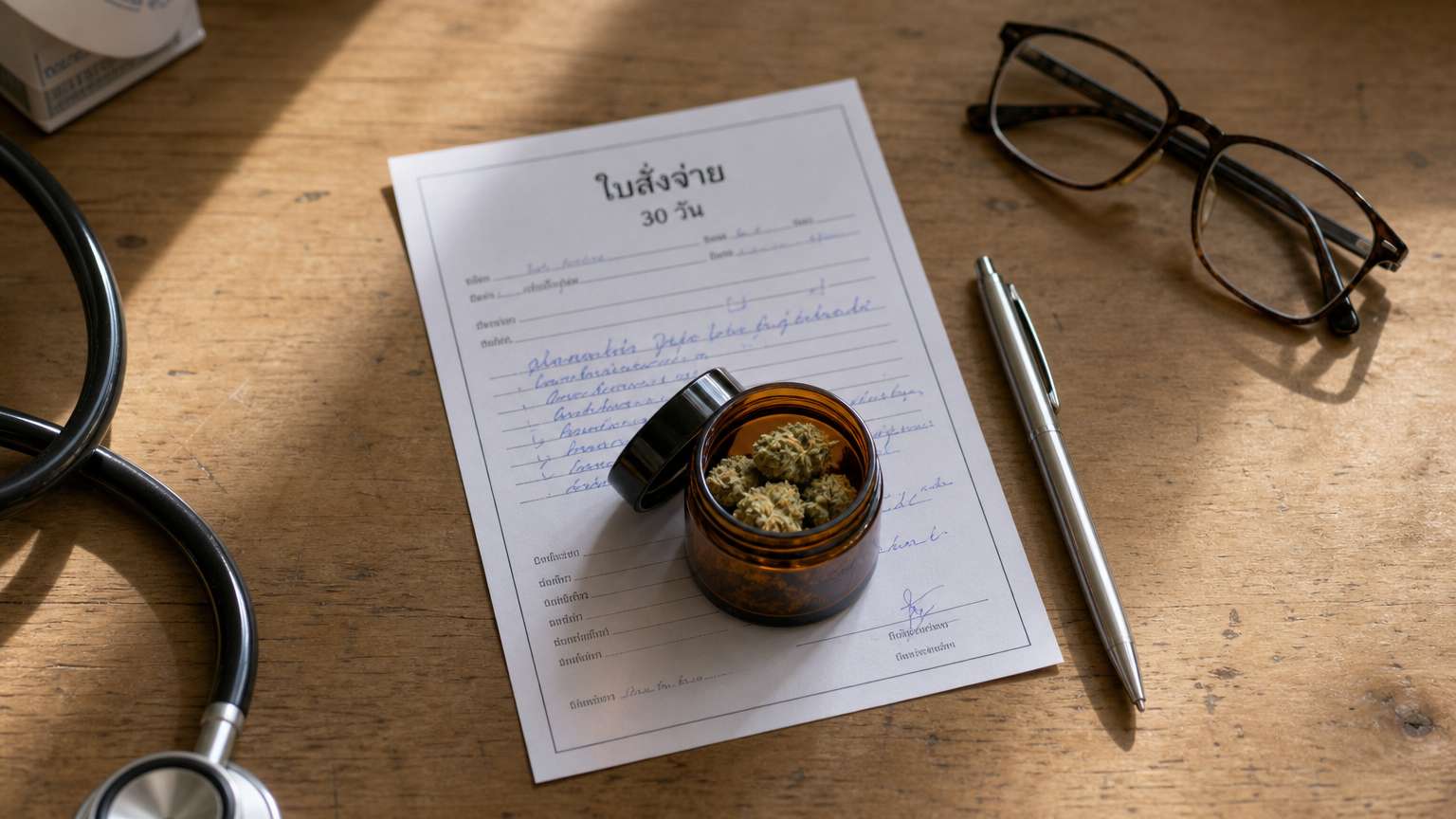
A prescription must show the prescriber's name and licence or certificate number, and the recommended daily amount. One prescription can cover no more than 30 days, according to Bangkok Biznews and Infoquest.
Bangkok Biznews reported 15 conditions that serve as a starting guide, including chronic pain, epilepsy, asthma, insomnia, cancer and depression. Prescribers may use their own judgement for other conditions. They remain responsible for the patient, including dosage and side effects, and an improper prescription can lead to penalties under professional law.
The same notice bans several kinds of sale. Anyone who used to buy from shops or online should know that the following are no longer allowed, according to Thai PBS and Infoquest:
- Commercial sales through vending machines and online channels
- Commercial advertising through any channel
- Commercial sales in temples, places of religious worship, dormitories, public parks, zoos and amusement parks
New ministerial regulation changes the rules for shops
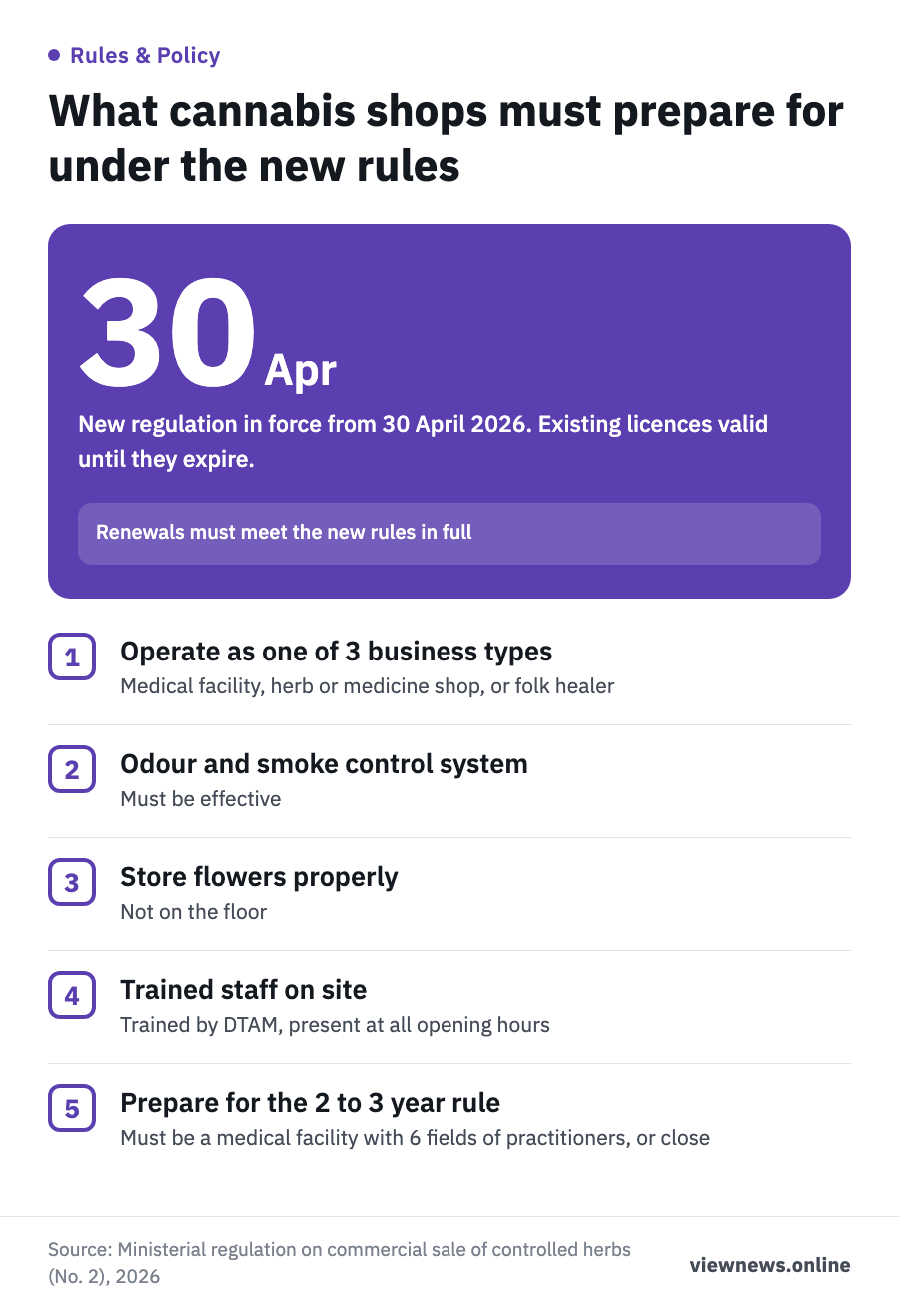
The ministerial regulation on licensing commercial research, export, sale or processing of controlled herbs (No. 2), took effect on 30 April 2026, according to Bangkok Biznews and The Active. Existing licences stay valid until they expire. Renewals must follow the new rules in full.
Under the new rules, a licence applicant must operate as one of three types of business:
- A medical facility
- A place that makes or sells medicines and herbal products
- A certified folk healer
The shop must also have an effective odour and smoke control system. It must store flowers properly and not leave them on the floor. It must also have staff trained by DTAM on site at all times during opening hours.
The Minister of Public Health has said a tougher condition is coming. Within two to three years, shops will have to become medical facilities with practitioners from six medical fields on site at all times. Shops that do not make the change will have to close when their licences expire.
About 12,000 shops are still open. Licences will expire in waves: about 5,000 to 6,000 in 2026, about 4,000 to 5,000 in 2027 and about 1,000 in 2028, according to Bangkok Biznews and The Active. Officials can inspect premises during business hours, check documents, seize or freeze goods and arrest unlicensed sellers.
What it means for patients and customers
Patients who use cannabis as part of treatment can still get it, but only through a licensed practitioner. The health minister has said patients nationwide are not affected, because community hospitals are already medical facilities and can dispense cannabis medicine. There are more than 40,000 medical cannabis patients. Prescribers must report dispensing data to the department's electronic system every month, according to The Active.
For people who used to buy at shops, the biggest changes are that online purchases are no longer possible, shops cannot advertise commercially, and unlicensed shops cannot sell. Anyone who wants cannabis for a specific condition should first be assessed by a practitioner, because the prescription comes from the person responsible for that patient.
The reports cited here do not say whether the rules differ for foreign visitors or residents. Tourists and expats should ask the shop or clinic directly what identification and documents they need, and should not assume a purchase is allowed.
To check whether a shop is licensed, DTAM has developed an app that maps licensed shops and shows their licence expiry dates, according to The Active. Talk to a doctor or pharmacist before starting, changing or stopping cannabis treatment.
Where the draft cannabis bill stands
The draft Cannabis and Hemp Act is still going through ministry procedures. As of 1 July 2026, according to a timeline reported by Thansettakij, DTAM held a second public hearing on the draft's details from 2 June to 1 July 2026. Next come a regulatory impact analysis (RIA) and revisions to the draft. The health minister then reviews it and submits it to the Cabinet.
If the Cabinet approves, the draft would enter the full legislative process from January 2027. The ministry says it supports medical and economic use but not recreational use. It may rename the draft the Cannabis and Hemp Control Act to stress control at every stage, from growing and harvesting to extraction and processing into products.
For now, the rules in force are the 2025 notice and the 2026 ministerial regulation. Anyone planning a business or a licence application should check with DTAM for progress on the bill since the Thansettakij report.
Source: Ministry of Public Health notice on controlled herbs (cannabis) 2025, via the Department of Thai Traditional and Alternative Medicine; ministerial regulation on licensing commercial controlled herbs (No. 2) 2026; reporting by Bangkok Biznews, Infoquest, Thai PBS, The Active and Thansettakij.
This article is adapted from ViewNews' Thai-language report.